Select a breaker candidate from the composition of the deposited drill-in filter cake and the cleanup outcome the completion needs. A starch-degrading enzyme, a polymer oxidizer and a carbonate-dissolving treatment act on different materials. A rapid viscosity drop in a fluid sample can show polymer attack while a mineral or fines-rich cake continues to restrict flow.
Inventory what actually reached the reservoir face
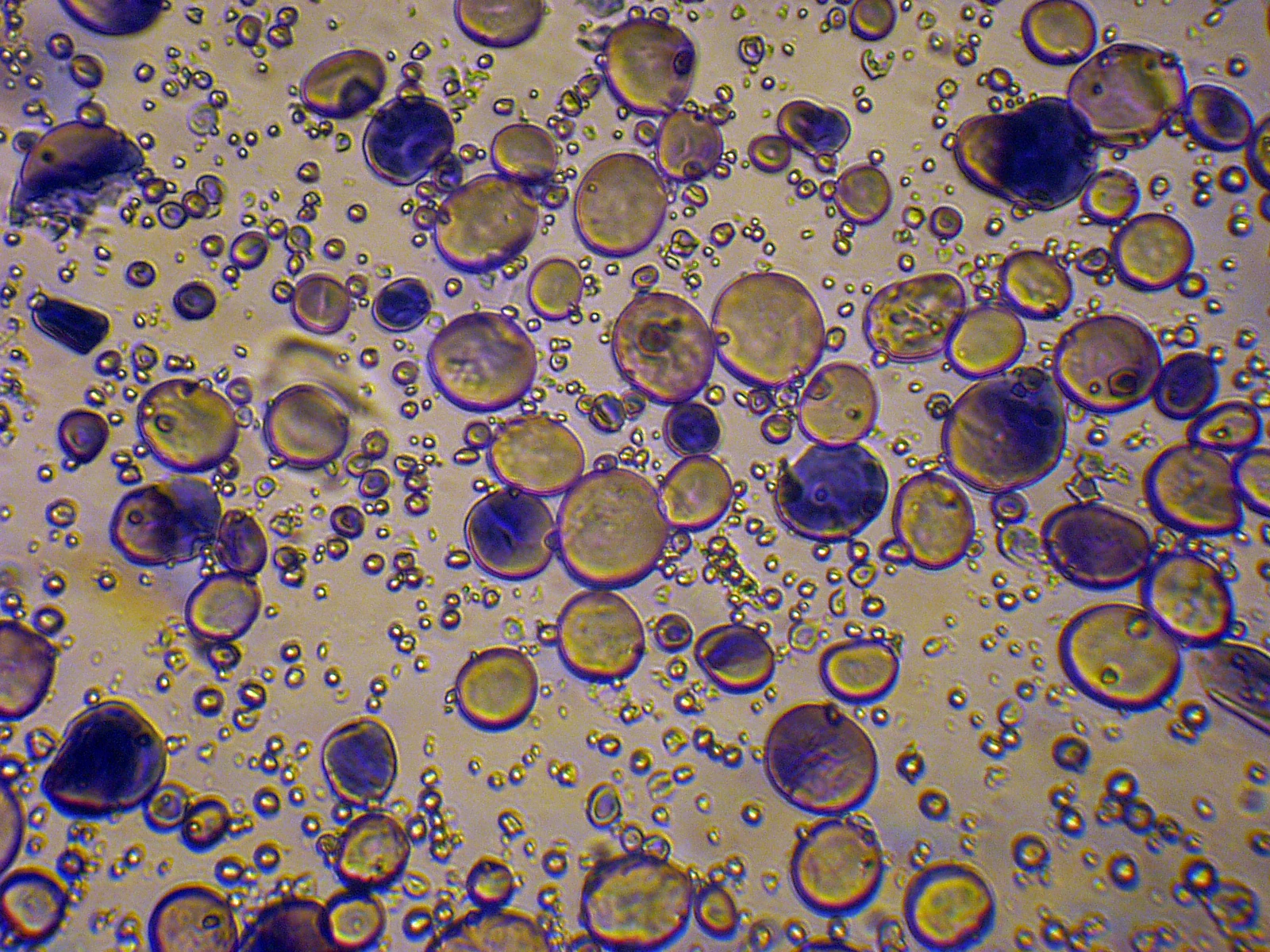
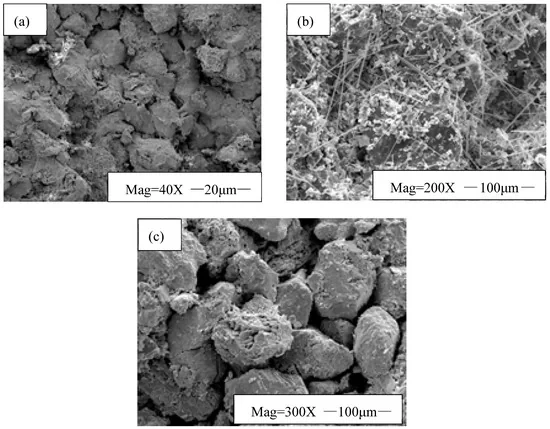
Start with the drill-in formulation, then check what changed while drilling. The deposited cake can contain graded calcium carbonate, polymeric fluid-loss material, drilled fines and other solids picked up during circulation. An unused laboratory mix and a returned fluid may form different cakes. Identify the fluid used to prepare each test specimen and retain its solids and exposure history.
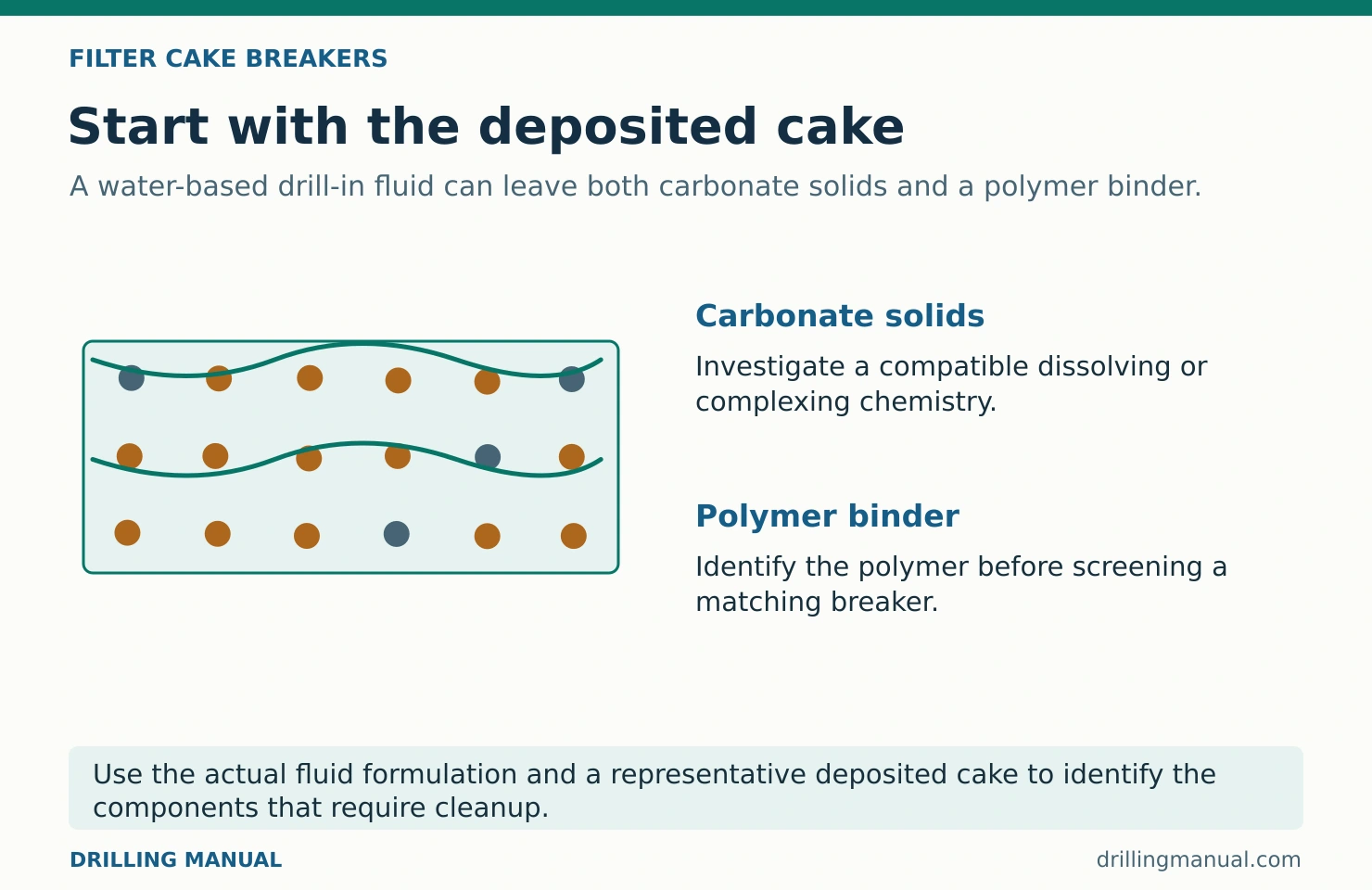
The target also depends on the completion. Clearing a screen-facing deposit, reducing an external cake and recovering permeability through exposed rock are related but distinct outcomes. A cake may lose visible material while internal impairment remains. Define the desired endpoint before comparing chemicals. Otherwise the visually cleanest specimen can win an experiment designed to judge sustained flow.


Match the candidate to a constituent and a limitation
| Candidate mechanism | Question it can test | What still needs evidence |
|---|---|---|
| Substrate-specific enzyme | Does the identified susceptible polymer, such as starch, break down under the proposed conditions? | Other polymers, mineral solids, carrier compatibility and access. |
| Oxidative polymer treatment | Does degradation of susceptible organic material change cake structure or flow? | Mineral removal, compatibility, contact and effects on the complete system. |
| Carbonate dissolution or complexation | Can the accessible target mineral be removed under the selected chemistry? | Polymer residue, insoluble fines, secondary precipitation and fluid compatibility. |
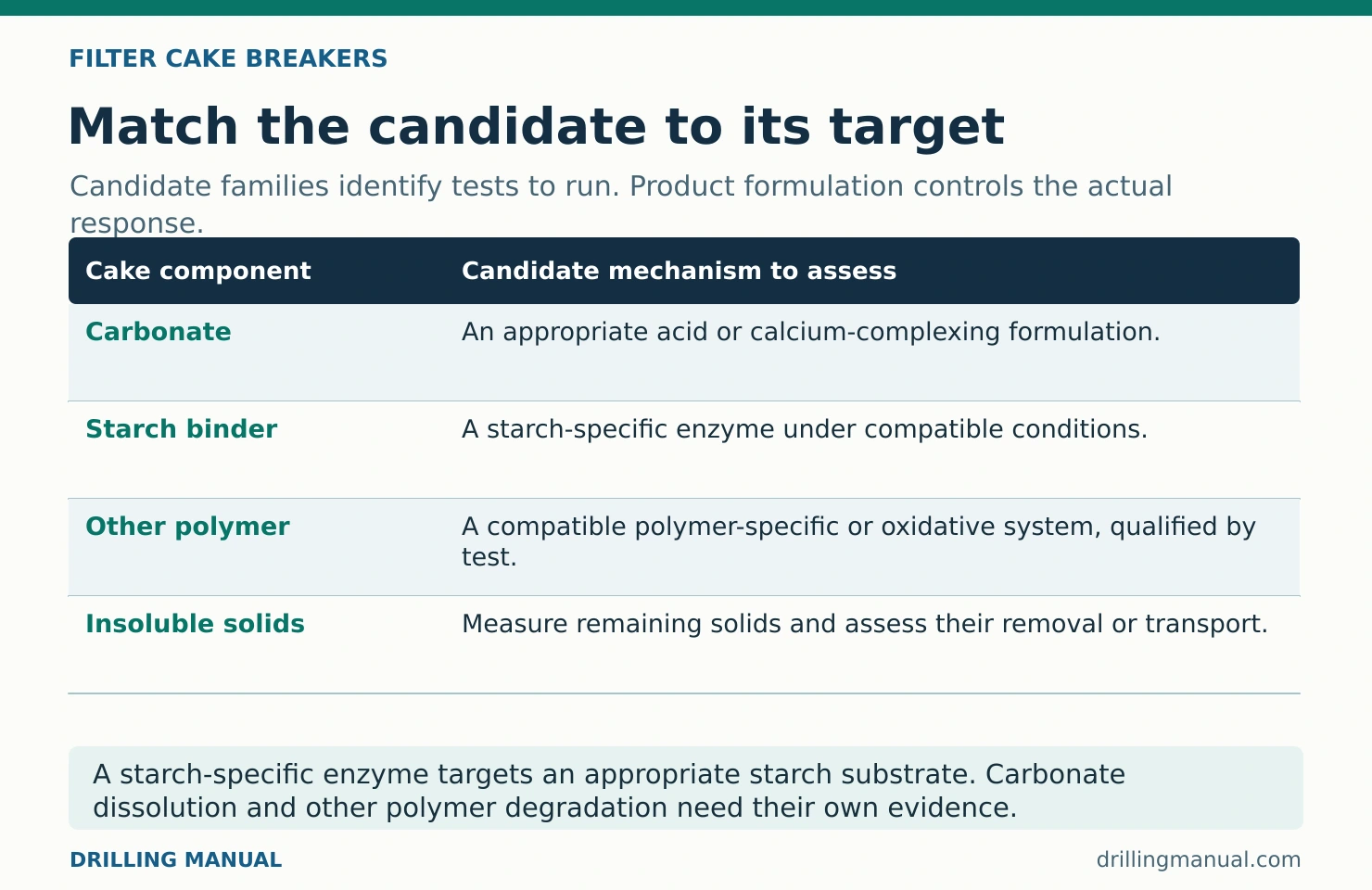
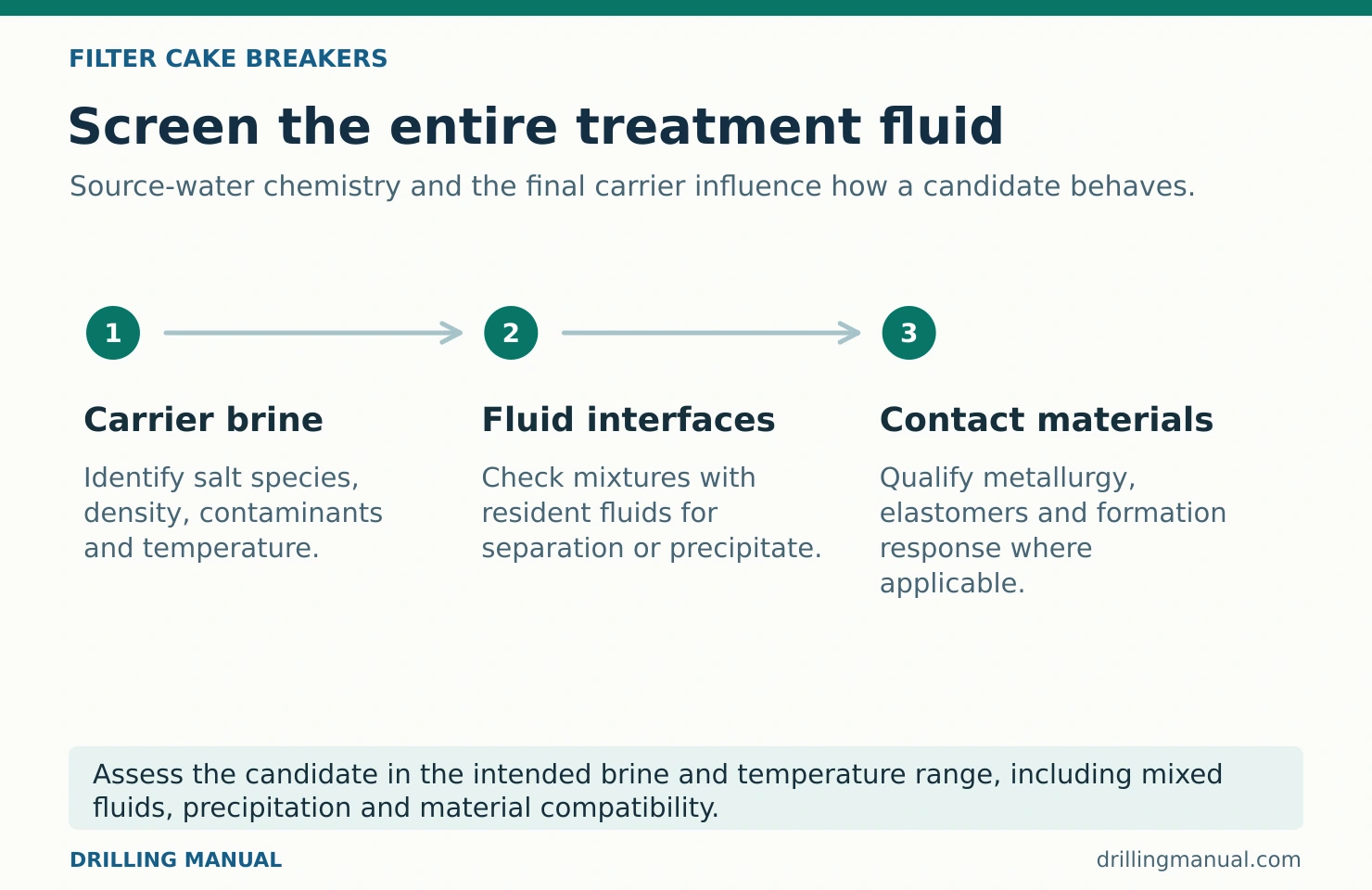
A combined or staged candidate may have a rationale when the cake has multiple constituents. That rationale is a laboratory question, not a field recipe. Test the proposed carrier and sequence as a system. A treatment that looks effective on dry powder can behave differently after contacting brine, reservoir fluid, tubular materials or a low-permeability cake.
Give each candidate a fair comparison
Create exposed specimens from the same representative fluid and deposition history where practical. Keep an exposed, untreated or carrier-only control, with its identity clearly stated. A clean baseline quantifies initial flow capacity. It answers a different question from an exposed control, which shows what reverse flow or the carrier can accomplish without the active breaker.
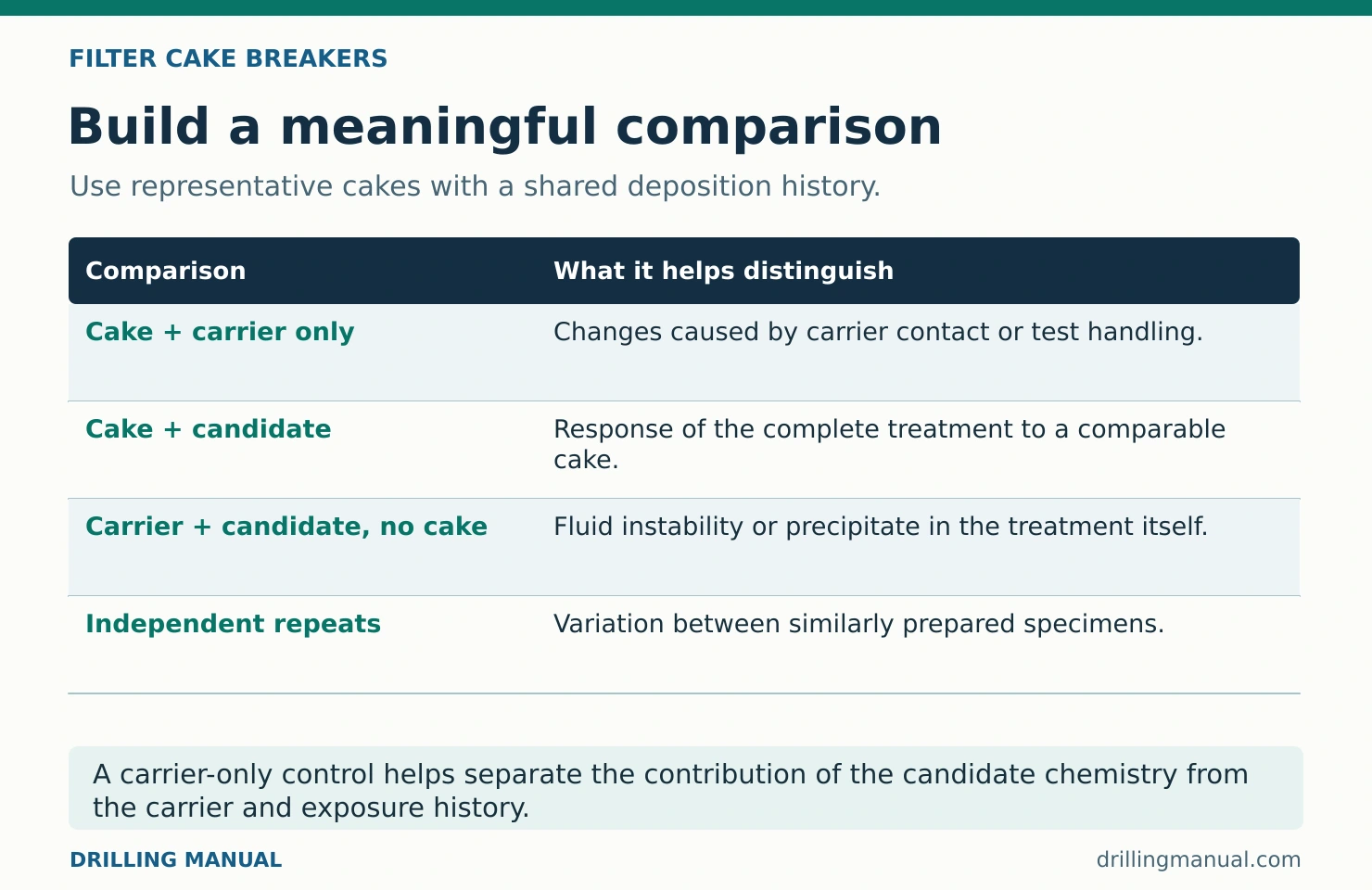
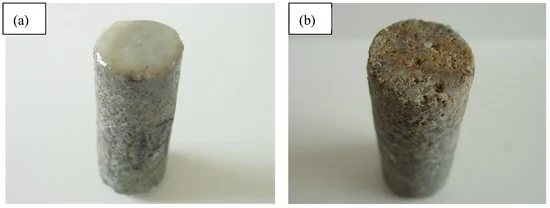
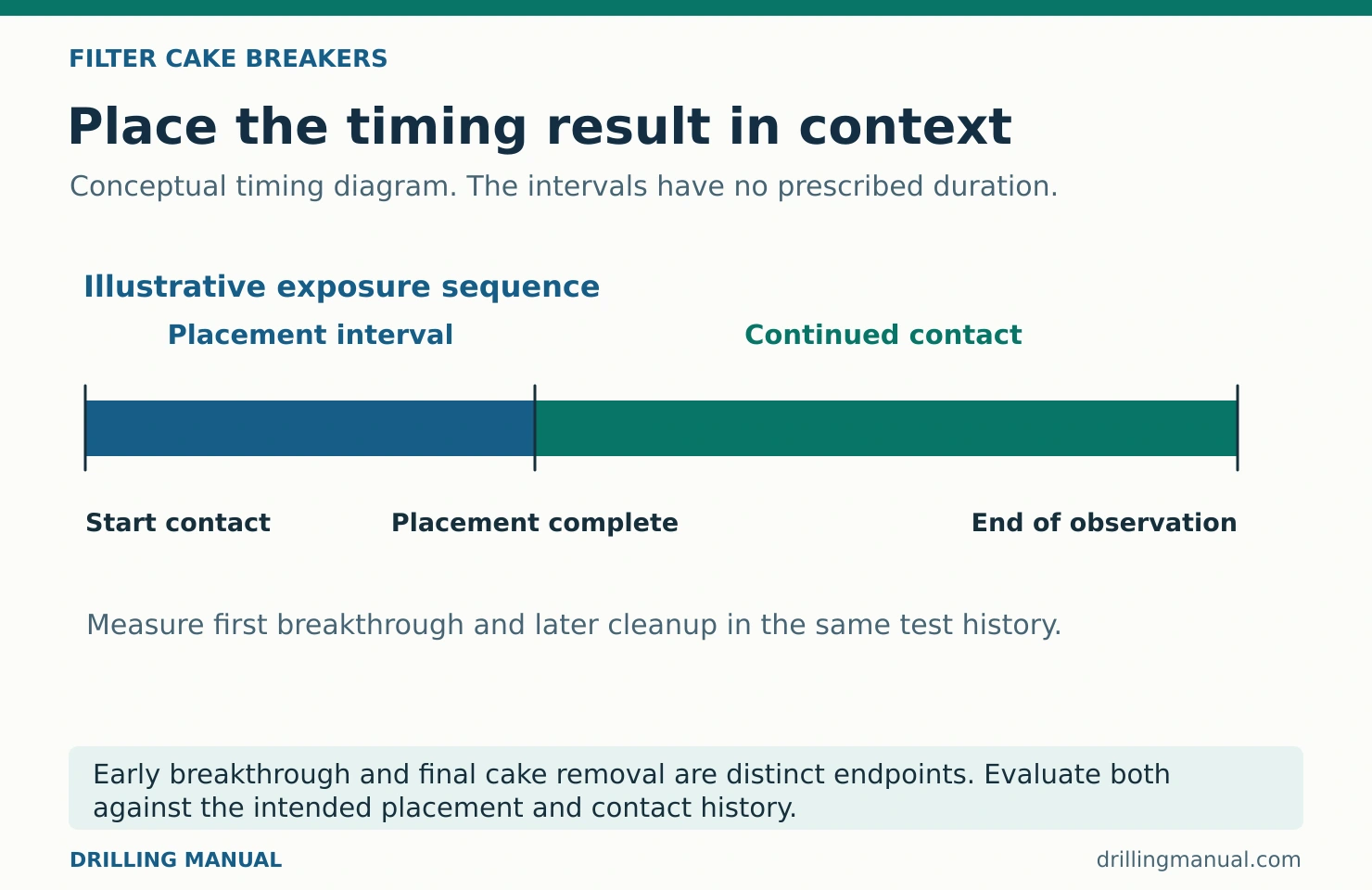
Record temperature, exposure time, carrier, sample history and observation intervals. Compare candidates on an agreed basis. A larger chemical inventory, a longer contact time or a different flow direction can account for an apparent improvement. Where the design requires a delay for placement, retain observations across that interval instead of recording only an overnight endpoint.
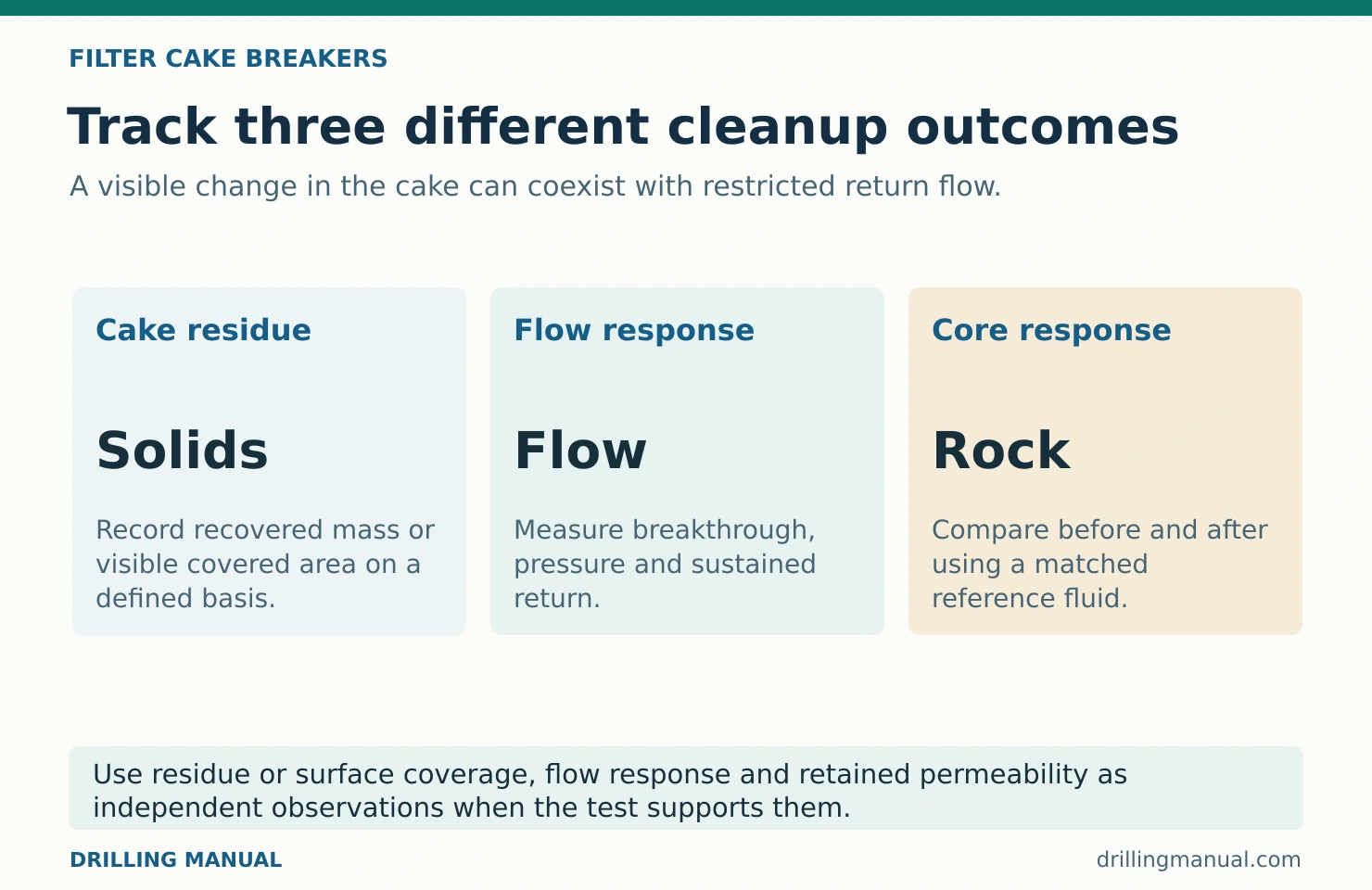
Read first flow, retained material and sustained flow together
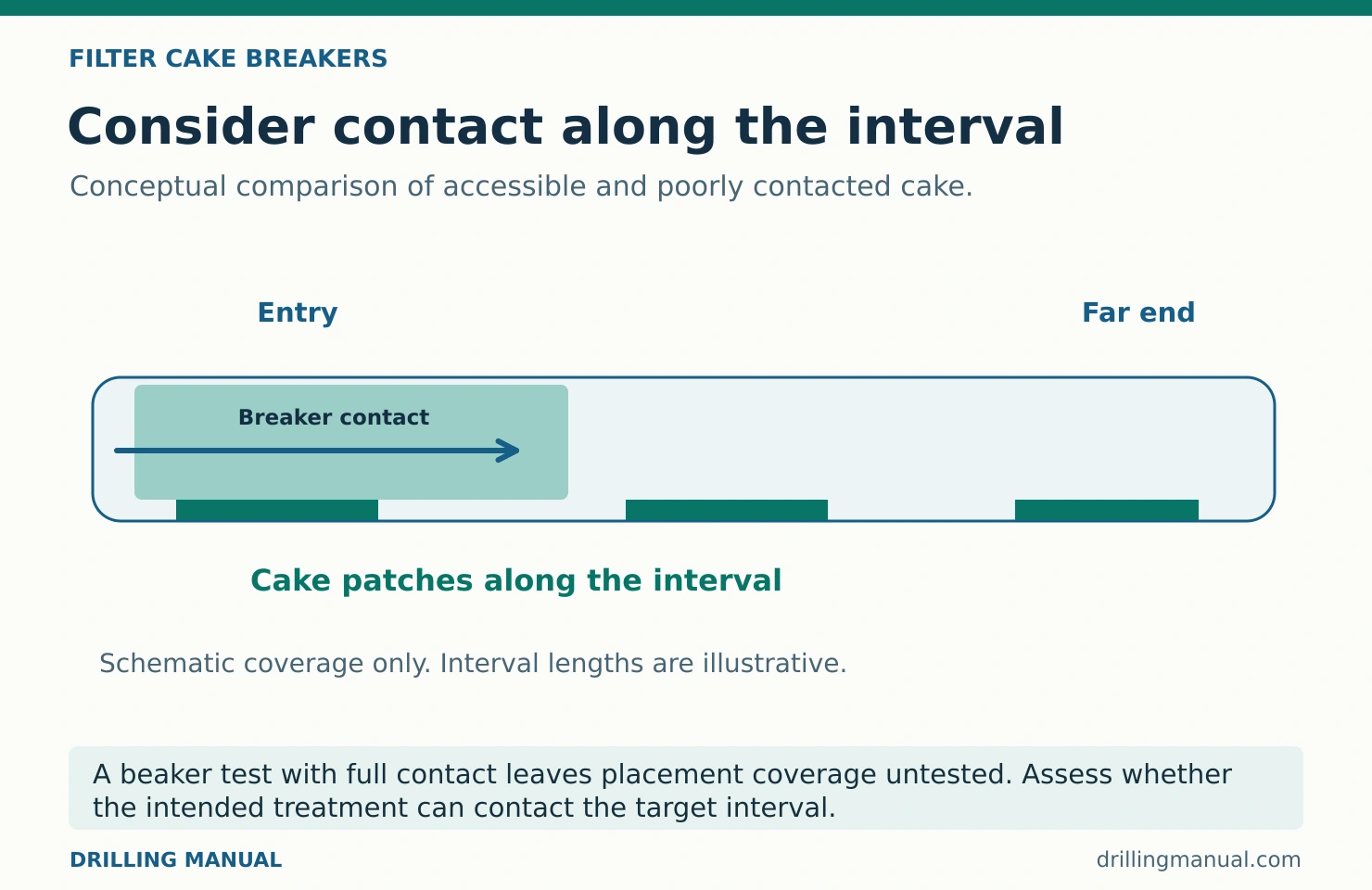
Suppose two hypothetical candidates give different signals. Candidate A opens one pathway early and leaves appreciable residue elsewhere on the face. Candidate B shows slower first flow but better stabilized permeability after its specified exposure. If uniform access and sustained return are central to the completion, early breakthrough alone supplies little basis for selection. Flow can preferentially enter the first opening and reduce contact elsewhere along a long interval.
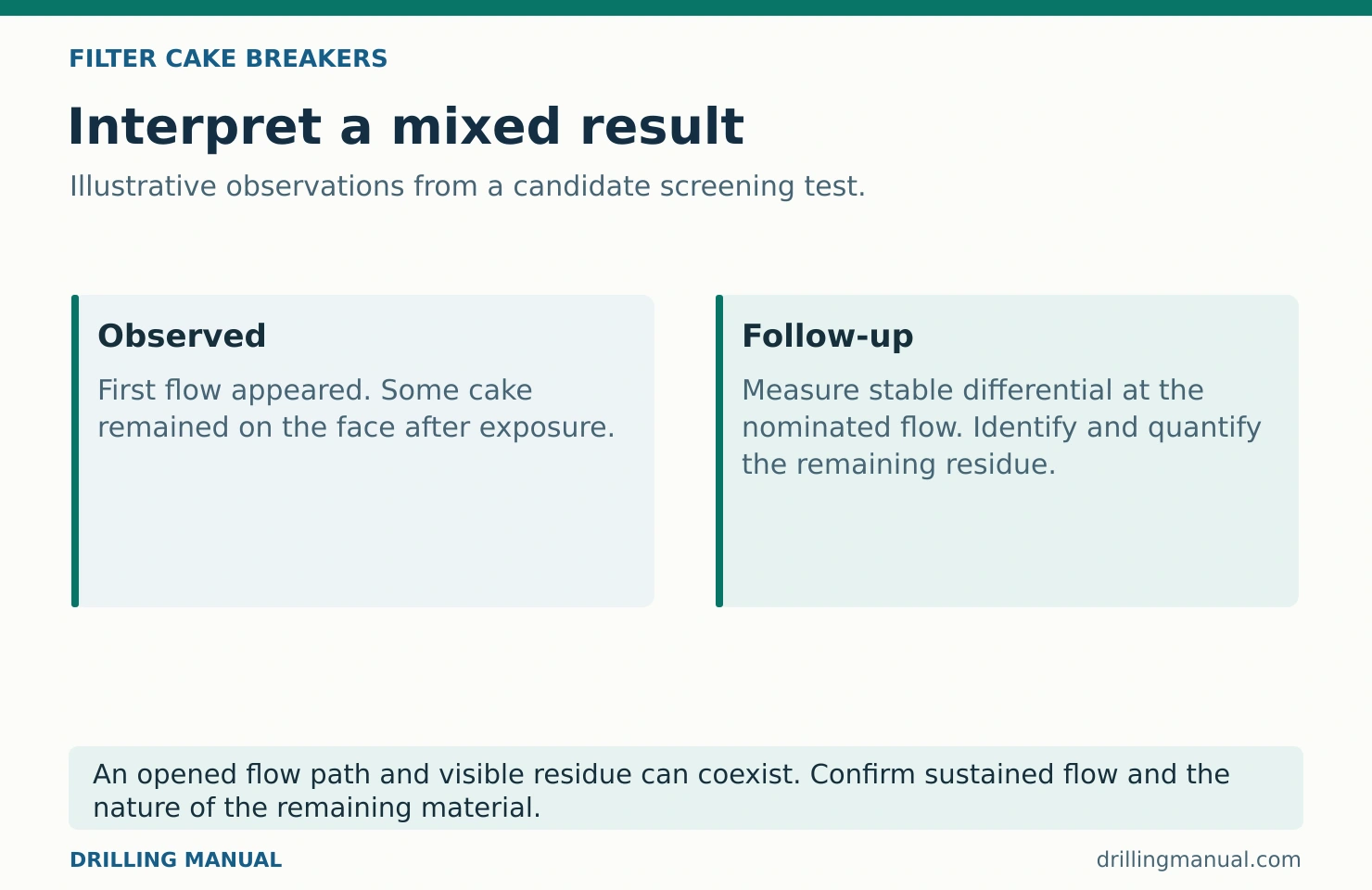
Document where each observation came from. A filtered and weighed residue addresses material recovery under the stated method. Inspection addresses visible cake coverage. A return-permeability measurement addresses resistance across the tested specimen and any included cake. The three results can disagree without any instrument having failed.
Convert a lab ranking into a qualified recommendation
State the cake, test conditions and endpoint for which the candidate ranked higher. List outstanding compatibility or exposure cases individually. Keep corrosion, elastomer compatibility, fluid–fluid compatibility and formation response with the appropriate qualified tests. A core result obtained at one temperature cannot establish placement time throughout a well with a different temperature history.
See the candidate comparison and interval coverage diagrams
Field or laboratory record
Download the editable drill-in cake breaker decision record (TXT).
Frequently asked questions
Will an enzyme remove every polymer in the cake?
Activity depends on its substrate and the conditions. Identify the actual polymer and check the candidate against the formulated fluid and deposited cake.
Does fast carbonate dissolution establish cleanup?
It supports mineral response under the test conditions. Remaining polymers, insoluble solids, limited access or internal damage can still restrict flow.
What should a one-page selection record show?
Document cake identity, reason for choosing the mechanism, matched control, exposure, first flow, residue, stabilized return and the conditions still awaiting qualification.
Further reading and technical references
For the polymers that may contribute to the original cake, see POLYMER DRILLING MUD SYSTEM DESIGN. For how the completion architecture affects cleanup objectives, see Open Hole Completion.
M-I SWACO. Completion Fluid Systems & Products, Reservoir Drill-In Fluids, Breakers, Filtration & Specialized Tools, version 5, copyright 2010. Printed pp. 35–38, 51–52 (PDF pp. 36–39, 52–53).
R. Caenn, H. C. H. Darley and G. R. Gray. Composition and Properties of Drilling and Completion Fluids, 7th ed. Gulf Professional Publishing, 2017. Printed pp. 493, 509–510 (PDF pp. 495, 511–512).
Baker Hughes INTEQ. Drill-in Fluid Systems: Reference Manual, 750-500-109, Rev. A, June 1999. Printed pp. 1-12–1-13, 1-20, 2-10 (PDF pp. 19–20, 27, 39).