A workover fishing decision starts with three questions. What remains in the well? Can the recovery assembly reach and engage it? If it remains stuck after engagement, how will the crew recover or release the fishing assembly? An overshot with the correct catch size can still be the wrong first run when its guide cannot pass a completion restriction.
Identify the top of the fish and the condition of the well
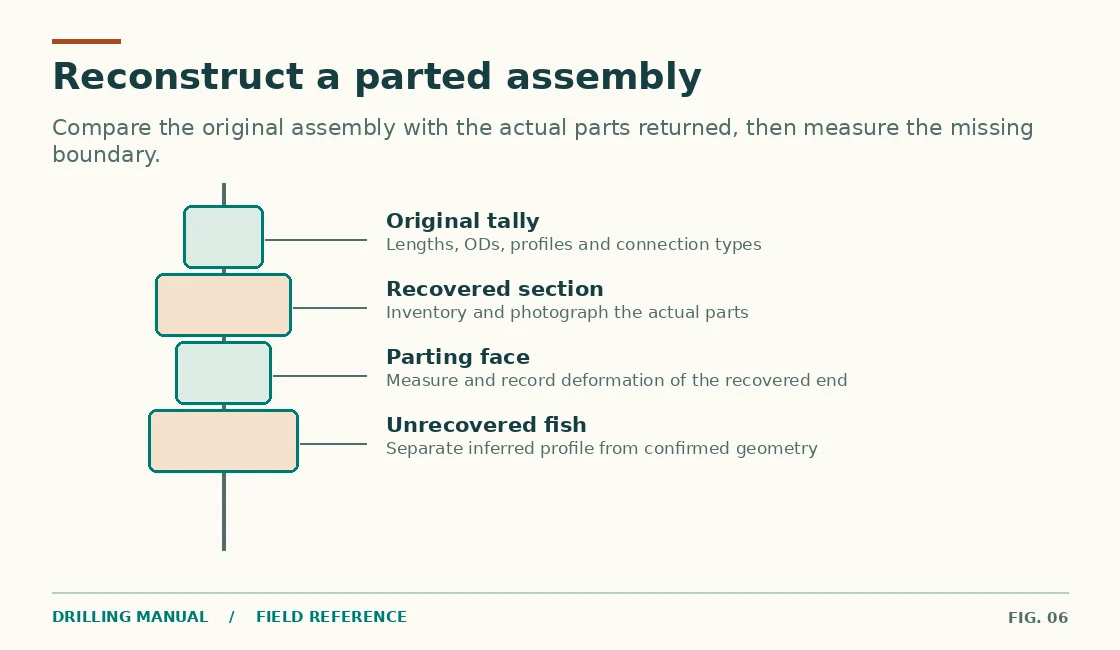
Reconstruct the last known assembly from the tally, tool sketches and recovered pieces. Lay out what returned, photograph the parted end and mark measured dimensions. Identify where the missing length starts, the expected depth range of the fish top and any uncertainty in the depth reference. A shallow obstruction can also stop a tool before it reaches the object being sought.
Record what happened immediately before the loss. A parted line may leave cable above a tool. A broken tubular can leave a flared, split or off-center top. A pulling tool may return with some components but leave others attached to a completion profile. Separate facts from inferences in the drawing. A nominal fish OD copied from the original assembly does not describe its condition after failure.
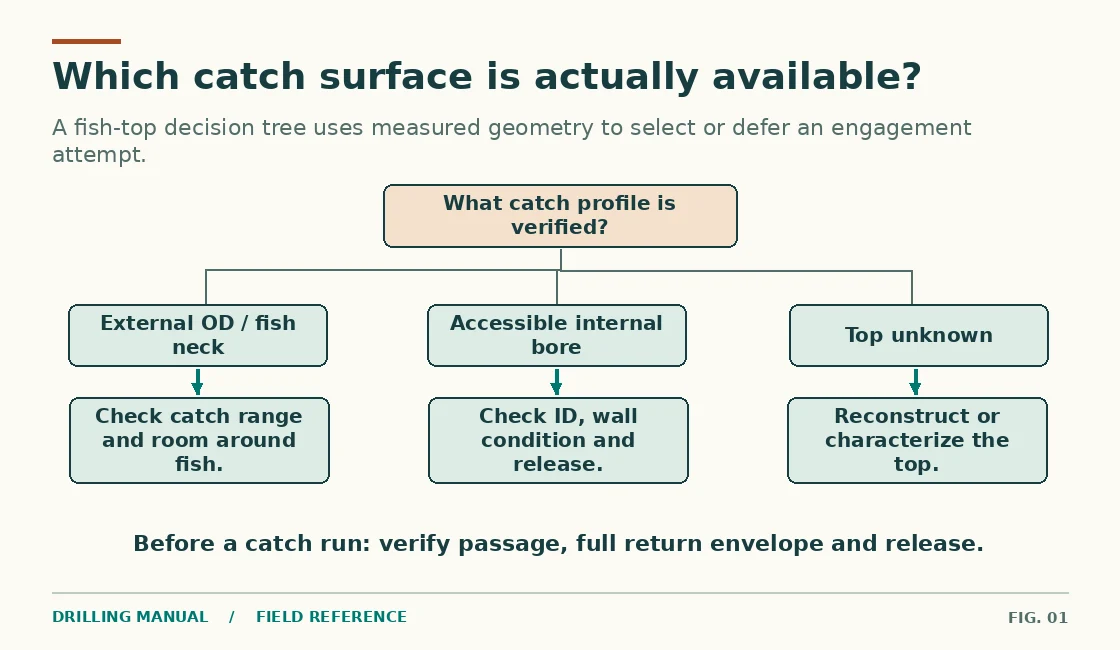
Branch on the engagement surface that actually exists
If an accessible external fish neck or tubular OD is confirmed, compare an external catch with the measured profile. Include the guide, engagement length and space around the fish. If the OD cannot be accessed but a suitable internal bore is available, consider an internal catch. Verify the ID, wall condition, catch range and release mechanics. A plugged or collapsed bore can eliminate that option.
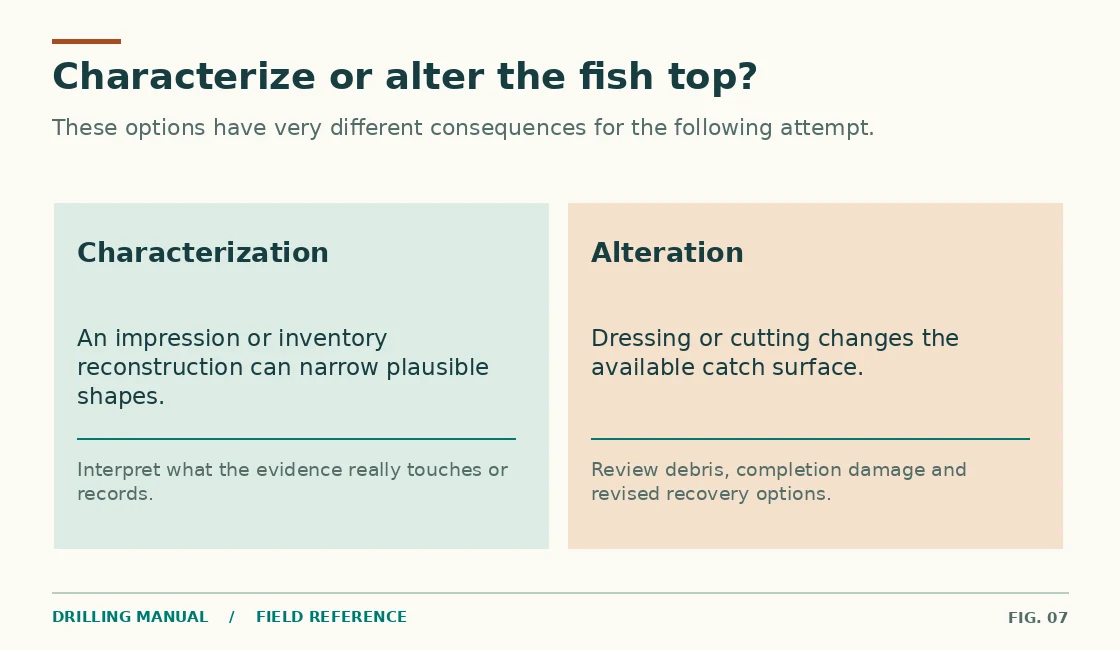
If neither surface is known, a diagnostic run or better reconstruction may be worth more than another speculative catch. An impression can constrain the shape of the accessible top without establishing its metallurgy, wall strength or release load. Altering the fish top by dressing, milling or cutting is a separate engineering decision because it changes the geometry and may create debris or damage the completion.
A lead impression block can clarify the shape of a fish top. Once the shape and access are understood, compare external-catch overshots with internal-catch spears.
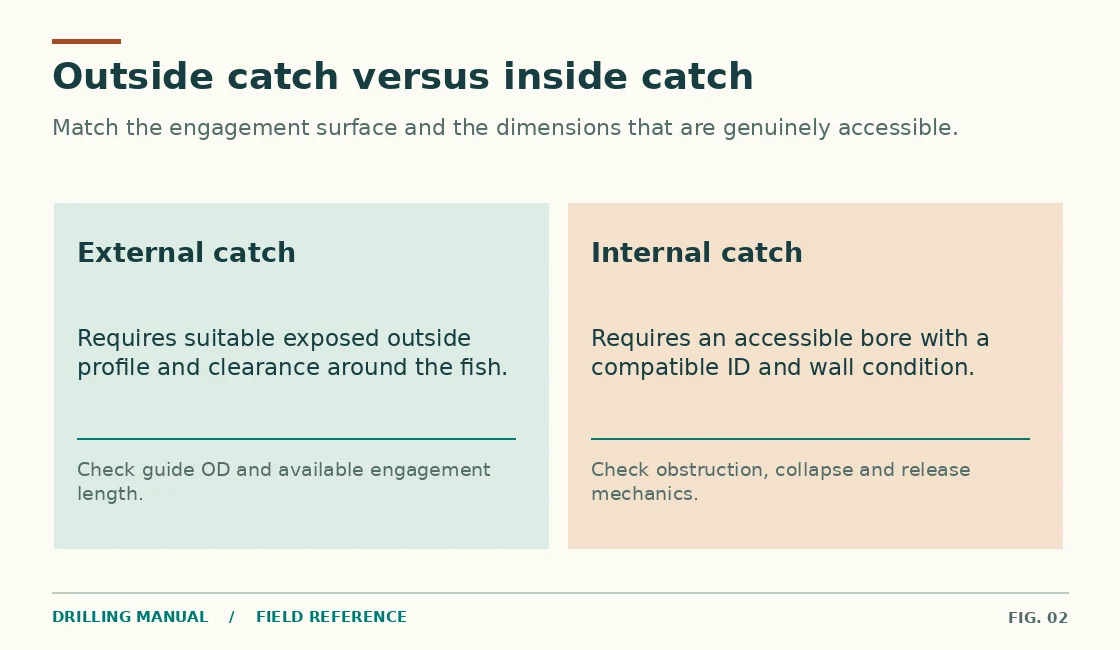
Worked clearance screen: the grapple fits but the assembly does not
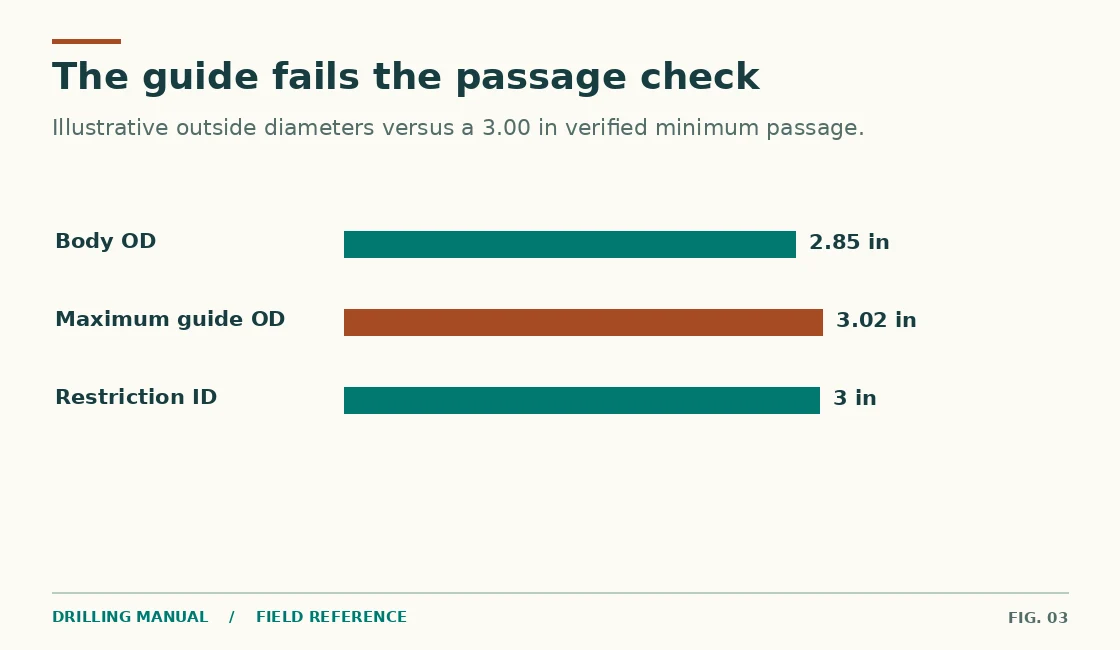
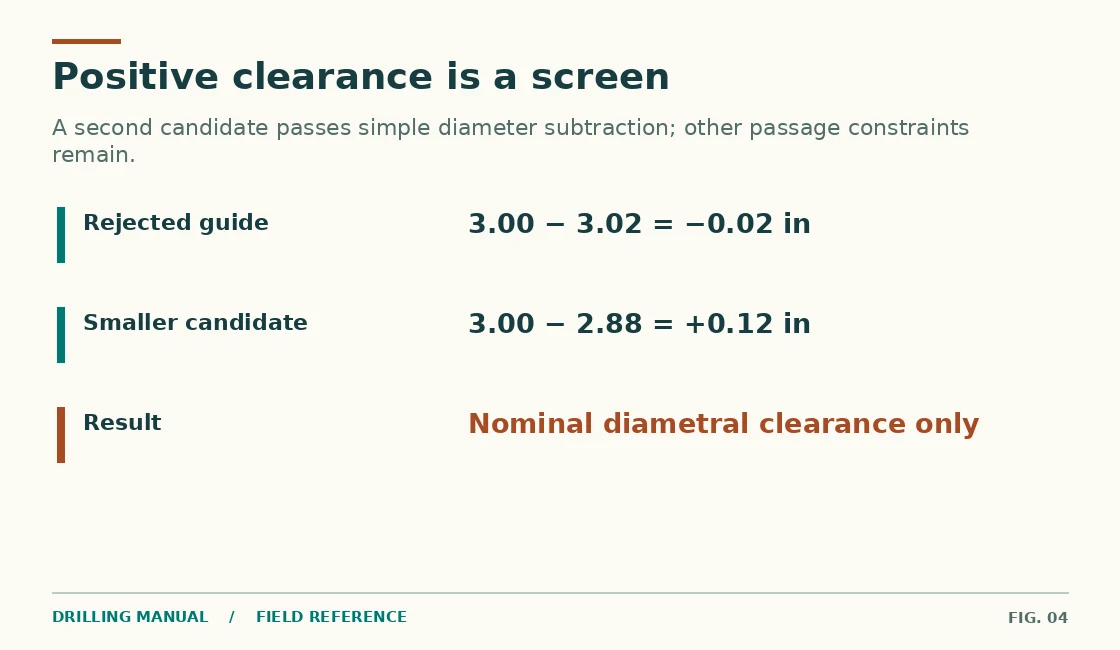
Suppose an external fishing tool covers the expected fish OD and has a 2.85 in body. Its guide OD is 3.02 in. The minimum verified restriction above the fish is 3.00 in. The guide exceeds the restriction by 0.02 in. The candidate fails the basic passage check even though the body and grapple look suitable.
A different design with a 2.88 in maximum OD would have 0.12 in nominal diametral clearance at that point. This is only a geometry screen. Recheck the true restriction, ovality, scale, full tool length, doglegs, engagement envelope and the combined diameter and length during retrieval. Do not turn a positive subtraction into a running-clearance allowance.

Give every catch branch an exit
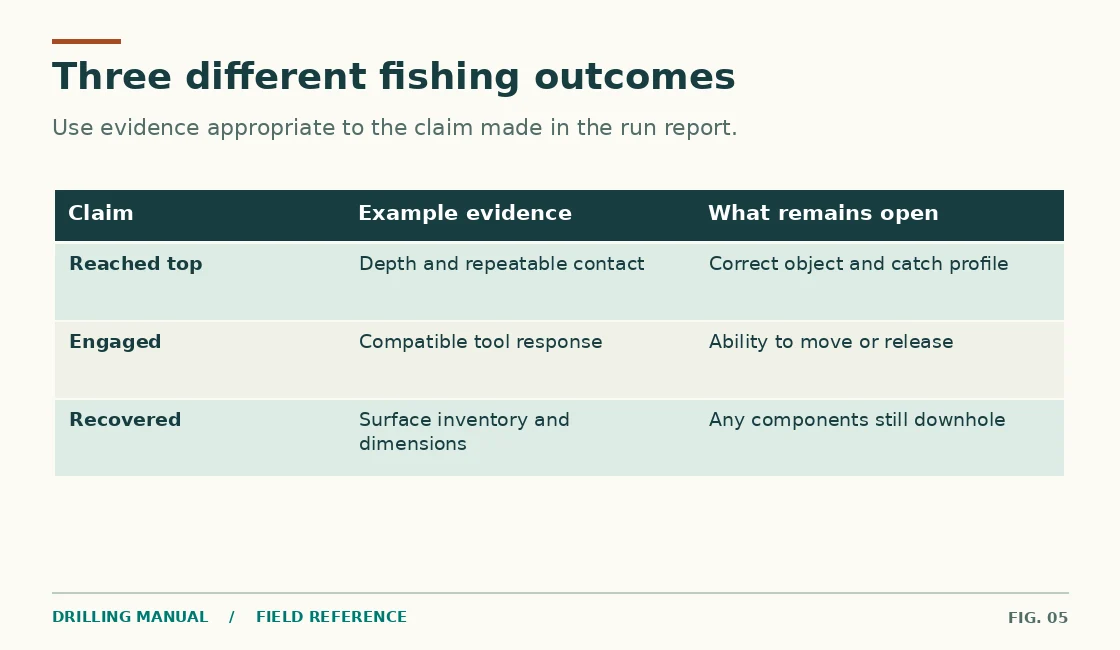
Separate three outcomes: tool reached the fish, tool engaged it, and the fish moved or was recovered. A new tension indication supports an interpretation but does not by itself prove engagement of the intended profile or recovery. For stuck tubulars, also separate the fish-top depth from the free point. The first locates the surface available for a catch. The second addresses how far down the pipe an applied load is transmitted. DeGeare, The Guide to Oilwell Fishing Operations, 2nd ed., p. 9, notes that pipe can respond to an axial pull yet remain stuck in torsion. If the proposed recovery or release depends on torque at depth, record the torsional free-point evidence as well as the stretch response. Check the approved load and release limits of the weakest component in the assembled string.
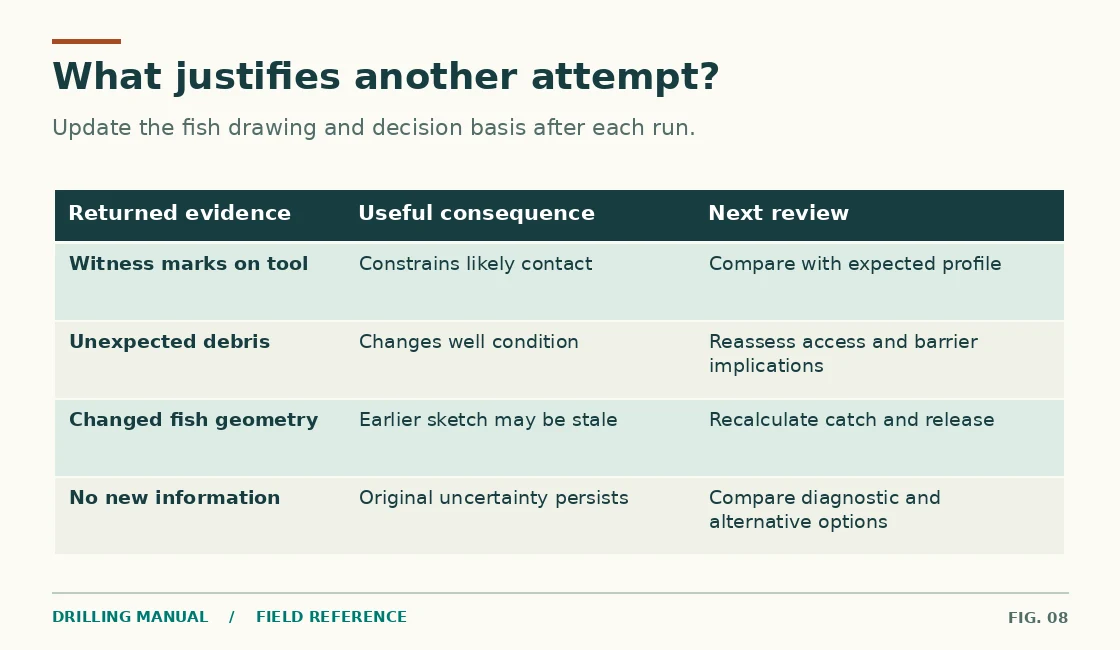
After a run, record the as-returned tool condition, any witness marks, debris, measured depth and the facts that changed. A repeat run is justified when the evidence or method changes. If the damage risk, time and achievable recovery value no longer support another attempt, record the alternatives and refer the decision to the well owner. Leaving equipment in place, isolating it or changing the workover objective changes the future well plan.
Set an economic limit on another fishing attempt
Consider a decision made now, after past costs have already been incurred. Suppose a further attempt costs $40,000 regardless of outcome. Success would avoid $160,000 of additional cost relative to the alternative; failure would return the well to the same decision state with no additional damage in this example. Break-even success probability is 40,000 ÷ 160,000 = 25%. At an assessed 20% probability the expected avoided cost is $32,000, below the attempt cost.
That simple screen changes if a failed attempt can damage the fish top, worsen access, or delay an alternative. Include those branches, their incremental costs and the remaining usable time. Treat well barriers, recovery of the fishing assembly and approved operating limits as prerequisites: a favorable cost forecast cannot make an infeasible catch acceptable.
Field comparison
| Decision branch | Evidence needed | Consequence |
|---|---|---|
| Unknown or conflicting fish top | Recovered inventory, depth reconciliation and diagnostic evidence | Characterize before selecting a catch |
| Accessible external profile | OD, engagement length and clearance around the fish | Evaluate a compatible releasable external catch |
| Accessible internal profile | Open ID, wall condition and engagement length | Evaluate internal engagement and release |
| Candidate cannot pass or release | Largest OD, trajectory and actual release mechanism | Reject the configuration or redesign the job |
| Fish changes after an attempt | New measurements and as-returned evidence | Update the drawing before another run |
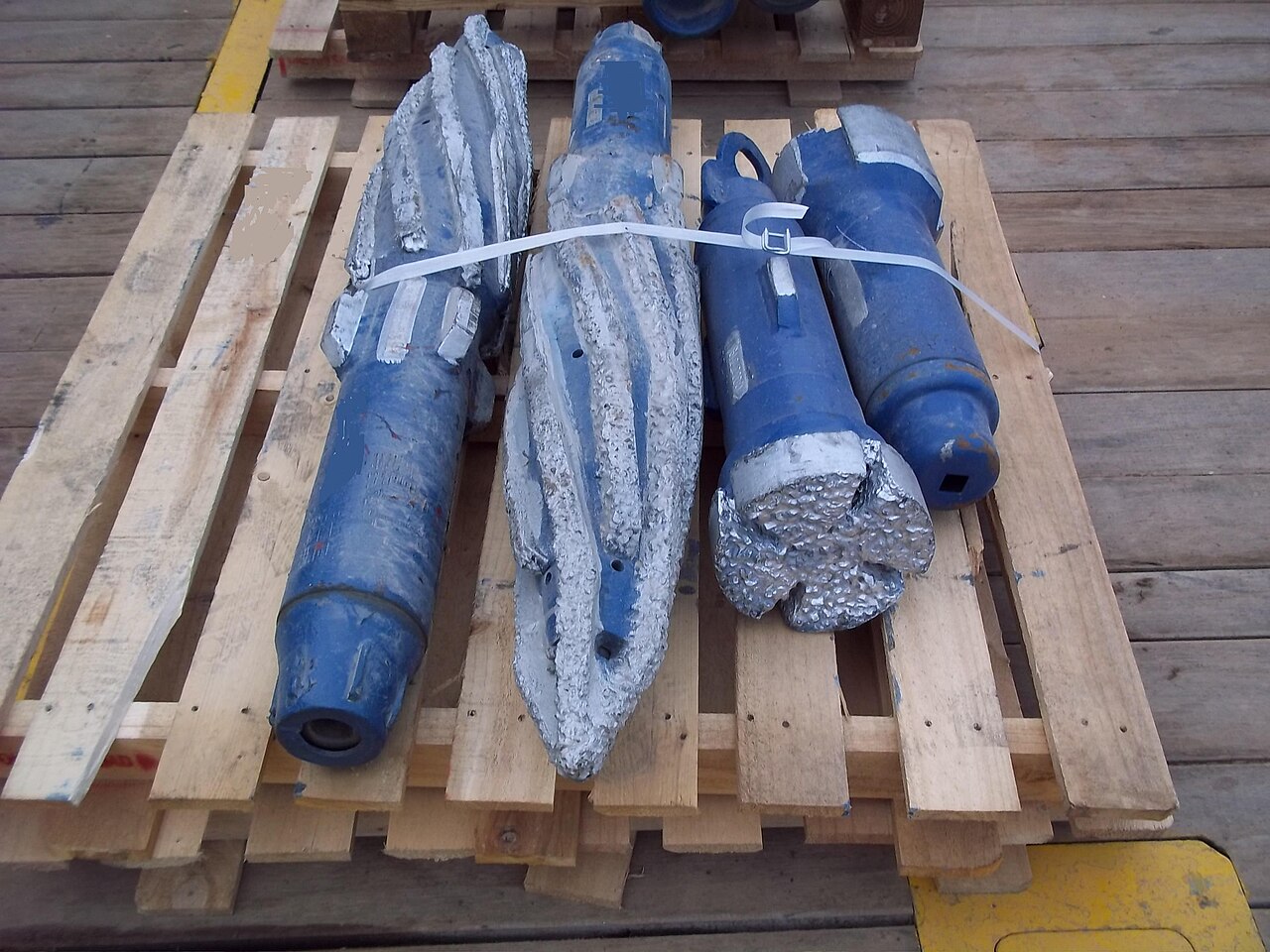

What to record in the field
| Check or record | Job-specific entry |
|---|---|
| Fish sketch, known dimensions, uncertain dimensions and depth datum | |
| Minimum verified passage and maximum OD of each fishing assembly component | |
| Available engagement length and recovery or release method | |
| Load limit owner, observation showing progress and review decision |
Additional technical figures (5)
Questions from the field
Should the first run always be an impression block?
No. Consider it when uncertainty about the fish top controls selection and the diagnostic result could change the next decision.
What is the difference between catch range and running clearance?
Catch range describes the fish a tool can grip. Running clearance concerns whether the complete assembly can pass every restriction on its way to and from the target.
Why distinguish engaged from recovered?
A tool can grip a fish that remains stuck. Surface recovery and inventory reconciliation provide stronger evidence of what was removed.

Technical references
Joe DeGeare, The Guide to Oilwell Fishing Operations, second edition. Second edition, printed pp. 5 and 8–10 (PDF pp. 11 and 13–15).
Baker Hughes, Conventional Fishing Product Catalog, section 2. External- and internal-engagement tools.