Bulk barite handling is the dry-material route between delivery, storage and the mud mixing destination. Its purpose is to make identified material available at the required place and rate while retaining a reliable account of what entered, moved and was issued. A full storage vessel alone does not establish that its contents can reach the mixer when required. [1, pp. 204–207] [2, pp. FD-57–FD-59]
This guide explains the system interfaces and provides original transfer and inventory examples. The existing barite properties and weight-up guide covers the material’s use in mud. Here the focus is the dry-bulk route that must deliver that material.
Map the bulk barite handling route
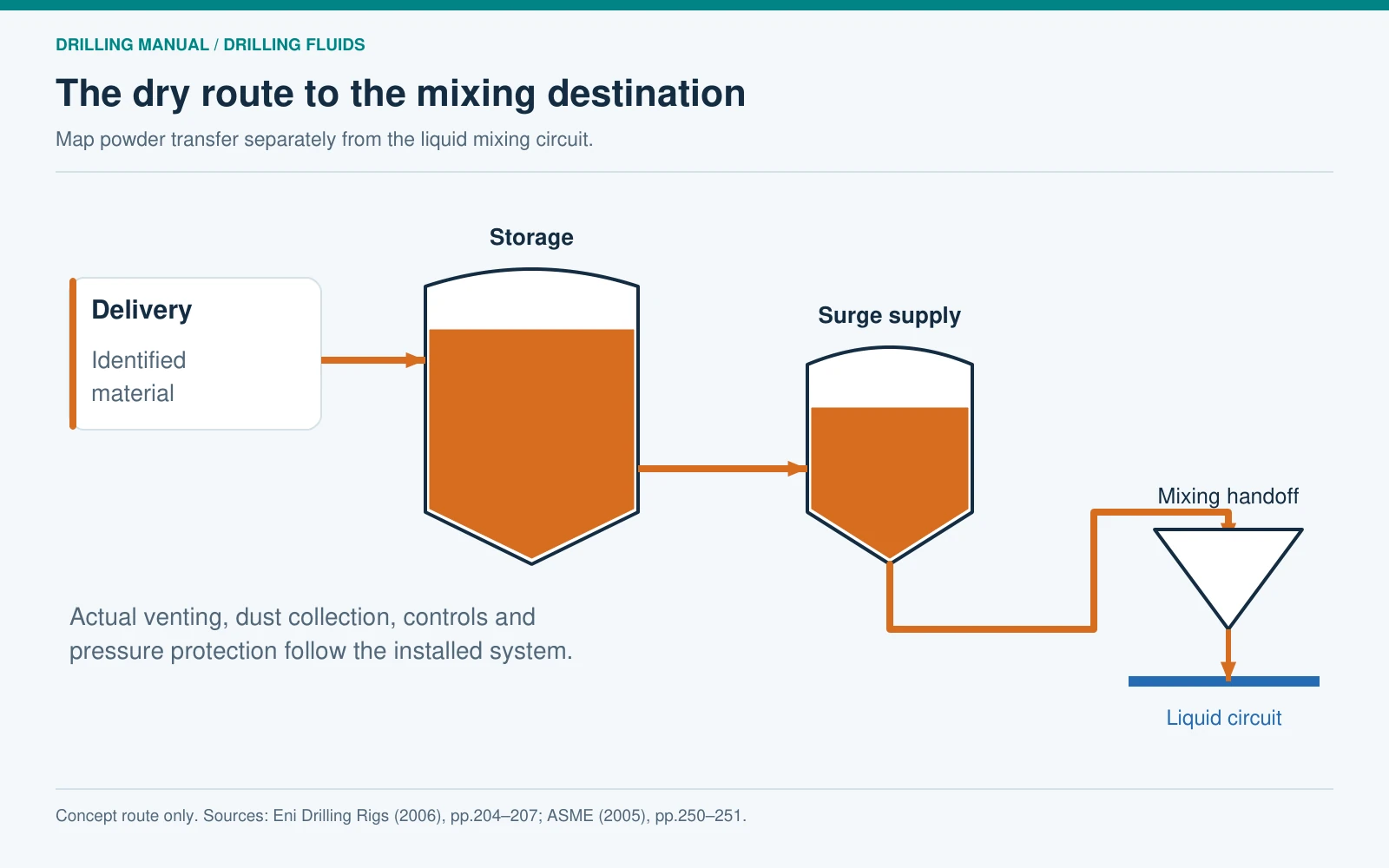
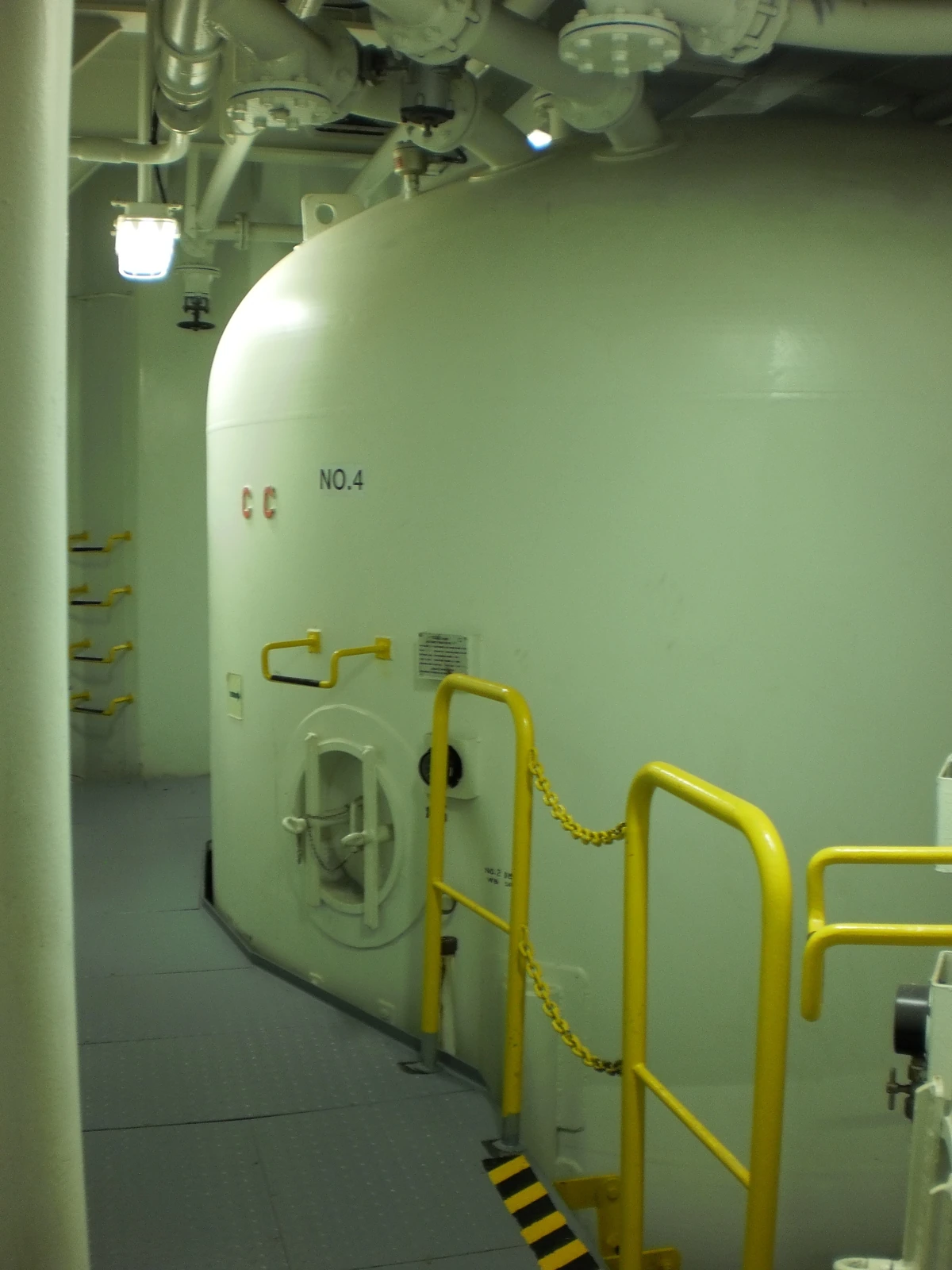
Eni’s drilling-rig manual describes a storage arrangement comprising an air compressor, one or more silos and a surge tank. The ASME handbook also describes pressure tanks connected to mixing equipment, with either pneumatic transport from a remote position or gravity delivery where the layout permits it. [1, pp. 204–207] [3, pp. 250–251]
Start the route map at the actual receipt point. A delivery may enter a storage vessel before being transferred to a smaller receiving or surge vessel near mixing. A later movement from that surge vessel to the hopper is a separate event. Include every vessel identifier and every destination that can receive the material, especially where a manifold serves more than one product.
The drawing should distinguish the powder route, the air supply and the liquid mixing circuit. It should also show the actual vent and dust-handling connections from the installed system documents. Their detailed arrangement and pressure protection belong to that installation; a simplified process drawing cannot replace them.
On a floating unit, IADC describes bulk storage within hull or column spaces and transfer to mixing facilities at a different elevation. That makes the vertical route and the ability to achieve the required delivery rate part of the review. [2, pp. FD-58–FD-59]

Keep material identity separate from vessel identity
A label such as “silo B” identifies a location; it does not establish the product or batch inside. IADC describes storage tanks designated for cement, barite and bentonite, with some crossover connections. Such flexibility makes the recorded product, route and previous contents important to the handling record. [2, pp. FD-58–FD-59]
For bulk barite handling, record the product designation, supplier or delivery reference, quantity basis and receiving tank before reconciling the transfer. If stock from different receipts is combined, preserve the receipt history rather than assigning the resulting contents an unsupported single-batch identity. Any material-quality acceptance remains a separate, documented decision.
A useful receipt record also identifies the sending location, receiving location, start and end times, the quantity reported by each party and the basis of each reading. These are original traceability fields: they help explain a discrepancy without asserting that the cause must be leakage, incorrect delivery or a defective instrument.
The same hardware may support another operation. IADC, for example, identifies barite supply lines that feed cementing equipment for spacer preparation. Record that issue against its actual destination. The cementing equipment guide covers the separate cementing context. [2, p. CE-8]
Bulk density and material density answer different questions
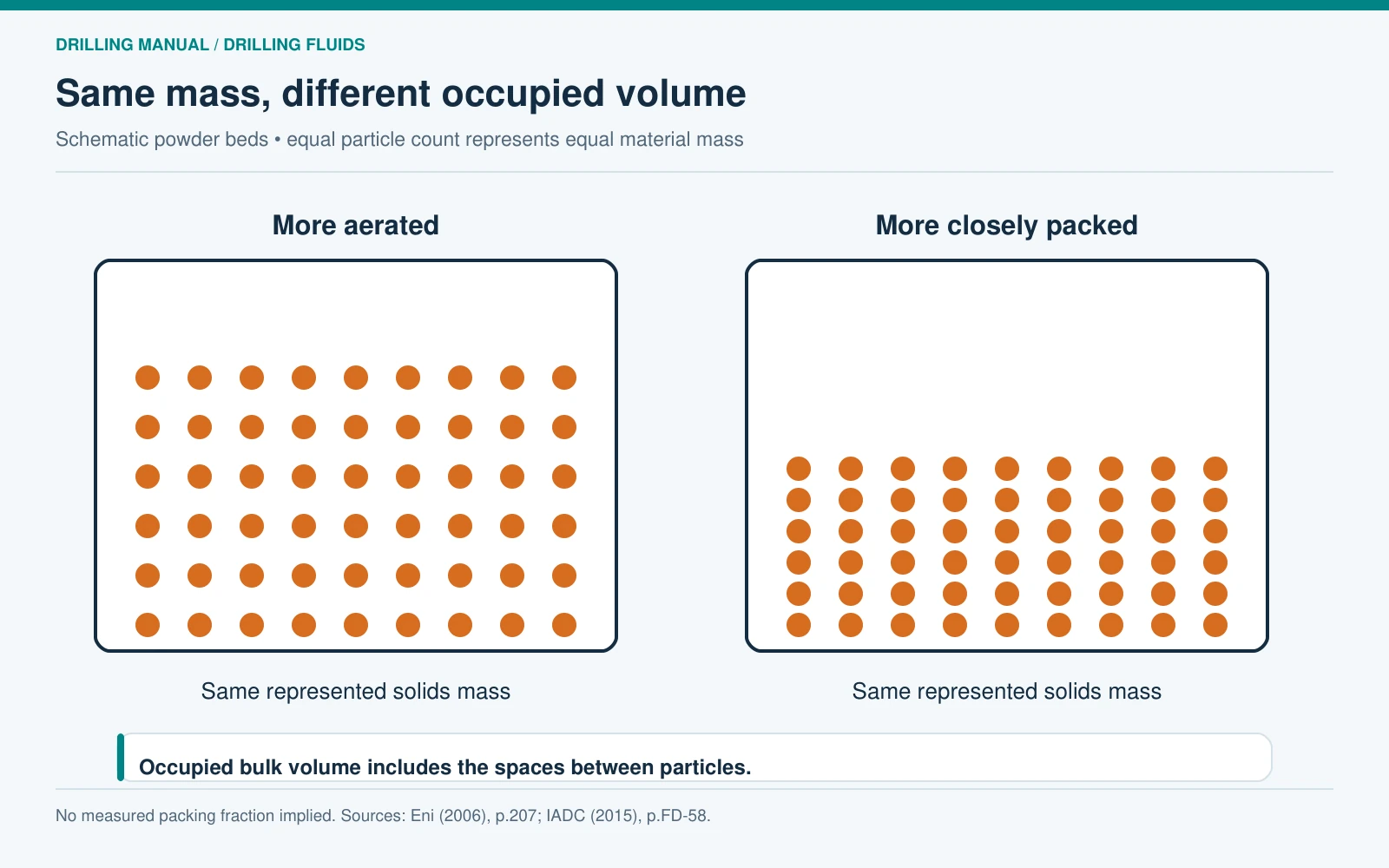
The volume occupied by dry powder includes spaces between particles. An aerated powder and a more closely packed powder can therefore occupy different volumes while containing the same material mass. Eni presents aerated and packed powder density as distinct handling information, while IADC discusses consolidation of bulk material on floating units. [1, p.207] [2, p.FD-58]
This distinction matters when a vessel level is converted into an inventory estimate. The conversion requires a stated bulk-density basis suited to the material condition. The particle specific gravity used in mud formulations is a different quantity. Substituting particle density for the occupied powder volume would ignore the spaces within the bulk bed.
Where a weighing system provides a mass indication, preserve its basis and check status. Where inventory is estimated from level, preserve the calibration and density assumption. Do not merge the two types of evidence into one apparently exact number. IADC specifically calls for checking the indication of bulk weight systems against the contents. [2, p.FD-59]
For bulk barite handling records, display units beside every quantity. “Ton” without a stated convention is ambiguous; a mass in metric tonnes and a vessel volume in cubic metres are not interchangeable entries. The drilling-fluid calculation guide explains the broader density and volume relationships.
Storage tanks and surge tanks perform different roles
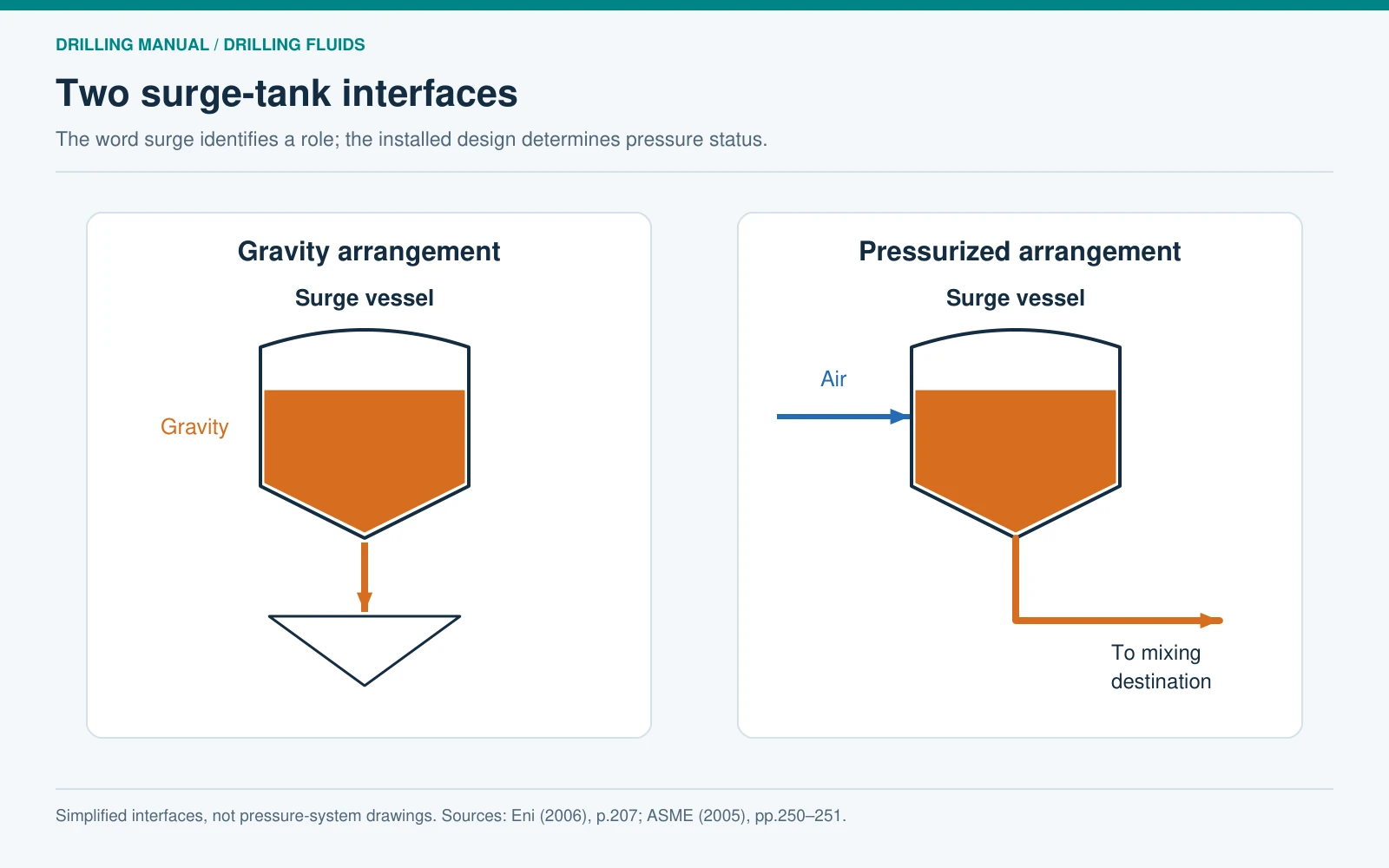
Large storage vessels hold the stock. A surge tank provides a nearer intermediate supply to the mixing destination. Eni illustrates both a nonpressurized gravity surge arrangement and a pressurized arrangement, with level indication and optional weighing features. The terms should therefore be interpreted from the installed design, rather than assuming that every surge tank has the same pressure status. [1, pp. 204–207]
The ASME handbook similarly distinguishes pneumatic transfer from gravity-fed addition. The final handoff may be close to the hopper while the storage vessel is remote. Keeping that interface clear prevents a storage-transfer limitation from being confused with a problem in the liquid mixing circuit. [3, pp. 250–251]
For bulk barite handling, document the usable supply at the surge vessel and the demand at its outlet. A large amount of barite elsewhere on the rig does not guarantee an uninterrupted supply at that point. Conversely, a fall in surge-vessel level may be normal during a transfer cycle; the level alone needs the timing and demand context.
The mud circulating system overview places mixing within the wider fluid system. Keep the dry material delivery rate distinct from the liquid circulation rate and from the resulting rate of mud-density change.
Air condition and route condition affect delivery
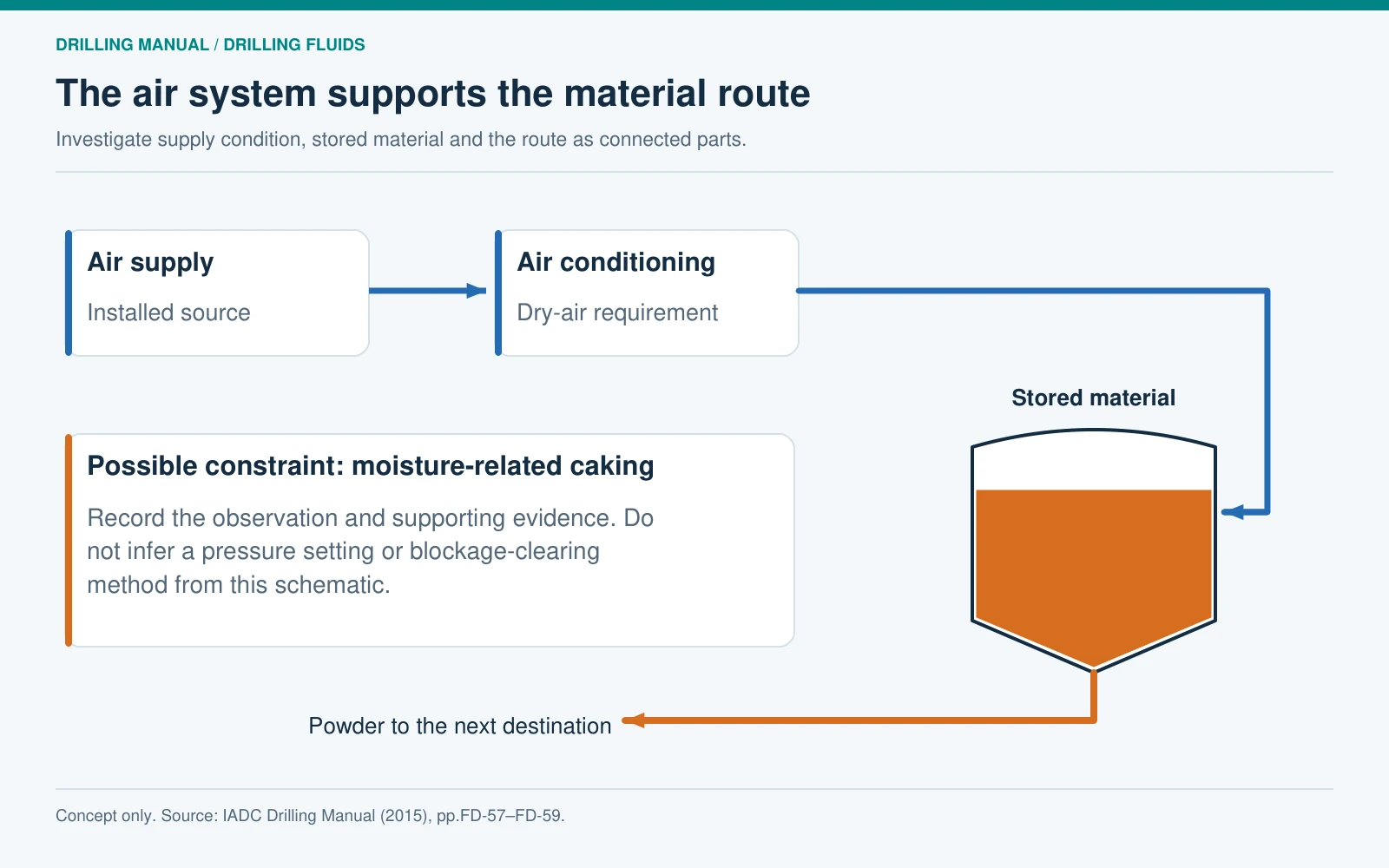
IADC identifies dry air as important in pneumatic bulk transfer and describes wet air as a contributor to caking and clumping. It also discusses buildup around branches and sweeps, and the condition of the air-distribution devices in storage vessels. These observations make the air supply and material path part of one handling assessment. [2, pp. FD-57–FD-59]
A slow transfer is therefore a symptom to locate. Useful evidence includes the product and source vessel, the route in use, the air-system condition, the material state, receiving-vessel status and the observed rate over a defined period. Compare the current event with a genuinely comparable prior transfer, not with a nominal compressor figure taken out of context.
Floating-unit movement can consolidate powder in storage; IADC discusses conditioning the bulk through the installed air system before transfer. The required sequence, pressures, isolation and acceptance checks belong to the approved equipment procedure. Raising air pressure is not a general remedy for every restriction, and the historical values in a handbook are not current settings for an unidentified system.
Record a suspected cause separately from a confirmed finding. For example, “delivery slowed after switching route” is an observation. “The new route is blocked” requires supporting evidence. That distinction keeps the bulk barite handling log useful when maintenance personnel investigate the installation.

Use a clear inventory boundary
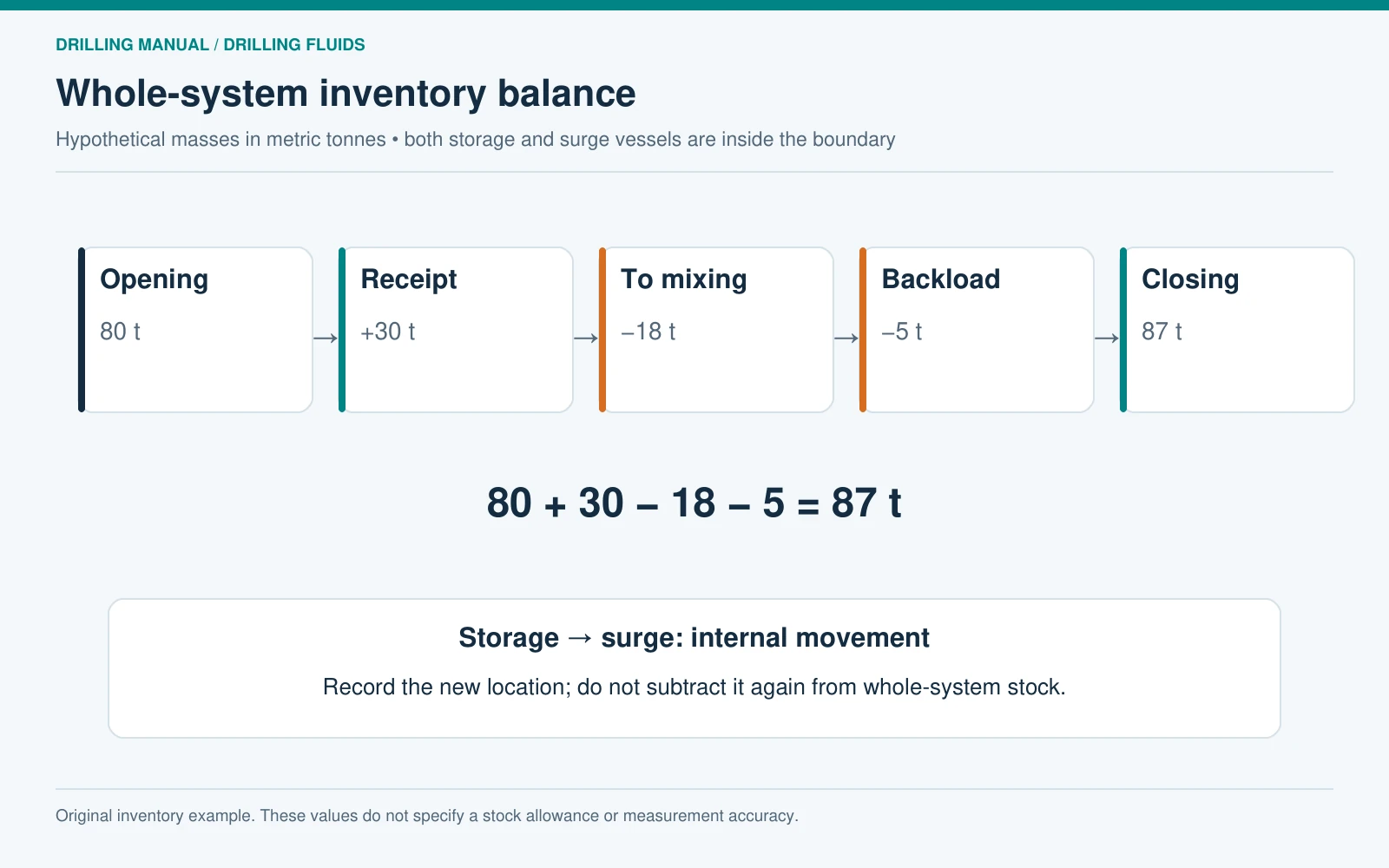
Define whether the balance covers one silo, a group of barite vessels or the entire rig stock. An internal movement is an issue from one vessel and a receipt into another. It is not consumption from the whole-system inventory. Material delivered to the hopper or backloaded across the chosen boundary is different.
The following original example uses metric tonnes and assumes the recorded masses are already on a consistent basis. It demonstrates bookkeeping, not an accuracy claim for weighing equipment or a recommended stock allowance.
| Whole-system event | Mass, t | Effect on stock |
|---|---|---|
| Opening stock | 80 | Starting balance |
| External receipt | 30 | Add |
| Issued to mixing | 18 | Subtract |
| Backloaded outside boundary | 5 | Subtract |
| Calculated closing stock | 87 | 80 +30 −18 −5 |
A transfer of 12 t from storage to the surge vessel, both inside this boundary, leaves the 87 t whole-system total unchanged until material is issued outside it. Keep that transfer in the vessel records so location remains visible. This prevents an internal movement being deducted twice.
The value of bulk barite handling records is the ability to distinguish location, availability and consumption. A closing total without its boundary and event history can obscure all three.
Reconcile the vessels before interpreting a discrepancy
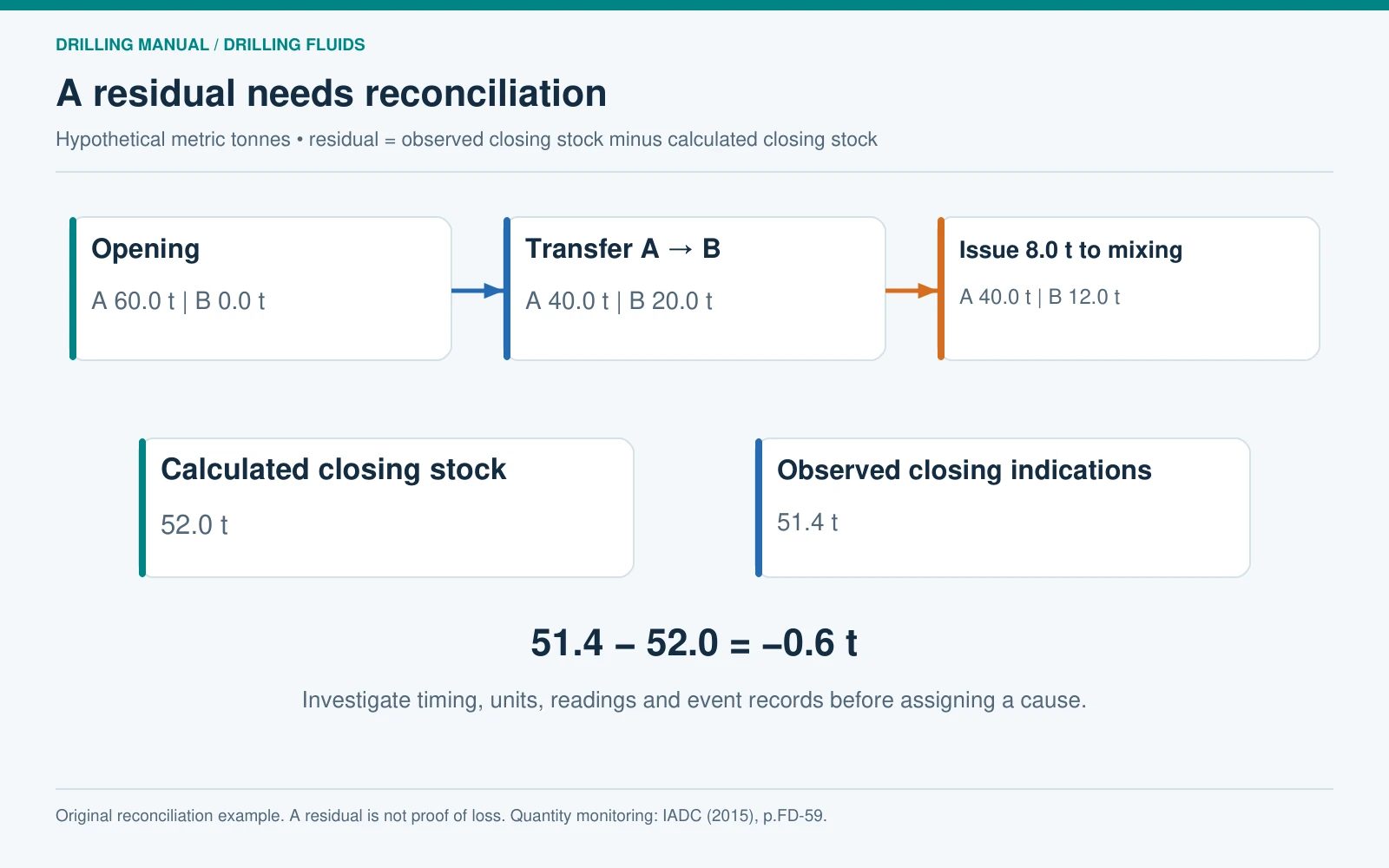
Consider a second hypothetical example. Silo A initially contains 60.0 t and silo B is empty. Moving 20.0 t from A to B leaves 40.0 t in A and 20.0 t in B; total stock remains 60.0 t. If 8.0 t is then issued from B to mixing, the calculated total becomes 52.0 t.
Suppose the observed closing indications sum to 51.4 t. Define the residual as observed minus calculated: 51.4 −52.0 = −0.6 t. That residual is a reconciliation item. It does not, by itself, prove a physical loss or identify its cause.
Review time alignment, units, recorded issues, tank assignments, reading basis and the condition of the measurement. Material still in an intermediate location or a mismatch between the transfer record and the reading time can also affect a particular accounting boundary. Label unresolved items rather than forcing the balance to close by inventing a consumption entry.
This is an original reporting method built around the manuals’ emphasis on quantity indication and transfer monitoring. It preserves the distinction between a measured or estimated stock and an arithmetic expectation. [2, p.FD-59]
Match transfer capacity to mixing demand
IADC emphasizes checking whether the air-transfer system can deliver bulk at the needed rate, particularly where the route involves substantial elevation. For bulk barite handling, the relevant rate is the sustained delivery to the required destination under the assessed conditions. Total storage capacity answers a different question. [2, p.FD-59]
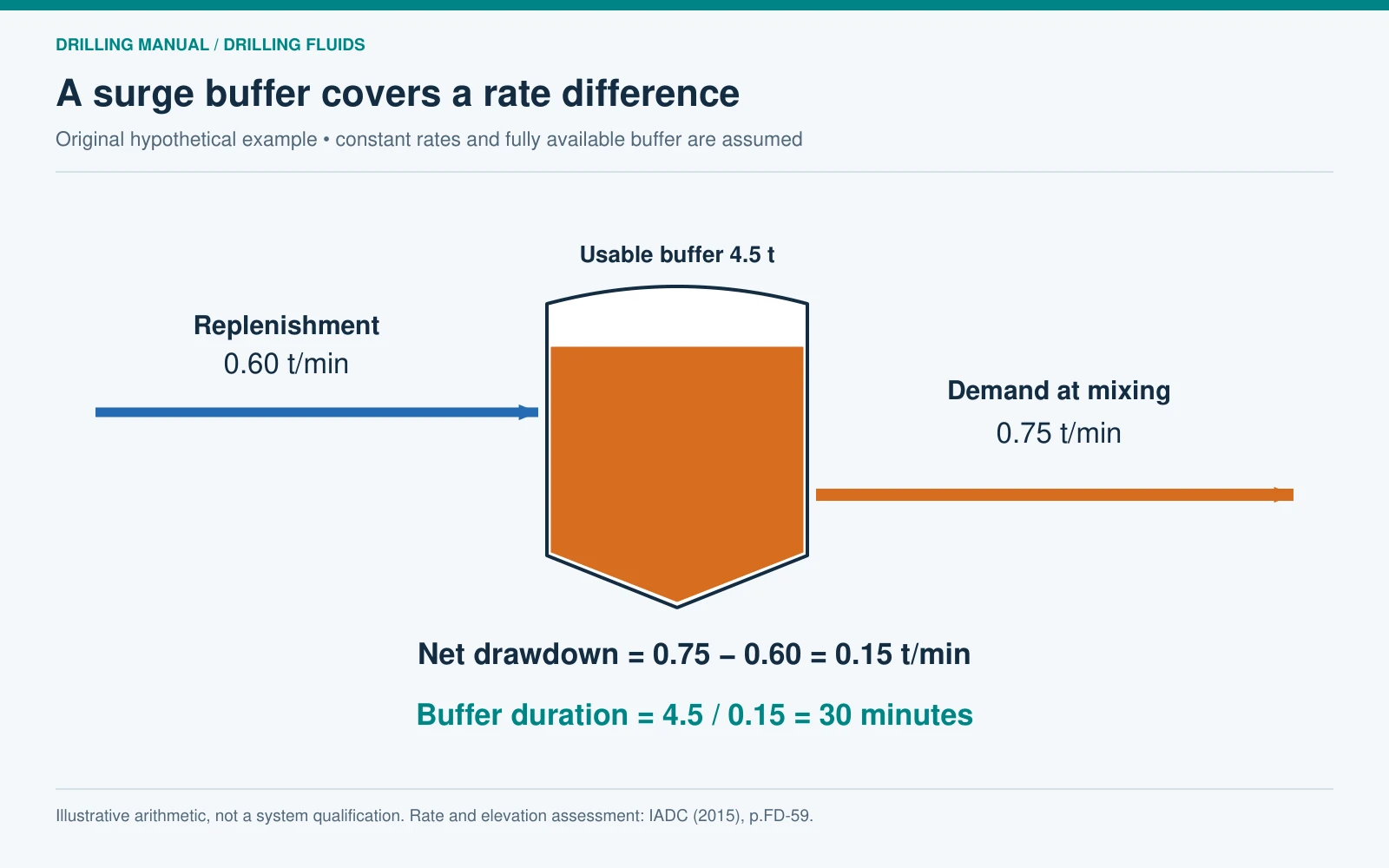
An original buffer example illustrates the difference. Suppose the mixer requires 0.75 t/min while transfer replenishes its surge supply at 0.60 t/min. The net drawdown is 0.15 t/min. A hypothetical usable buffer of 4.5 t would cover 4.5/0.15 = 30 minutes if both rates stayed constant and all of that buffer were available.
This simple balance does not qualify a system. Real transfer interruptions, changing material condition, usable vessel volume and variable demand must be assessed separately. The example shows why a short successful delivery is insufficient evidence for a longer demand period. Record duration alongside rate, and identify which simultaneous operations were included.
A practical bulk barite handling handover record
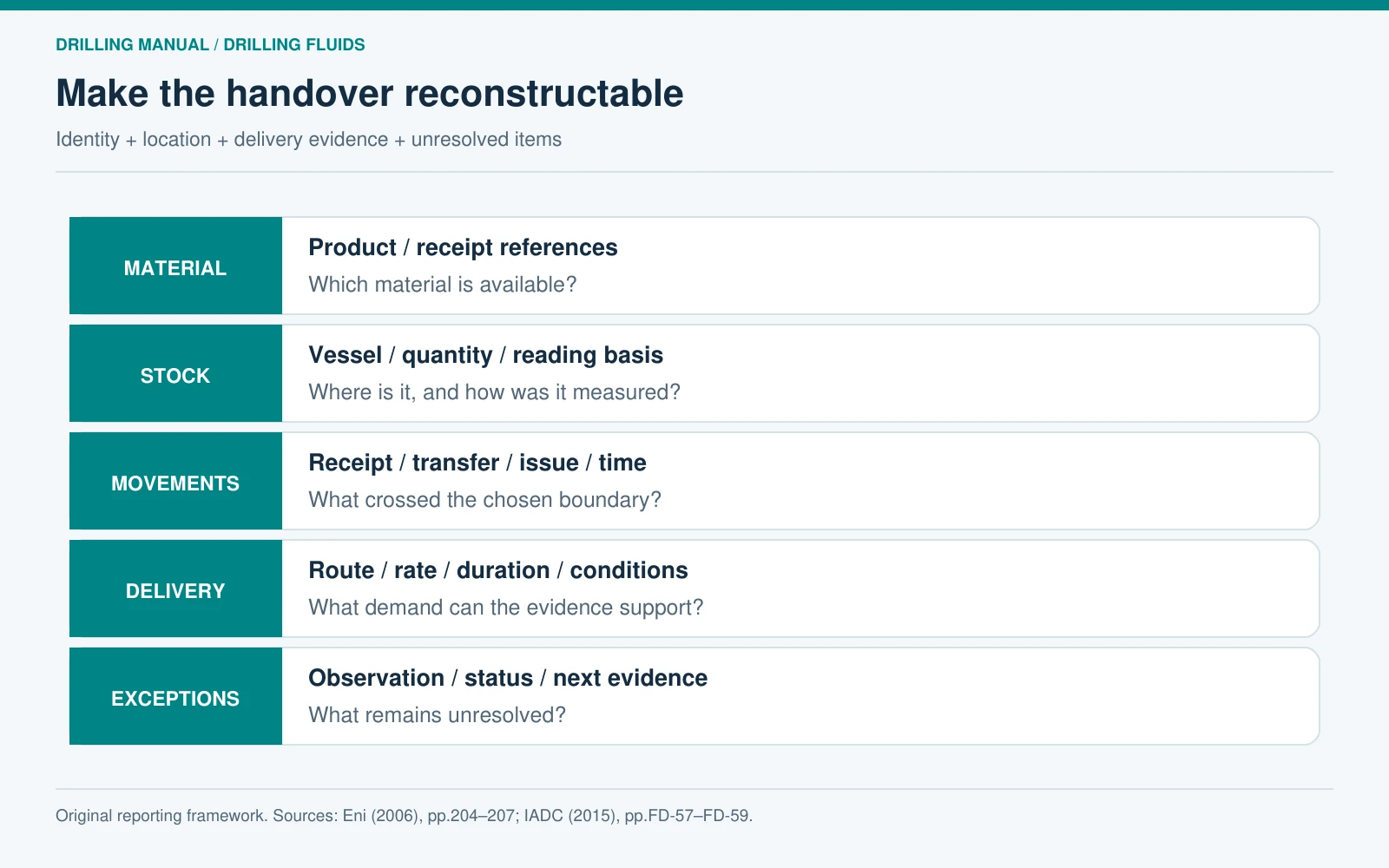
The record should let the next person reconstruct both the material account and the delivery constraint. Include product and receipt references; stock by vessel and reading basis; transfers and issues with times; available route; surge-vessel status; the last observed delivery rate and its duration; and any unresolved discrepancy.
Add a clear status for each exception: observed, under review, corrected or rechecked. Identify what evidence supports the status. For example, restoring a route after maintenance and confirming a subsequent delivery are separate entries. Neither should silently change a previous inventory number.
The wider mud-system acceptance guide addresses system inspection. This handover record stays focused on dry material identity, location, transfer capability and the mixing interface. Those fields turn “barite available” into a statement that can be checked against the actual planned demand.


Frequently asked questions
What does bulk barite handling include?
It includes receipt, dry storage, transfer and the handoff to the mixing destination, together with material and quantity records. The material’s effect on mud density belongs to a separate formulation assessment. [1, pp. 204–207]
Is a surge tank always pressurized?
No. Eni illustrates both gravity-type and pressurized surge arrangements. Identify the actual vessel design and connected equipment before assigning its operating role. [1, p.207]
Why is dry air important for pneumatic bulk transfer?
IADC describes wet air as a contributor to caking and clumping in bulk handling. Air conditioning and route condition therefore matter to reliable delivery, alongside the material and the installed transfer system. [2, pp. FD-57–FD-58]
Can barite specific gravity convert silo level directly into stock mass?
Particle specific gravity alone does not account for the spaces between particles in a powder bed. A level-to-mass estimate needs an appropriate bulk-density and calibration basis, with the material condition stated. [1, p.207]
Does transfer from storage to a surge tank count as consumption?
Within a whole-system boundary containing both vessels, it is an internal movement. It changes the location of stock. An issue beyond that boundary, such as material actually delivered to mixing, changes the whole-system total.
Does an inventory residual prove that barite was lost?
No. It shows disagreement between the observed or estimated stock and the calculated balance. Timing, units, measurement basis and event records must be reconciled before assigning a physical cause. The numerical examples here are original teaching records.
References
- Eni Corporate University. Drilling Rigs. Libya ENABV Training Project. Code IPE044-E-P-A01, Rev.001, 10 November 2006. Section 21, Mud Mixing System. Printed pages: 204–207. PDF pages in the edition consulted: 204–207.
- International Association of Drilling Contractors. IADC Drilling Manual. 12th edition, 2015. Cementing; Floating Drilling Equipment and Operations. Printed pages: CE-8;FD-57–FD-59. PDF pages in the edition consulted: 154;653–655.
- ASME Shale Shaker Committee. Drilling Fluids Processing Handbook. Gulf Professional Publishing / Elsevier, 2005. Section 10.8, Bulk Addition Systems. ISBN 0-7506-7775-9. Printed pages: 250–251. PDF pages in the edition consulted: 277–278.