Lignite vs lignosulfonate is a comparison between two families of organic drilling-fluid additives with overlapping functions. Both can contribute to rheology and filtration control in water-based mud, but they have different origins, product forms and responses to the surrounding chemistry. The appropriate choice depends on the required function and the performance of the actual grade in the complete fluid. [1, pp. 3-38, 3-66, 15-28]
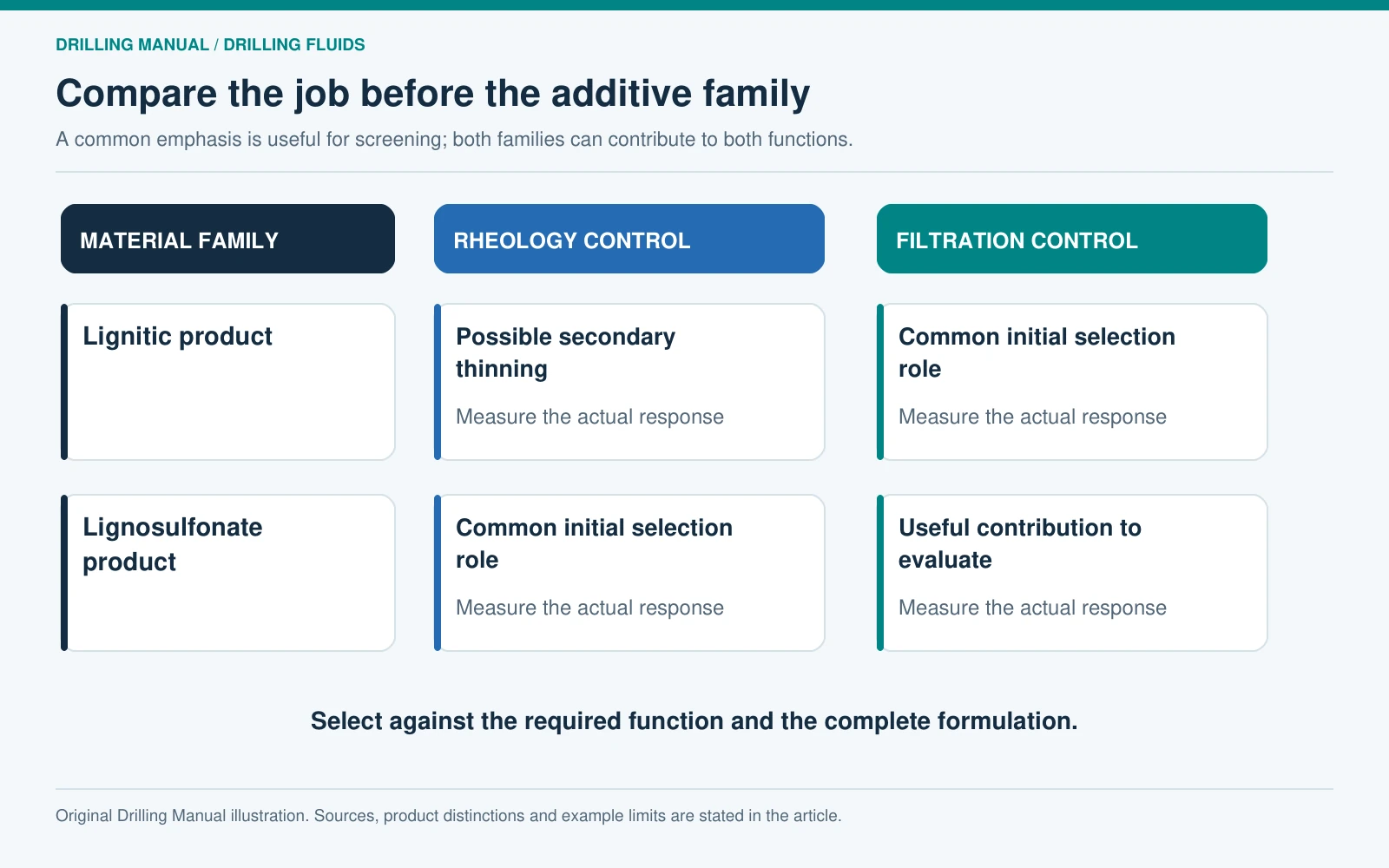
Lignosulfonate is commonly considered for deflocculation; lignitic materials are often selected for filtration control with a secondary thinning contribution. That is a useful starting distinction, rather than a rule that assigns each material only one function. The comparison below explains what to check before substituting one for the other or using them together. The broader polymer drilling-fluid guide covers system-level polymer selection.
Lignite vs lignosulfonate: start with the material identity
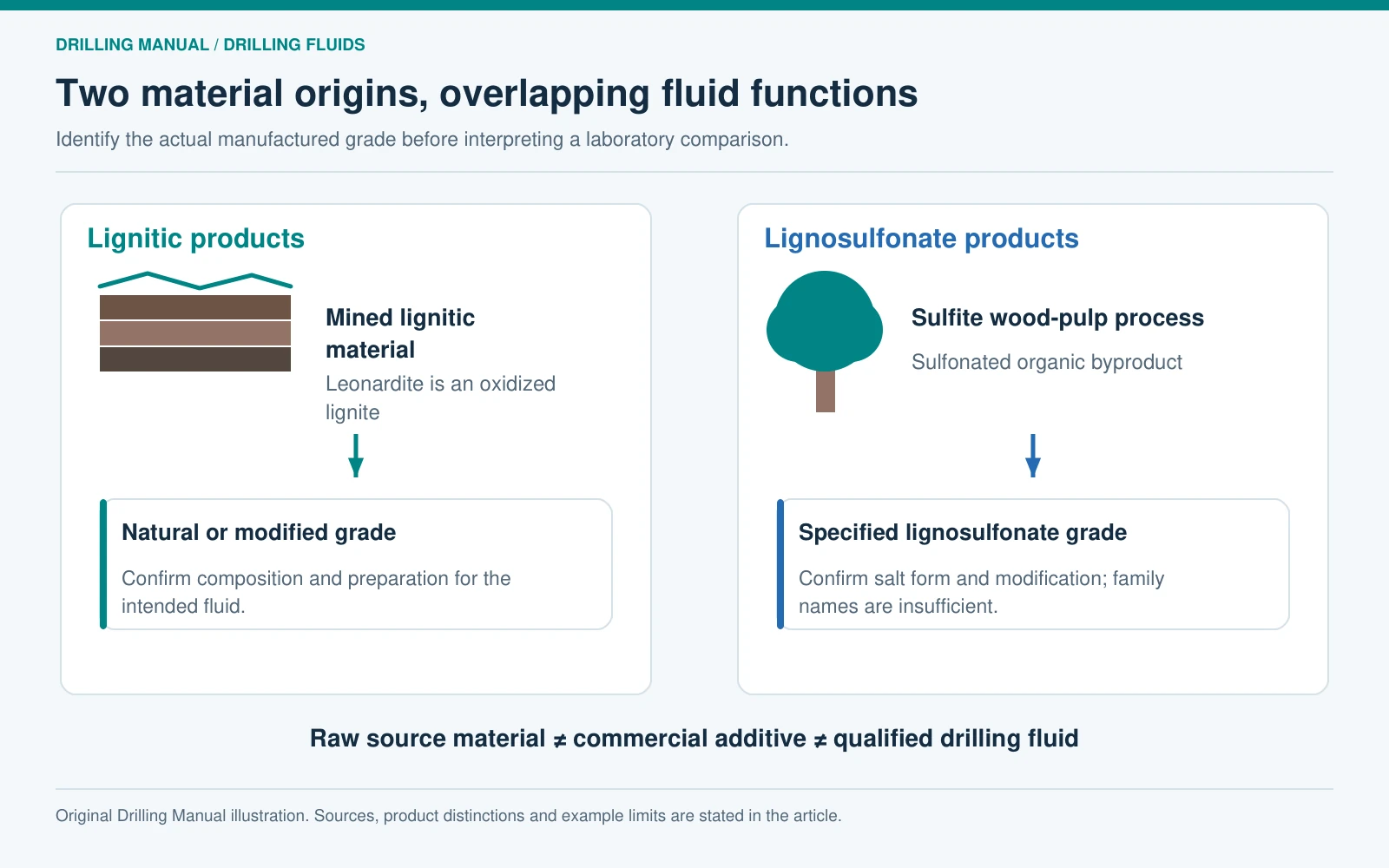
Lignitic drilling-fluid products originate from mined carbonaceous material. Leonardite is an oxidized lignite, and its humic constituents are important to its behavior. Lignosulfonates originate from the sulfite process used in wood-pulp manufacture; the products contain sulfonated organic structures. Similar names and brown powder appearance do not make them interchangeable materials. [1, p. 15-28] [2, pp. 171, 174]
Ask for the exact product identity and modification, not merely “lignite” or “ligno.” Natural lignite, causticized lignite, other modified lignitic products and organophilic lignite serve different formulation needs. Lignosulfonates likewise include different salt and modified forms. The source manuals describe this variation, so a comparison should preserve the actual grade and batch used in each test.
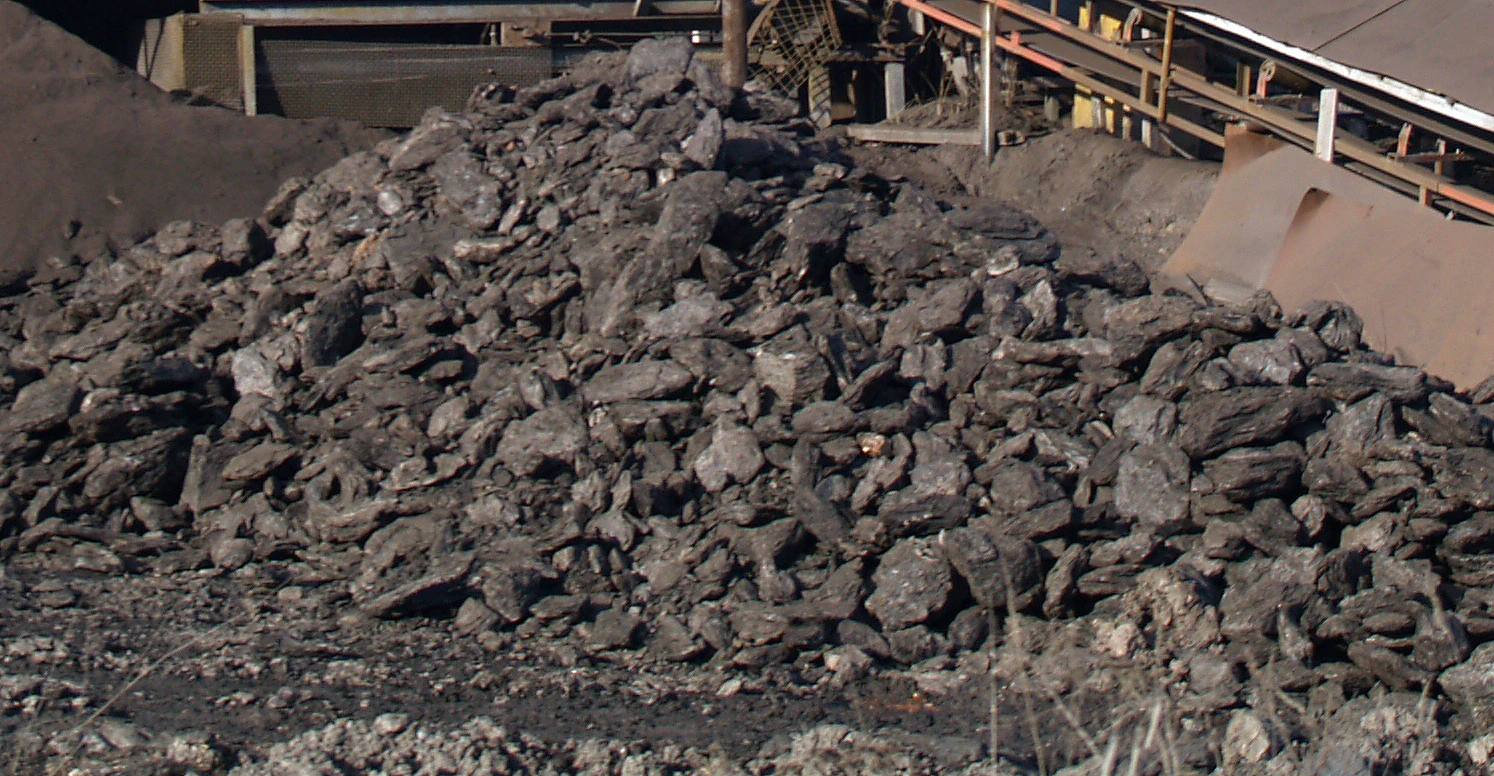
The photograph of raw lignite illustrates its geological origin. It cannot establish the composition, preparation or performance of a commercial mud additive. Keep the raw material, the manufactured product and the qualified fluid as three separate levels of identification.

Compare the principal jobs before comparing the bags
The Baker Hughes manual describes lignitic materials primarily as filtration-control agents and, in some freshwater low-solids applications, as thinners. It also notes that their thinning action is generally weaker than that of lignosulfonates. Its lignosulfonate-system discussion describes deflocculation and supplementary filtration control, including the possible use of lignitic materials alongside the thinner. [1, pp. 3-38, 3-66]
| Selection question | Lignitic product | Lignosulfonate product |
|---|---|---|
| Material origin | Mined lignitic material; grade and modification matter | Sulfite wood-pulp byproduct; salt and modification matter |
| Common initial role | Filtration control and possible secondary thinning | Deflocculation and rheology control, with filtration contribution |
| Alkalinity assessment | Check whether the actual grade becomes functional in the fluid | Account for product acidity and the receiving fluid chemistry |
| Salinity and hardness | Unmodified material can lose effectiveness | Tolerance varies with the product and complete system |
| Temperature assessment | Verify the actual formulation after defined exposure | Verify rheology and filtration after the same exposure |
| Substitution basis | Required performance at an identified concentration | Required performance at an identified concentration |
This lignite vs lignosulfonate table is a screening framework. Neither a shared function nor equal bag mass establishes equal performance. Compare the response needed by the well program and the consequences for the other fluid functions.
How deflocculation changes a clay suspension
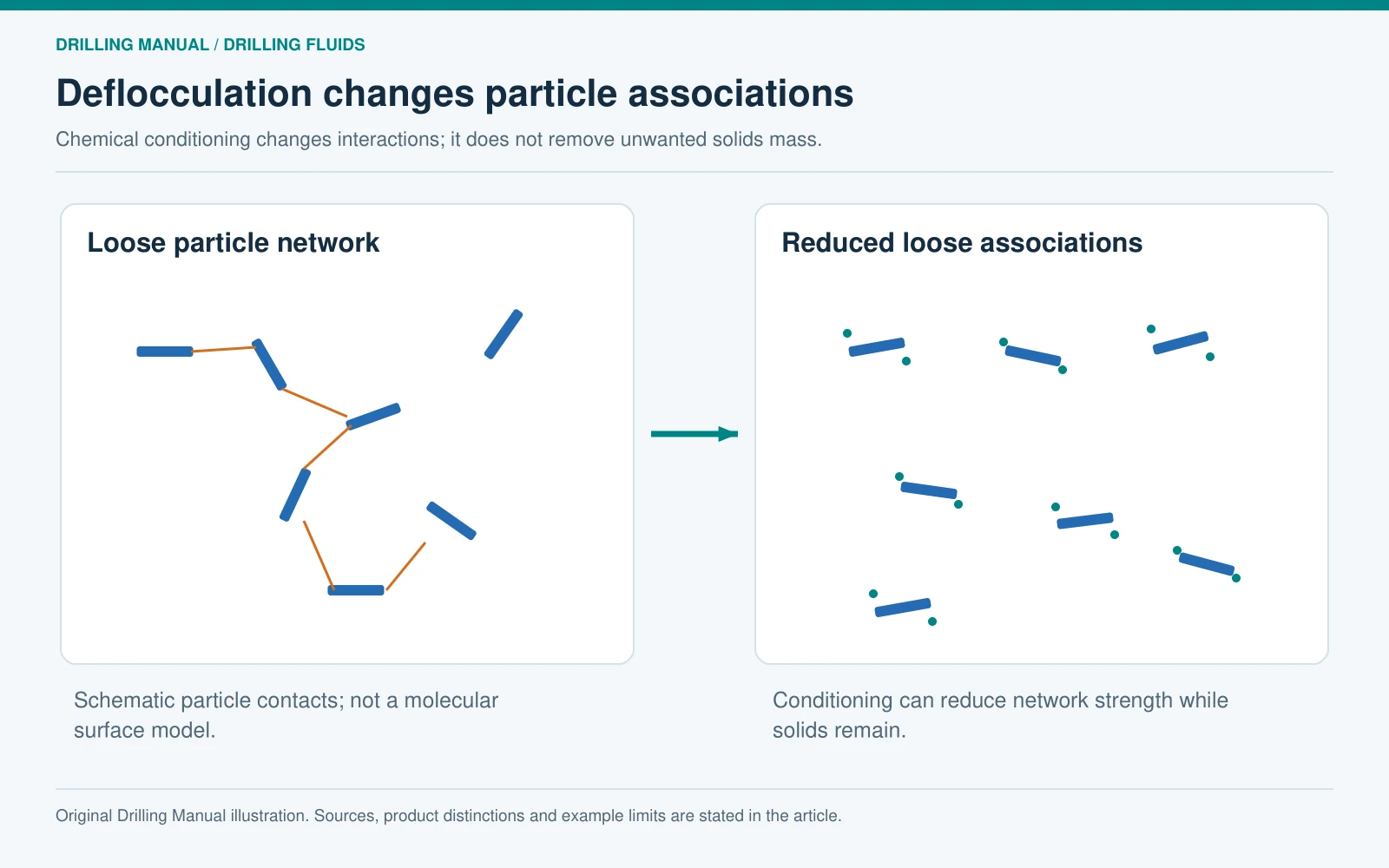
Loose associations between clay particles contribute to yield point and gel structure. An effective deflocculant reduces the degree or strength of these associations. The resulting change can reduce the measured resistance to flow and improve how particles assemble into a filter cake. AVA relates the deflocculating action of lignosulfonate to its interaction with clay surfaces. [2, pp. 153–154, 171, 226]
The technical distinction between deflocculation and dispersion matters. In drilling terminology a chemically thinned mud is often called “dispersed,” but breaking loose associations is different from dividing larger clay aggregates into more particles. Caenn and colleagues distinguish those processes because they can affect suspension behavior differently. [3, pp. 120–122]
A thinner changes interactions; it does not remove the mass of unwanted drilled solids. If solids continue to accumulate, a satisfactory rheology result after treatment can conceal an unresolved solids burden. The existing solids-control equipment guide addresses the removal system. Keep that engineering task connected to, but separate from, chemical conditioning.
Why filtration control needs its own comparison
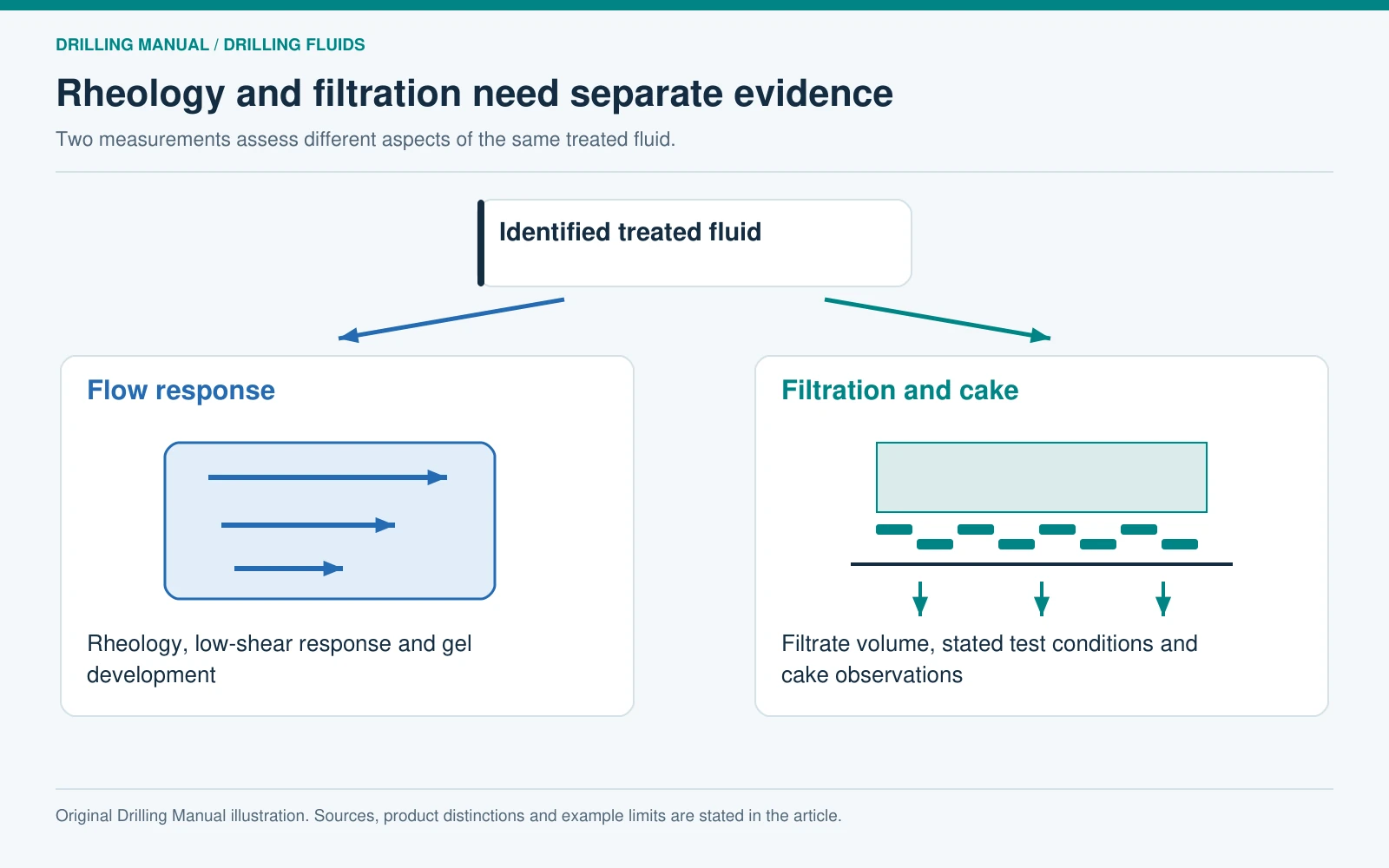
Filtration performance depends on the structure and permeability of the deposited cake as well as the properties of the liquid passing through it. Deflocculating a suitable clay suspension can help particles pack more effectively. A lignitic additive may contribute filtration control without producing the same rheological change as a lignosulfonate at the compared concentration. [1, pp. 3-38, 3-61, 3-66] [2, pp. 153–154, 174]
Measure the actual filtration response and retain the cake observations. Do not infer a lower filtrate volume from a thinner appearance, a lower yield point, or the material family printed on the sack. Conversely, a useful filtration improvement does not establish adequate low-shear suspension or acceptable gel development.
Use the same method, medium, temperature, pressure difference and exposure history when comparing candidates. The HPHT filtration guide describes the separate test topic. A lignite vs lignosulfonate evaluation should state which filtration question its measurements actually answer.
Solubility, pH and alkalinity change the comparison
A candidate must function in the chemical environment of the receiving fluid. Baker Hughes describes the need for suitable alkalinity when using lignitic materials, while AVA notes that lignite can remain insufficiently soluble in certain saline and low-alkalinity conditions. Adding more of an inadequately functioning material can increase the solids burden without delivering the intended result. [1, p. 3-38] [2, p. 456]
Lignosulfonate products can also change the receiving fluid’s acid–base balance. AVA discusses the acidic character of many such products and the need to monitor the resulting fluid chemistry. This does not justify applying one fixed alkali-to-additive ratio to every product or system. Product modification, existing alkalinity and the other additives all matter. [2, pp. 171, 226–227]
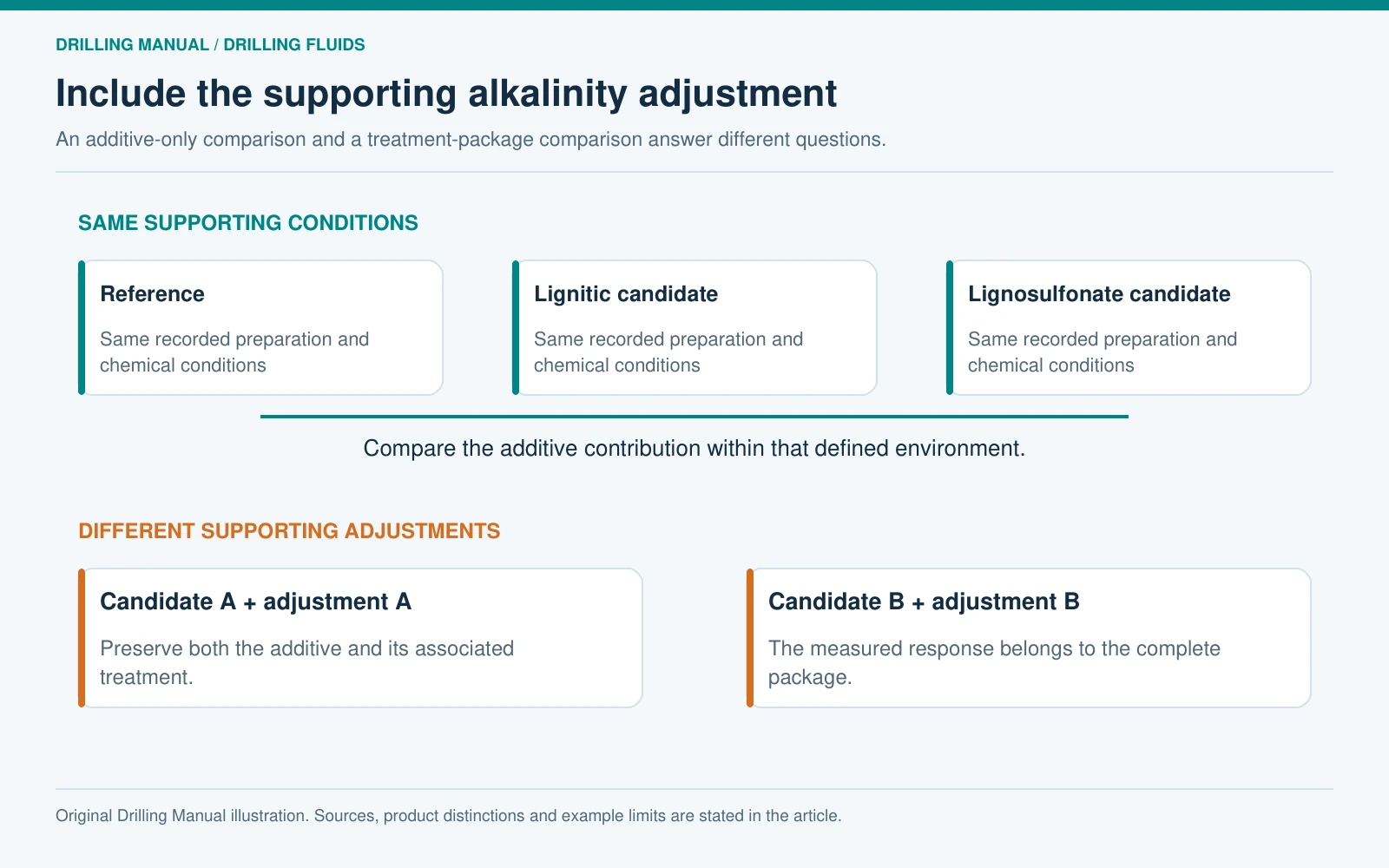
When comparing lignite vs lignosulfonate, record both the additive and any associated alkalinity adjustment. If the two samples receive different additional treatments, state that explicitly: the result compares two treatment packages, rather than isolating the effect of the named organic additive.
Salinity and hardness: qualify the grade in the actual water
AVA identifies reduced effectiveness of unmodified lignite in saline or calcium-contaminated fluids. It also describes modified lignitic products and several lignosulfonate types. These distinctions make water chemistry part of the material comparison rather than an incidental laboratory detail. [2, pp. 171, 174]
Use the actual base water or a justified representation of it, and preserve the chloride, calcium and magnesium results that define the test environment. A favorable result in freshwater does not establish the same behavior after a saline transfer or hardness change. The relevant water-based system must remain identifiable throughout the comparison.
Separate chemical tolerance from solids tolerance. A fluid may contain acceptable concentrations of dissolved ions yet carry excessive reactive drilled solids. Another may have modest solids but a water chemistry unsuitable for the candidate. These are different reasons for a poor response and should lead to different follow-up questions. Baker Hughes explicitly warns that solids amplify many contamination effects. [1, p. 3-55]
Temperature claims belong to the tested formulation
The source books describe thermal stabilization, degradation and the use of additive combinations, but their product examples do not create one temperature rating for an entire material family. The time of exposure, fluid chemistry, solids and the required function influence whether a candidate remains useful. Caenn and colleagues discuss formulations in which rheology control and filtration control require different supporting additives. [3, pp. 436–437]
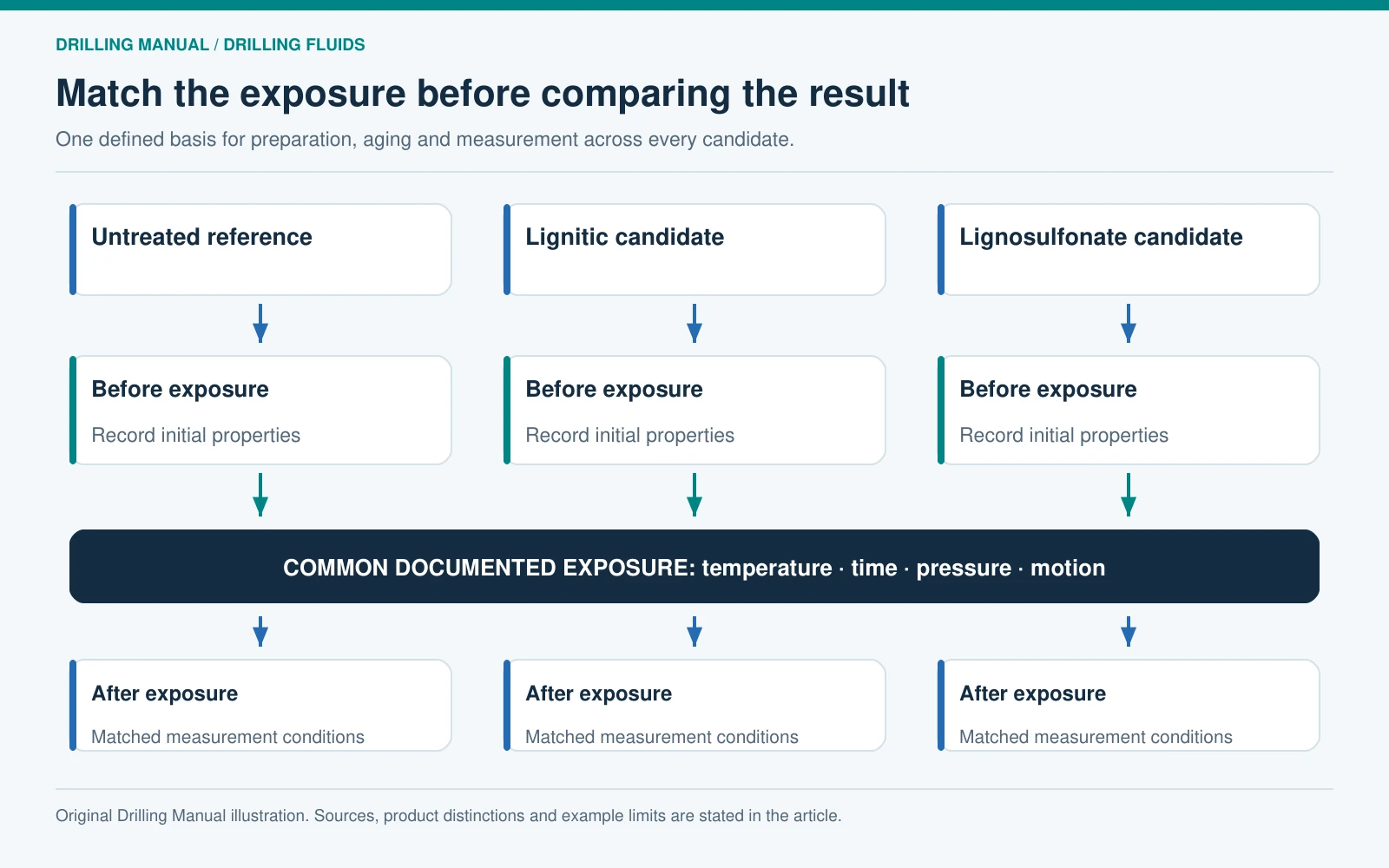
Compare the candidates after the same defined exposure and measure the properties at matched conditions. Retain both the before-exposure and after-exposure results. A fluid that thins initially can develop a different response after aging, while an acceptable rheology result does not establish acceptable filtration.
Degraded organic additives can also contribute to changes in fluid chemistry. The contamination discussion in Baker Hughes includes carbonate-related problems arising from organic-material degradation. Treat an unexplained aged response as a reason to investigate the whole fluid, rather than automatically increasing the original thinner. [1, p. 4-7]
An original lignite vs lignosulfonate comparison matrix
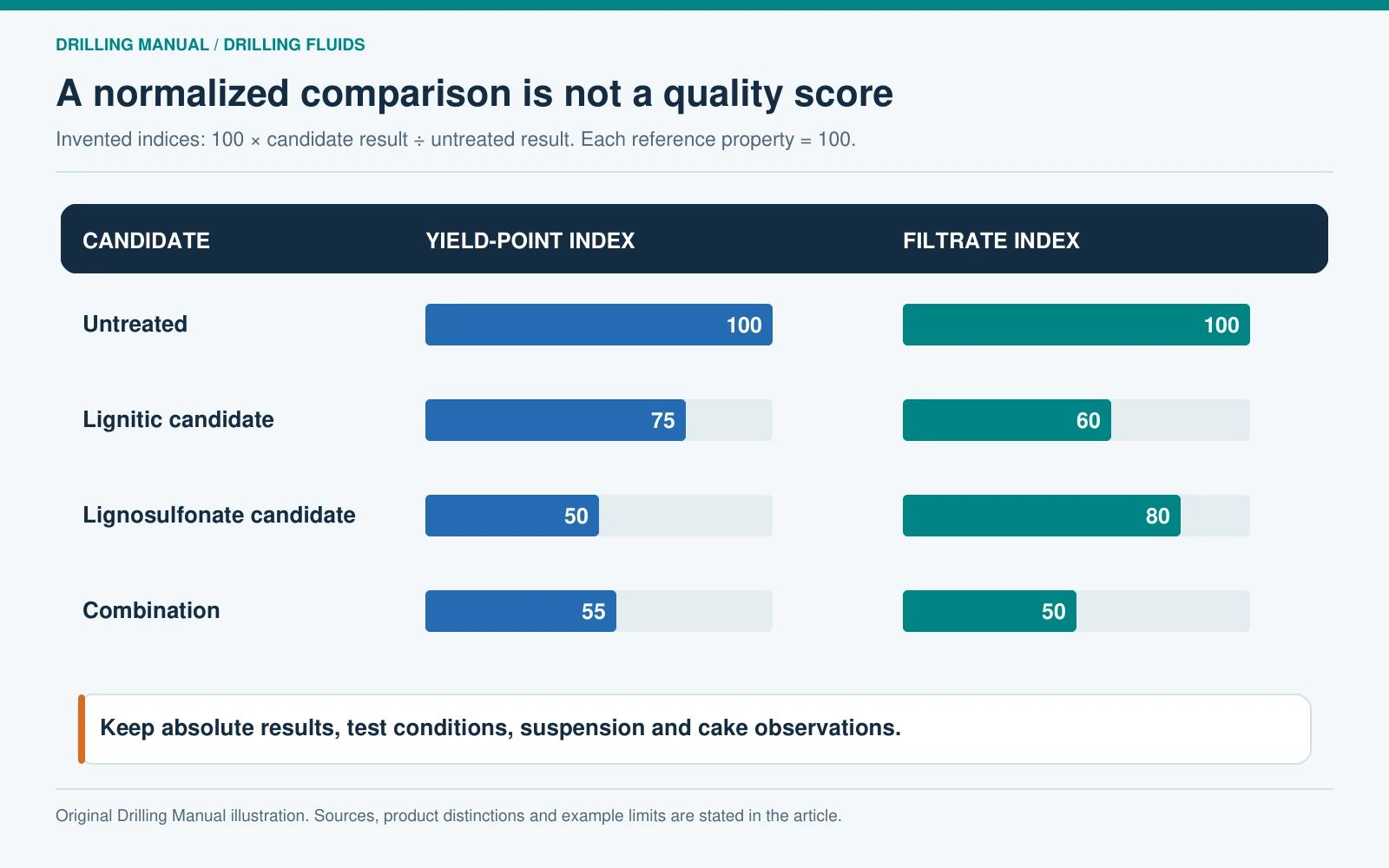
Prepare identified comparisons that answer a defined question. An untreated fluid provides the reference. A lignitic candidate, a lignosulfonate candidate and, where justified, a combination can then be assessed at recorded concentrations. Keep mixing history, exposure, measurement conditions and any supporting treatment visible in the record.
For an invented illustration, normalize each result to the untreated fluid under the same conditions. Define an index as 100 × candidate result ÷ untreated result. Suppose the lignitic candidate gives a yield-point index of 75 and a filtrate index of 60; the lignosulfonate candidate gives 50 and 80; and the combination gives 55 and 50. The untreated reference is 100 for each property.
The arithmetic shows different response patterns, not a winning product. Lower yield point is not always desirable: suspension and hole-cleaning requirements remain. A lower filtrate index also needs the actual absolute value, method and cake observations. The invented combination is included to show how a comparison can be organized; it does not claim universal synergy or prescribe a formulation.
Substitution requires a performance basis
Equal mass is not an adequate substitution rule for lignite vs lignosulfonate. Two products can differ in active constituents, modification and associated treatment requirements. A replacement should be assessed against the original job: rheology control, filtration, stability, or a justified combination of those functions. The books’ descriptions of complementary use support testing the actual formulation rather than assuming equivalence. [1, pp. 3-38, 3-66]
Keep organophilic lignite outside a direct water-based substitution. Baker Hughes describes amine-treated lignites for oil and synthetic systems, where the modification changes the material’s suitability for the continuous phase. An oil-dispersible grade is not simply another bagged version of the water-based candidate. [1, p. 5-26]
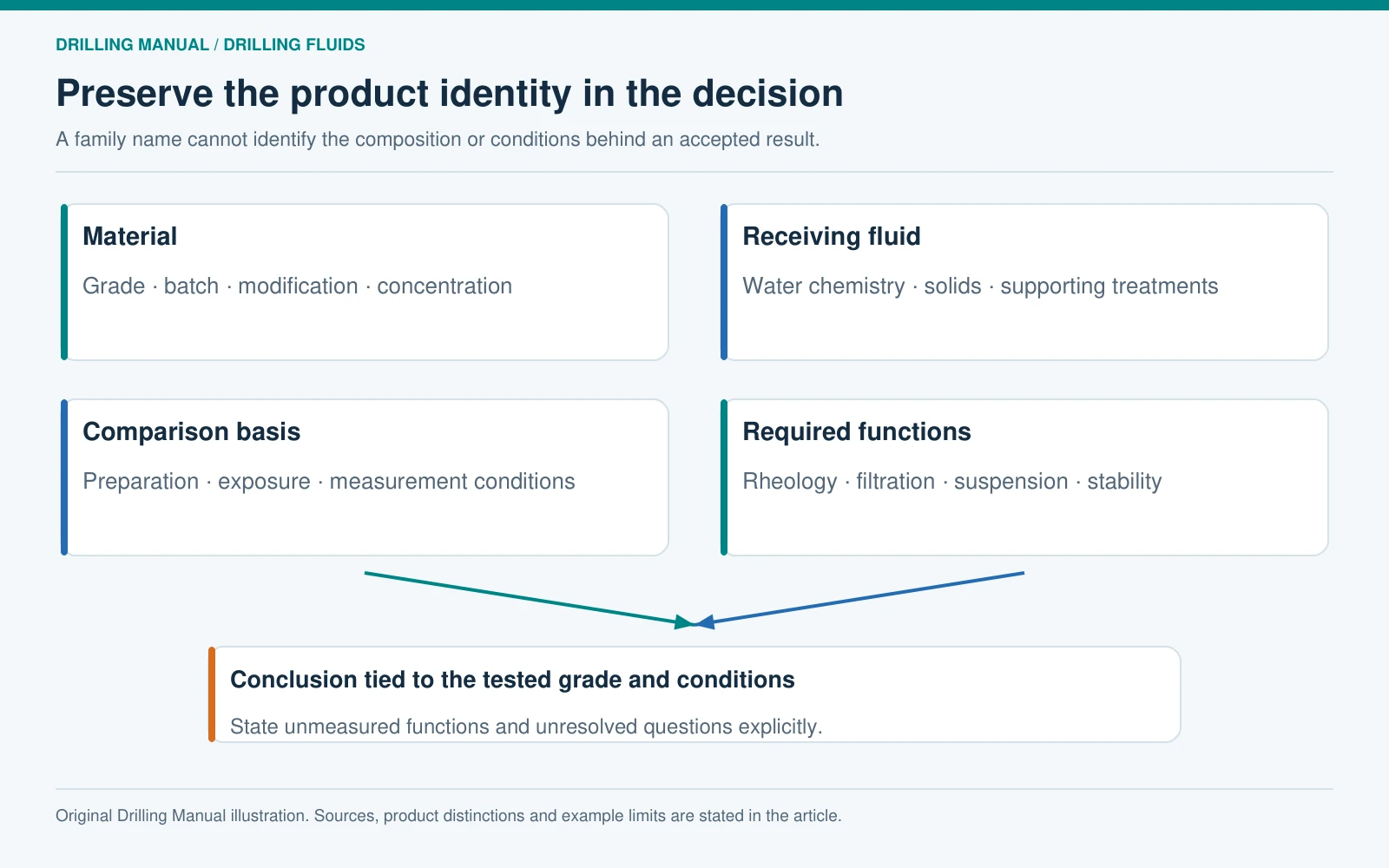
Product names, chemical grades, concentrations, supporting adjustments and measured outcomes should all remain in the final decision record. A result attached only to the family name cannot be reliably repeated or compared with a later delivery.


Document the decision and the remaining limits
A useful conclusion is specific: the identified candidate at the stated concentration achieved the required filtration result after the recorded exposure, while rheology and suspension met the defined fluid-program requirements. If one of those functions was not measured, leave it unresolved rather than extending a favorable result to the entire system.
The original decision record combines material identity, water chemistry, solids condition, preparation, exposure, measurements and the reason for selection. Record an unsuccessful candidate too; the reason may be incomplete solubility, excessive thinning, inadequate filtration control or an adverse aged response. These distinctions make a future lignite vs lignosulfonate review more useful than a note stating that one material “worked better.”
Published historical product examples are useful for understanding mechanisms and interactions. Current product selection still requires the actual supplied grade and its applicable documentation. This article provides a book-based comparison framework, rather than a universal mixing recipe or product approval.
Frequently asked questions
Is lignite the same material as lignosulfonate?
No. Lignitic additives originate from mined carbonaceous material, while lignosulfonates are associated with the sulfite wood-pulp process. Their functions can overlap, but product origin, modification and performance differ. Identify the actual grade before comparing results. [1, p. 15-28] [2, pp. 171, 174]
Which is the stronger thinner: lignite or lignosulfonate?
The Baker Hughes manual describes lignitic materials as generally weaker thinners than lignosulfonates in the freshwater applications it discusses. That supports an initial screening distinction, not a universal performance ranking. Compare actual grades in the receiving fluid at defined concentrations and conditions. [1, p. 3-38]
Can lignite and lignosulfonate be used together?
Yes, the manuals describe lignitic filtration-control materials used alongside lignosulfonate systems. The combination still needs assessment against rheology, filtration and the exposure conditions. Complementary functions do not guarantee that every product pairing or concentration will be suitable. [1, p. 3-66]
Why can a lignite addition fail to improve the fluid?
The material may be unsuitable for the salinity, hardness or alkalinity, or its required function may not match the problem. In certain saline and unfavorable-alkalinity conditions, lignite can remain as colloidal material and contribute to rheology problems. Confirm the grade, chemistry and solids before assuming that a larger addition is needed. [2, pp. 174, 456]
Does lower yield point mean the better treatment?
Only if the resulting fluid also meets the required functions. Excessive thinning can undermine suspension and hole cleaning. A comparison must retain the relevant low-shear, gel and filtration observations, rather than rank candidates solely by the smallest yield-point number. [1, p. 3-62]
Can a water-based grade replace organophilic lignite?
No direct substitution should be inferred. Organophilic or amine-treated lignite is modified for oil or synthetic-fluid service. The continuous phase and the actual product chemistry are part of its function, so a water-based material requires a separate qualification for a different application. [1, p. 5-26]
References
- Baker Hughes Drilling Fluids. Reference Manual. Revised 2006. Water Based Drilling Fluids; Contamination; Oil/Synthetic Fluids; Glossary. Printed pages: 3-38, 3-55, 3-61–3-62, 3-66; 4-7; 5-26; 15-28. PDF pages in the edition consulted: 119, 136, 142–143, 147; 196; 236; 753.
- AVA Drilling Fluids & Services. Drilling Fluids Manual. Version 1, November 2004. Polymer Chemistry, Water-Based Fluids and Problem Solving. Printed pages: 153–154, 171, 174, 223, 226–227, 456. PDF pages in the edition consulted: 155–156, 173, 176, 225, 228–229, 458.
- Caenn, R.; Darley, H. C. H.; and Gray, G. R. Composition and Properties of Drilling and Completion Fluids. Seventh edition. Gulf Professional Publishing / Elsevier, 2017. ISBN 978-0-12-804751-4. Printed pages: 120–122, 436–437. PDF pages in the edition consulted: 124–126, 438–439.