When active pit space limits a dilution, write two balances before ordering premix. One tracks final volume. The other tracks the solids you want to reduce. Adding clean fluid expands the system. Withdrawing a representative portion first also removes some of the target solids, so it can meet the same concentration in less final space.
Start with the solids you intend to dilute
Use one consistent concentration basis. This example uses volume fraction of a designated solids component in a well-mixed fluid. The incoming fluid contains none of that component. It may contain other solids, such as a weighting material, provided the input assumption remains true. Weight percent, retort total-solids volume and a calculated low-gravity-solids fraction represent different inputs.
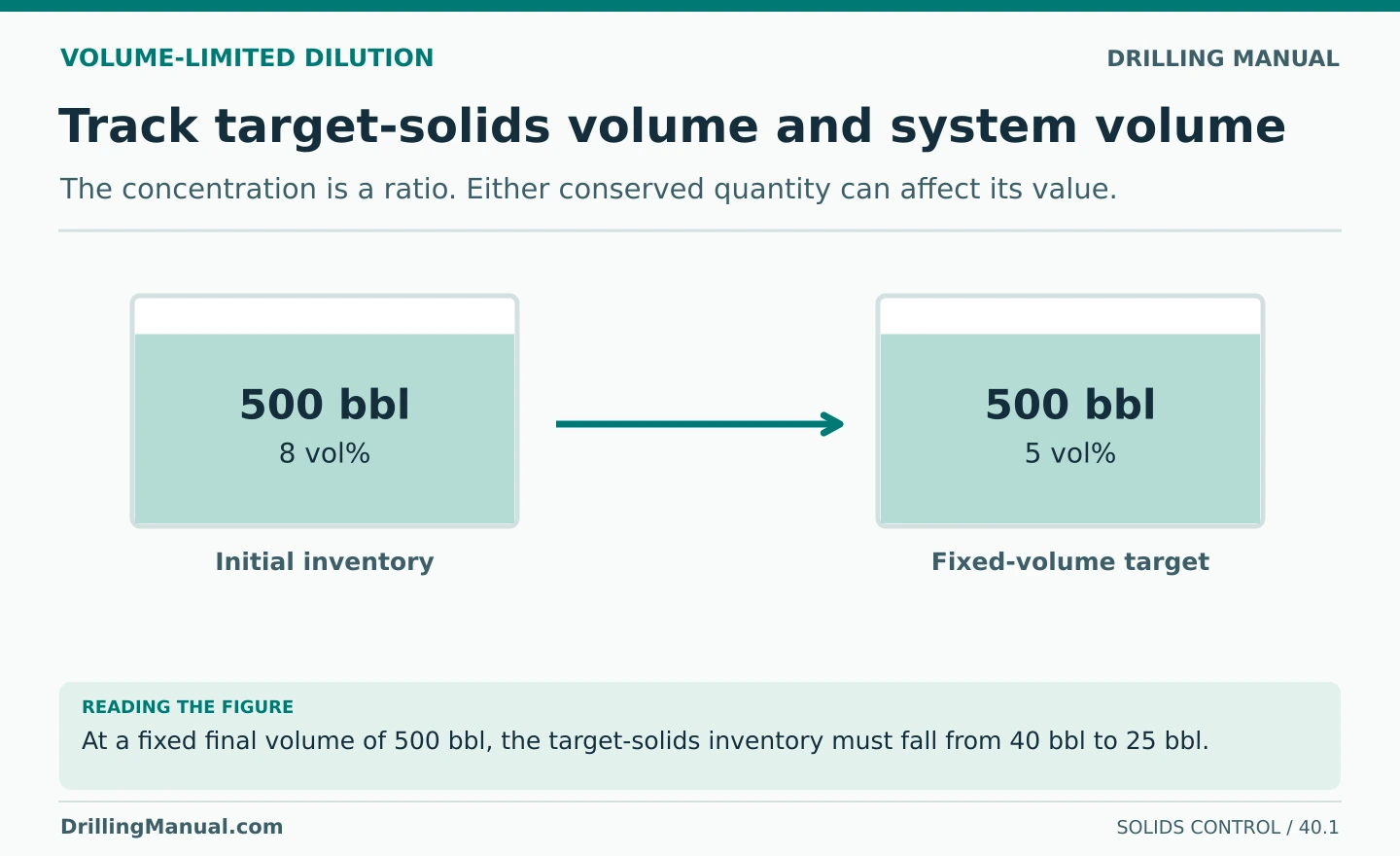
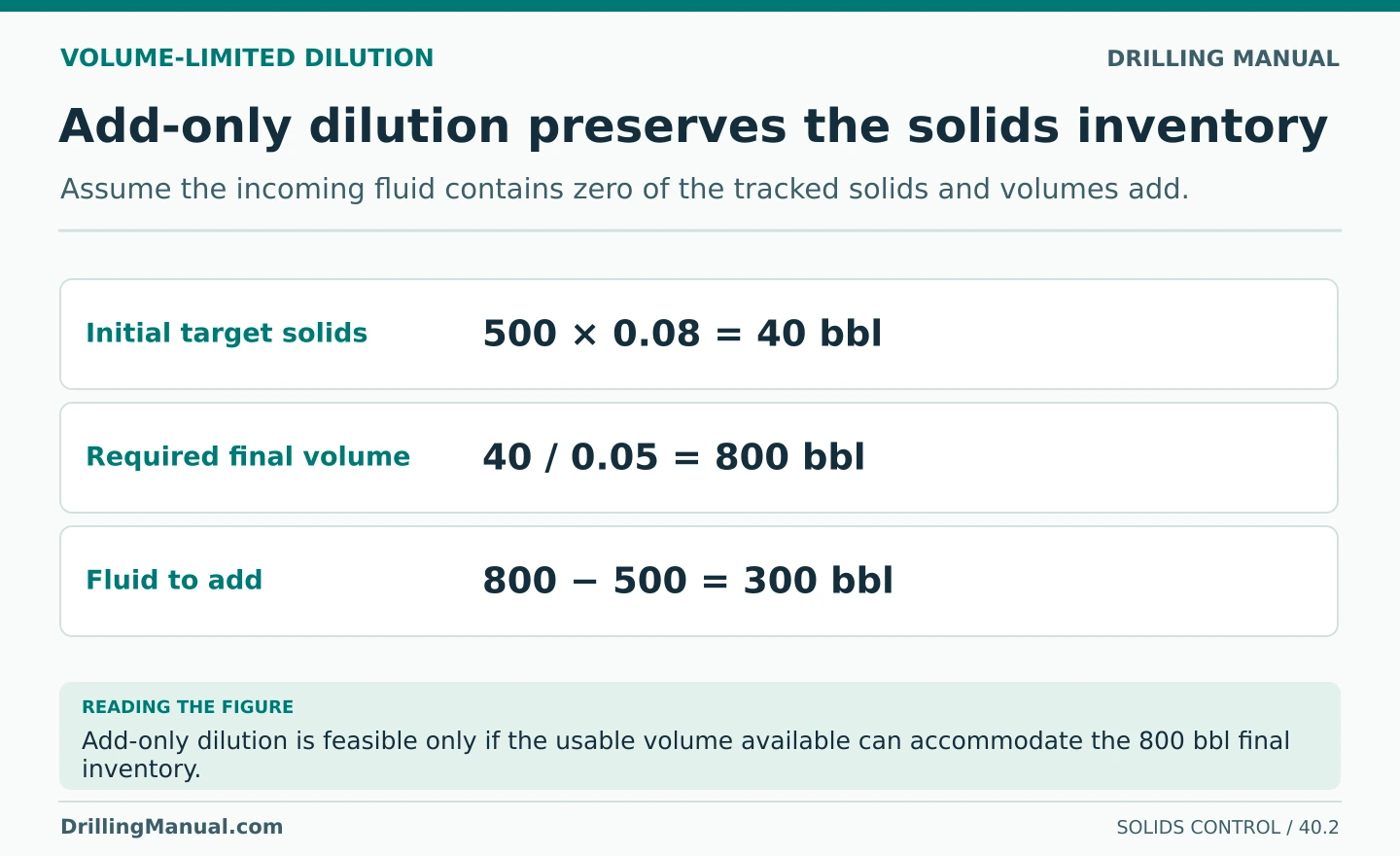
Suppose 500 bbl contains 8% by volume of the target solids. The component inventory is 500 × 0.08 = 40 bbl. The target final fraction is 5%. Adding clean fluid only keeps all 40 bbl in circulation. The final volume must therefore be 40/0.05 = 800 bbl. The required addition is 300 bbl. A spreadsheet that returns this number is solving the unlimited-capacity case.
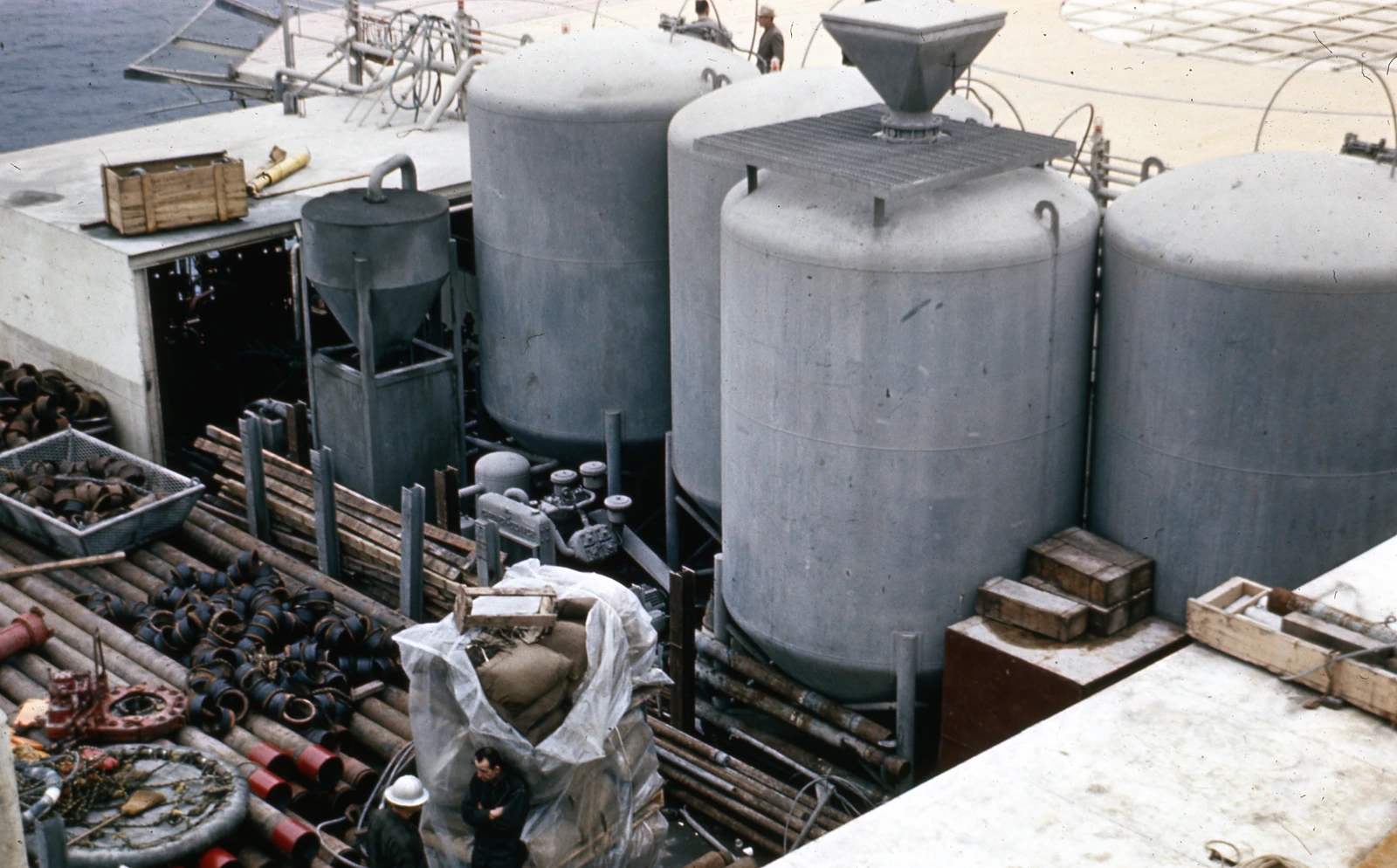

Compare three plans on the same starting inventory
| Permitted final volume | Initial mud removed first | Clean premix added | Final target-solids inventory |
|---|---|---|---|
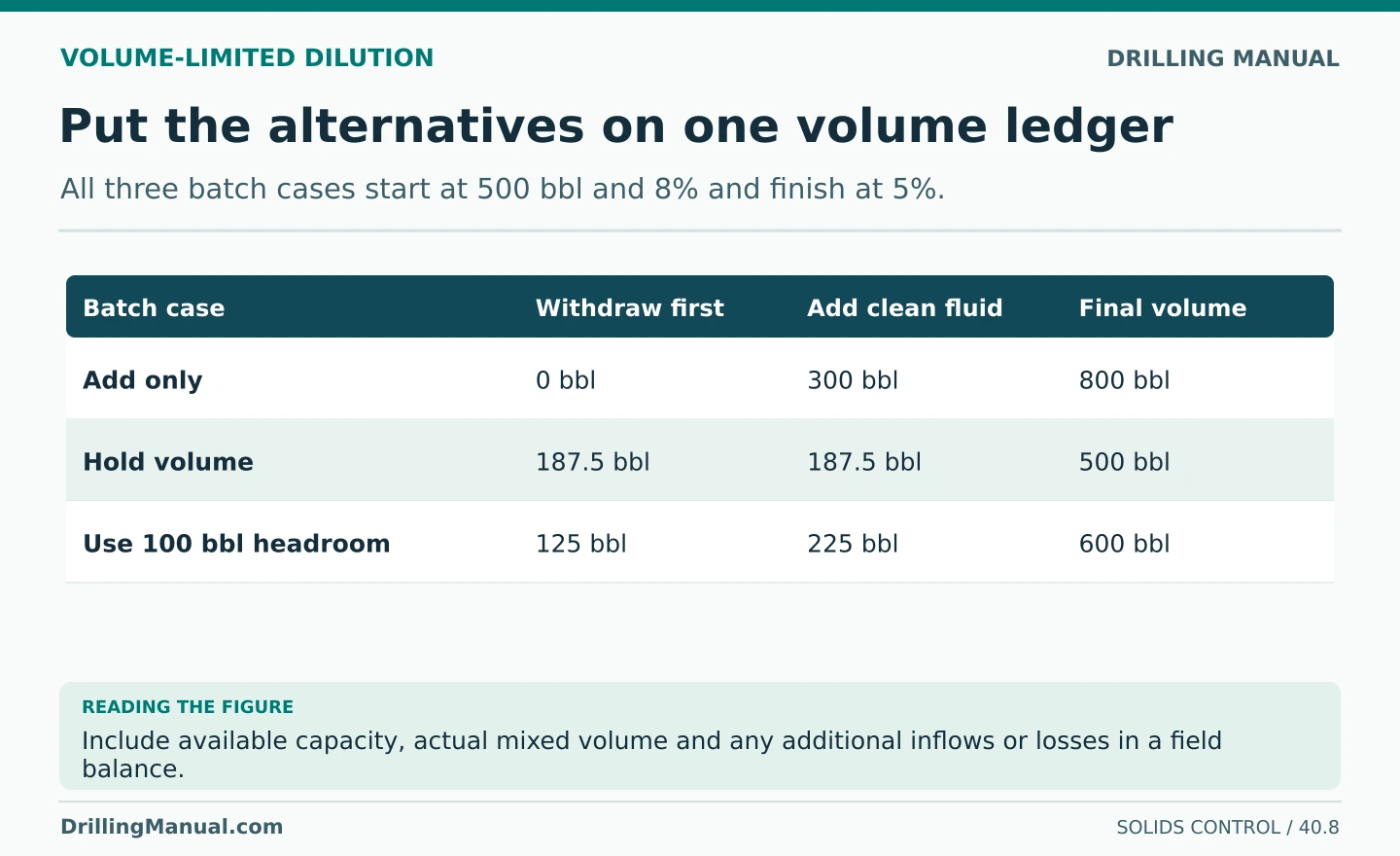
| 800 bbl, add only | 0 bbl | 300 bbl | 40 bbl |
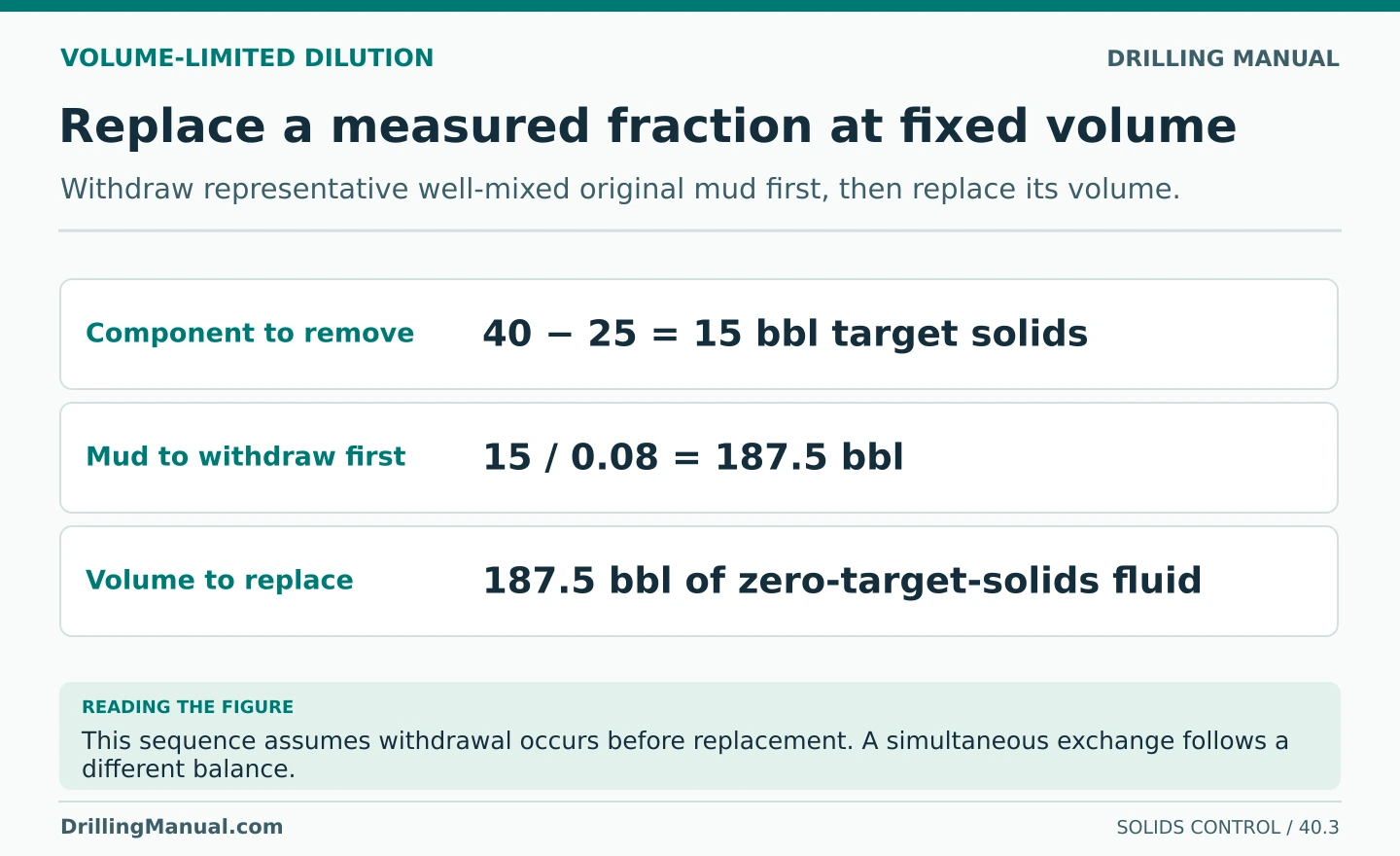
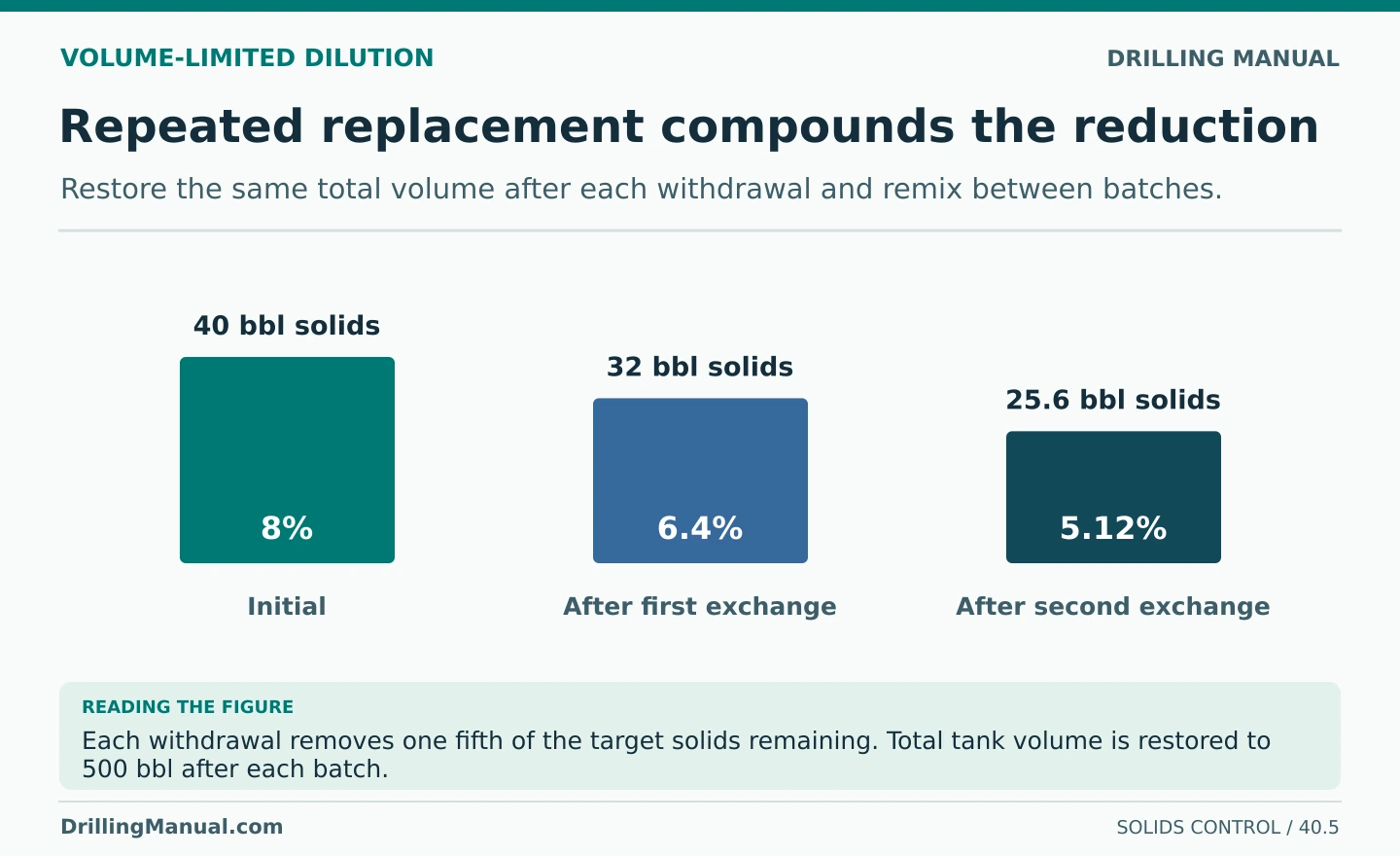
| 500 bbl, hold volume | 187.5 bbl | 187.5 bbl | 25 bbl |
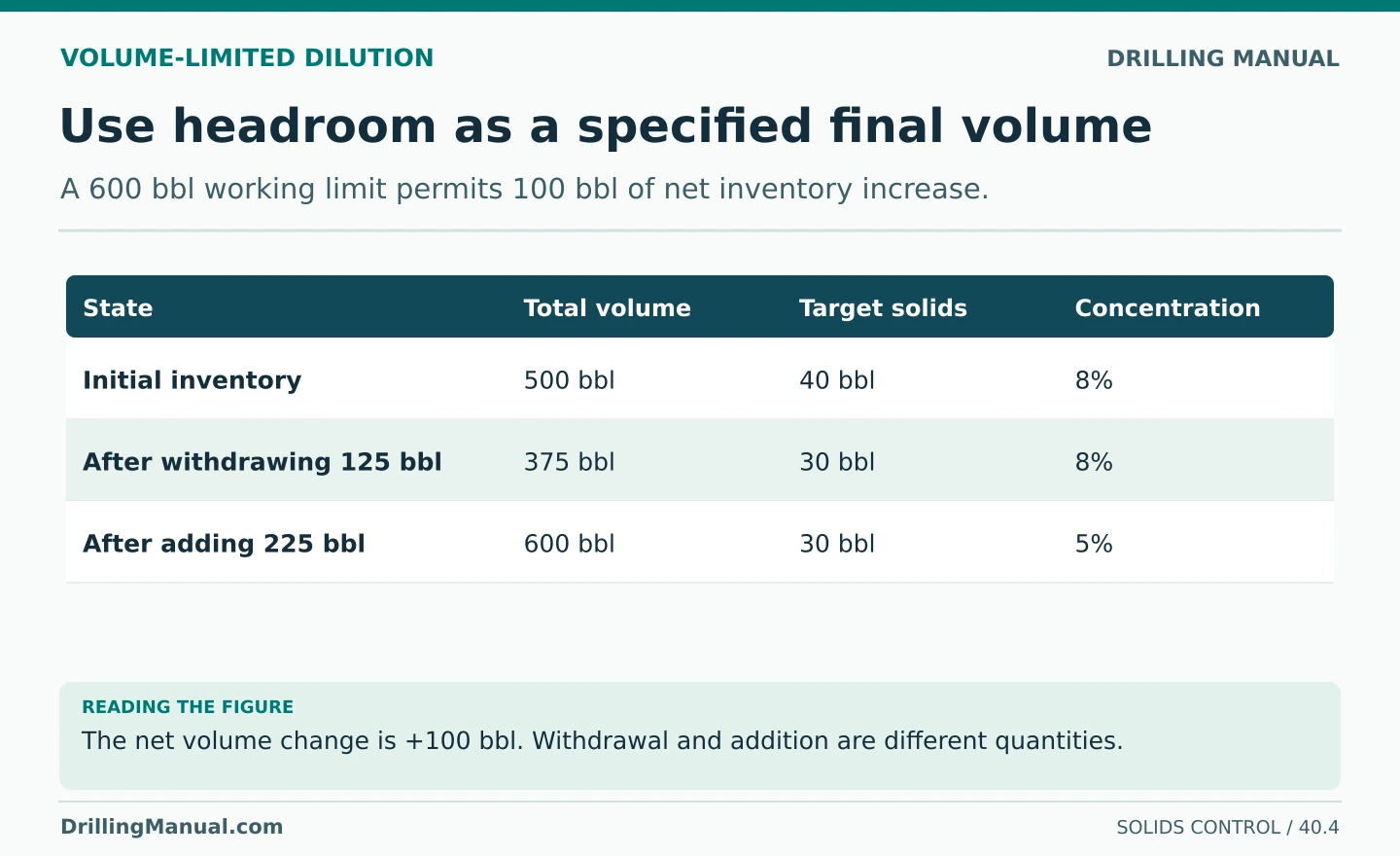
| 600 bbl, use available headroom | 125 bbl | 225 bbl | 30 bbl |
In the 600-bbl case the final system can contain 600 × 0.05 = 30 bbl of target solids. Removing 10 bbl of those solids at the original 8% concentration requires withdrawal of 125 bbl of representative original mud. The tank then holds 375 bbl. Adding 225 bbl brings it to 600 bbl. Recheck the fraction as 30/600 = 5%.
Generalize the calculation for a real premix
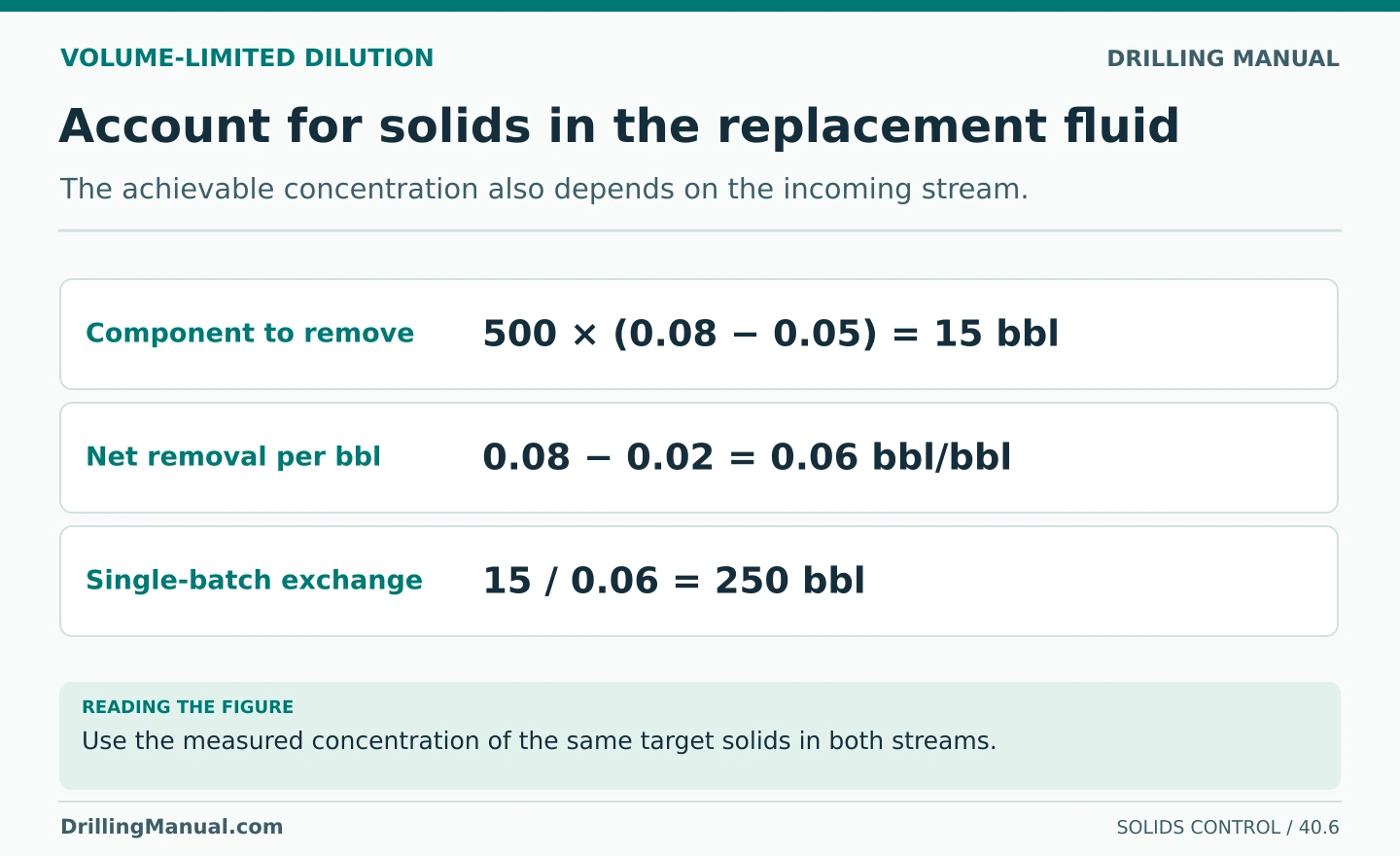
Let V₀ be starting volume, V₁ final volume, C₀ the initial fraction, C₁ the desired fraction and Cₚ the fraction in premix. If a volume R of original fluid is withdrawn first and A of premix is then added, the equations are V₁ = V₀ − R + A and C₁V₁ = C₀(V₀ − R) + CₚA. They assume additive volumes and a representative withdrawal. When C₀ differs from Cₚ, R = V₀ − V₁(C₁ − Cₚ)/(C₀ − Cₚ), then A = V₁ − V₀ + R.

A negative withdrawal or addition signals that this sequence and the inputs cannot deliver the stated plan. If C₀ and Cₚ are equal, exchanging the fluids cannot change the target fraction. If incoming premix carries appreciable target solids, entering zero understates the amount of replacement required.
Why simultaneous dilution gives another answer
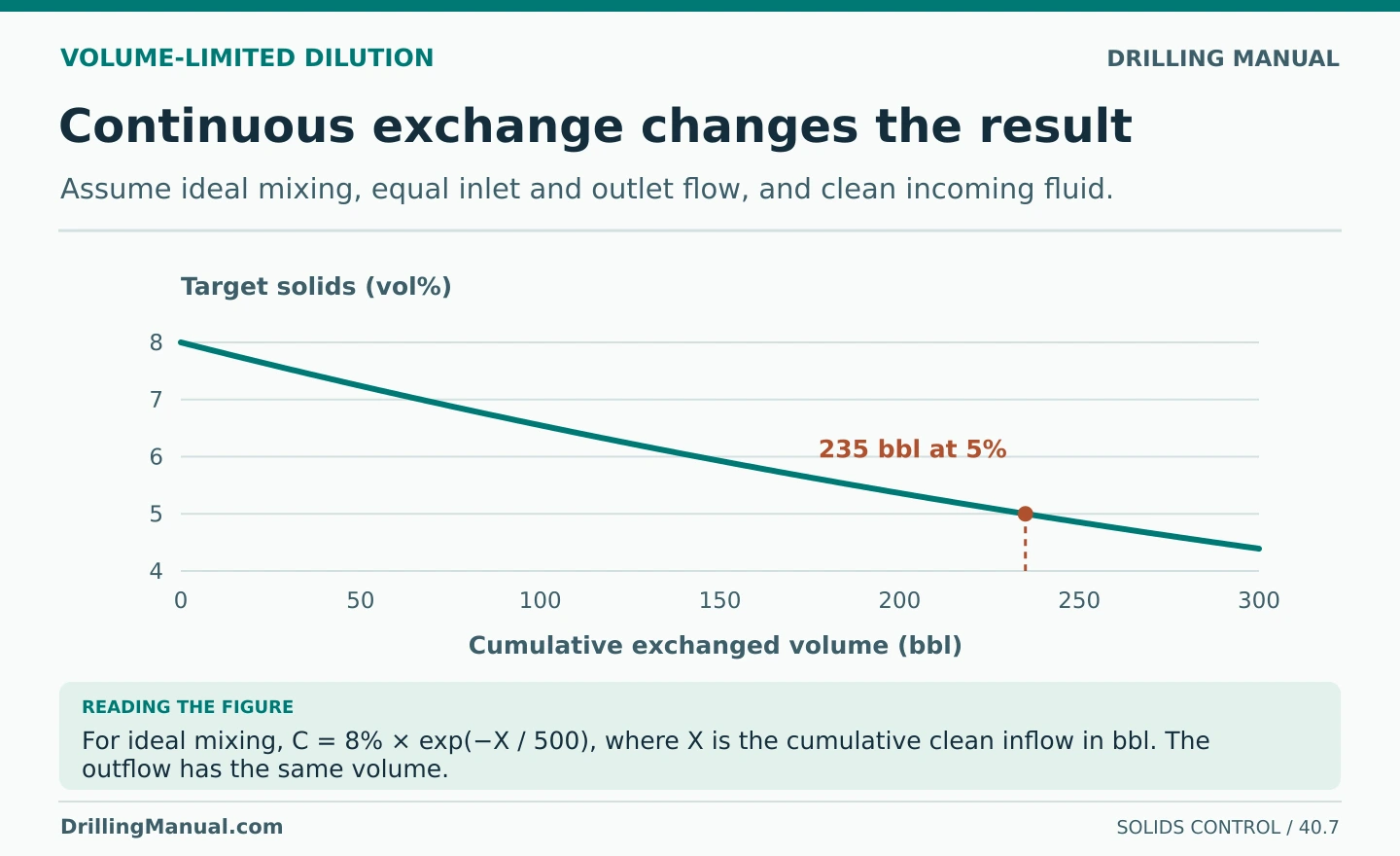
If clean premix enters while mixed mud leaves continuously, some newly added fluid leaves again. Under ideal, perfectly mixed, constant-volume assumptions with zero target solids in the premix, Cfinal/Cinitial = exp(−Q/V), where Q is cumulative exchange. For 500 bbl moving from 8% to 5%, Q is about 235 bbl. The single withdrawal-and-refill calculation uses 187.5 bbl because it removes the initial, more concentrated fluid first.

On an active rig, drilling adds new solids, mechanical removal takes solids out and transfers move fluid across the boundary. Separate the planned batch calculation from the subsequent interval balance. Confirm usable working capacity, tank routing, premix composition and measured final properties against the approved fluids program.
Compare staged exchange, premix contamination and continuous dilution
Field or laboratory record
Download the editable pit-capacity dilution worksheet (TXT).
Frequently asked questions
Is a spare 100 bbl of tank space enough for this example?
It allows a 600-bbl final volume. Reaching 5% still requires removing 125 bbl of original mud before adding 225 bbl of clean premix.
Can I enter mud density in place of solids concentration?
Density alone does not identify the quantity of a selected solids component. A density blend solves a different problem.
What is the most useful check after mixing?
Reconcile measured final volume and independently measured target fraction. Record intervening additions, drilled interval and equipment discharge before assigning a difference to the dilution calculation.
Further reading and technical references
For the removal and dilution options surrounding this example, see Solids Control In Oil & Gas. Related density and mud-volume calculations appear in Drilling Fluids Calculations For Drilling & Mud Engineer.
ASME Shale Shaker Committee. Drilling Fluids Processing Handbook. Gulf Professional Publishing, 2005. Printed pp. 335–337, 343–346 (PDF pp. 362–364, 370–373), ch. 15.
AADE Joint Industry Shaker Technology Committee. Shale Shakers and Drilling Fluid Systems. Gulf Publishing, 1999. Printed pp. 165–167 (PDF pp. 182–184), ch. 8.