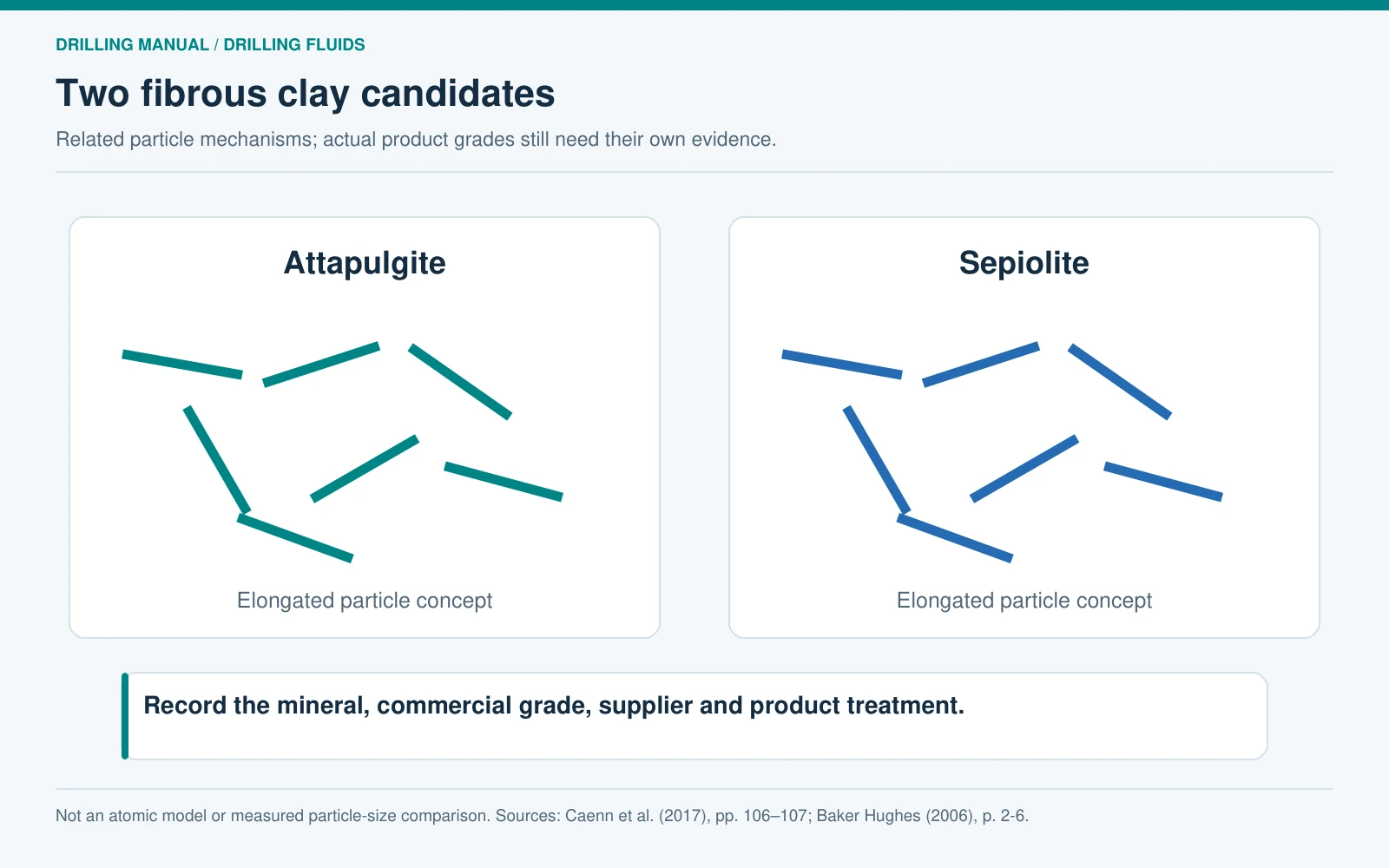
Attapulgite vs sepiolite is a comparison between two fibrous clay minerals used to build suspension and rheological properties in drilling fluids. Both develop useful structure through interactions among elongated particles. Sepiolite receives particular attention in the supplied manuals for high-temperature service, while attapulgite is strongly associated with saltwater suspension. Neither mineral name, by itself, establishes a complete mud’s performance. [1, pp. 106–107] [2, p. 2-6]
This guide compares the mechanisms, preparation requirements and evidence needed to select between actual products. It keeps the broader choice of fluid family with the types of drilling fluids guide. The comparison concerns untreated mineral viscosifiers in aqueous systems; an oil-compatible treated clay is a different product.
Attapulgite vs sepiolite: start with the particle structure
Baker Hughes groups attapulgite and sepiolite among chain-type clays, distinguishing them from layered minerals such as smectites. Its description of attapulgite starts with bundles of elongated laths that separate during vigorous mixing. The resulting interacting particles increase the resistance to flow. [2, p. 2-2] [2, p. 2-6]
Caenn, Darley and Gray likewise describe mechanical interference among long laths as central to attapulgite suspension behavior. They describe sepiolite as an analogous mineral with a different structure and wider laths. These are explanations of mineral behavior, not a claim that all commercial grades have identical particle dimensions or preparation requirements. [1, pp. 106–107]
The practical implication is that “clay” is too broad a purchase description. Record the mineral identity, product grade, supplier and any treatment or processing information available for the proposed material. A bag labelled with a familiar family name does not establish that it is interchangeable with a previously tested product.

What the shared mechanism means in saline water
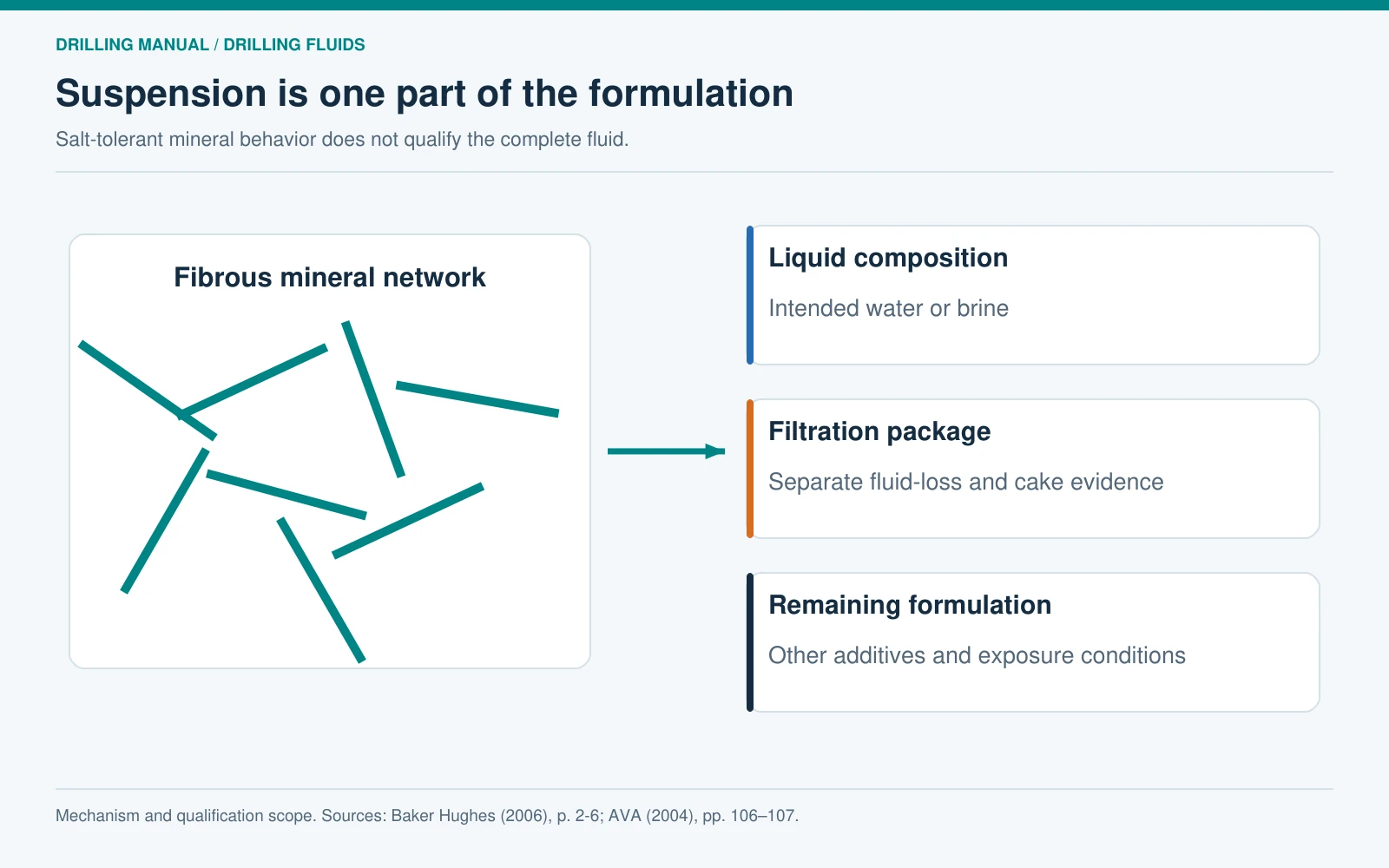
Attapulgite suspension is less dependent on electrostatic interaction than a swelling-clay system because the elongated particles mechanically interfere with one another. Baker Hughes connects that behavior with its usefulness as a saltwater suspending agent. AVA discusses the relatively limited effect of dissolved ions on the rheological properties of these fibrous clays. [2, p. 2-6] [3, pp. 106–107]
This helps explain the interest in attapulgite vs sepiolite for brine-based drilling mud. It does not establish that salinity has no effect on the complete formulation. Other viscosifiers, filtration-control additives, contaminants and the liquid phase still belong to the fluid being qualified. The relevant comparison uses the intended water or brine and the complete additive package.
Distinguish deliberate brine design from an unexplained change in an existing fluid. Selecting a salt-tolerant mineral is not a diagnosis of why chloride changed, nor does it establish the condition of the remaining products. The water-based fluid systems guide provides the wider formulation context.
Shear history is part of the attapulgite vs sepiolite comparison
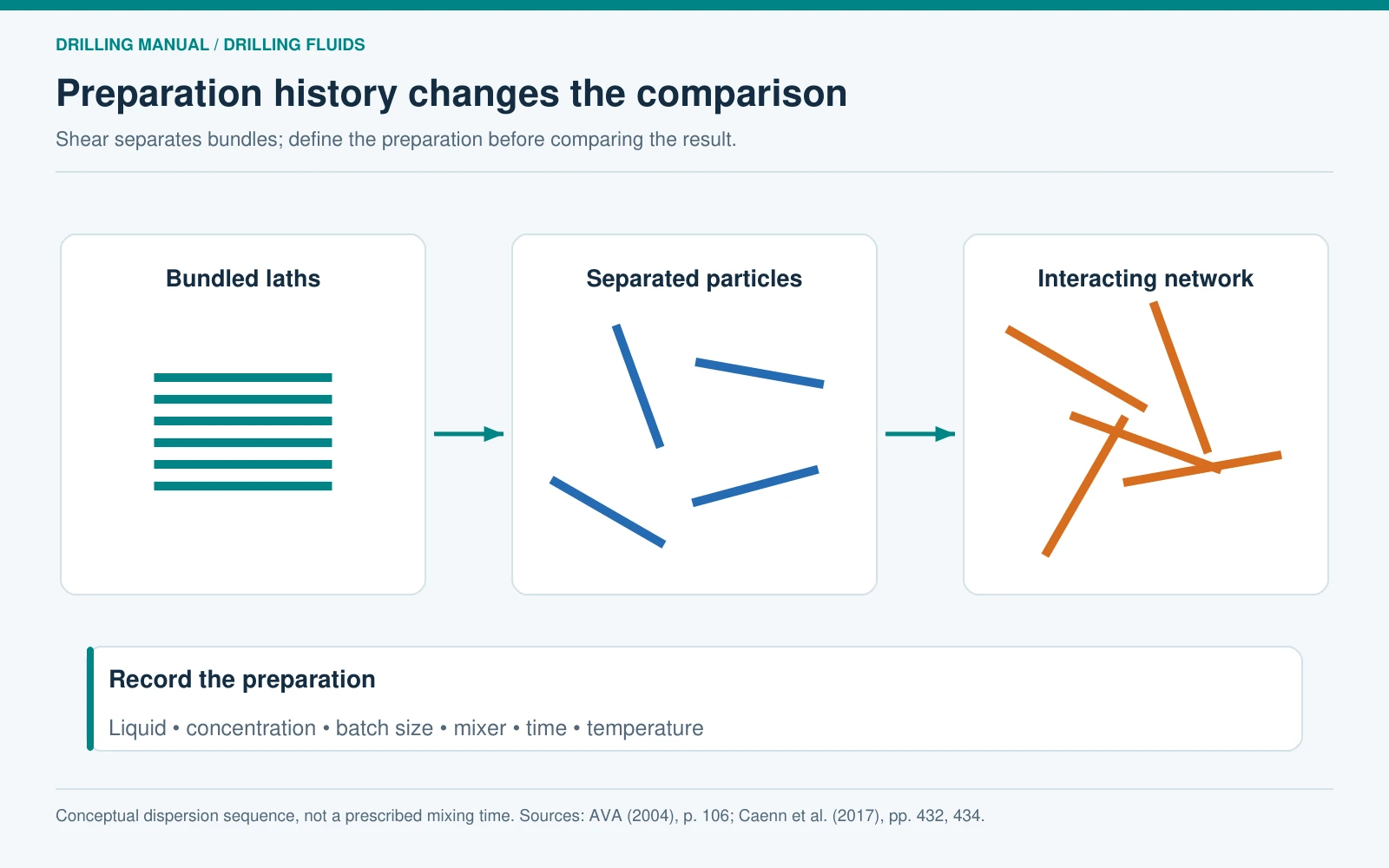
The manuals do not describe these clays as behaving like bentonite that simply develops its useful state through conventional swelling and dispersion. AVA emphasizes the shear needed to separate bundles into individual elongated particles. Caenn and colleagues also discuss the preparation challenge in historical sepiolite systems and the use of effective high-shear mixing. [3, pp. 106–107] [1, pp. 432, 434]
That makes sample preparation a controlled variable. Record the liquid, addition sequence, concentration basis, mixer configuration, speed where relevant, duration, batch size and temperature history. A viscosity difference after two different preparation histories cannot be assigned confidently to mineral identity alone.
Two comparisons may be useful, but they answer different questions. A matched-preparation comparison asks what the materials do after the same defined treatment. A comparison using each product’s qualified preparation asks what each can deliver under its intended process. Label which question is being answered; do not switch between them without showing the change.
The preparation record should also show whether the sample was tested immediately or after a defined hold. Retain an unchanged control and a repeated preparation where reproducibility matters. These are original comparison controls built around the manuals’ demonstrated sensitivity to dispersion and shear, rather than a universal mixing recipe.
A preparation comparison also needs a stated stopping point. If one sample receives extra mixing because it initially looks different, that intervention becomes part of its history. Preserve the earlier observation and identify the extra treatment. Otherwise the report can make two preparation processes appear identical even though they required different time or equipment input. The manuals’ discussion of bundle separation makes that history directly relevant to the interpretation. [3, p. 106]
Why sepiolite is considered for high-temperature duty
Baker Hughes identifies the high-temperature stability of sepiolite-based fluids, and AVA gives sepiolite particular emphasis for elevated-temperature rheology. Caenn and colleagues describe historical geothermal formulations and the separation of fibrous bundles under shear. These sources provide a reason to investigate sepiolite when temperature is a major selection constraint. [2, p. 2-6] [3, pp. 106–107] [1, pp. 432–435]
They do not provide one temperature rating applicable to every modern sepiolite product or every formulation. Mineral suspension behavior, polymer stability, filtration performance and the duration of exposure can have different limits. The whole fluid therefore needs an exposure history and a defined set of measurements.
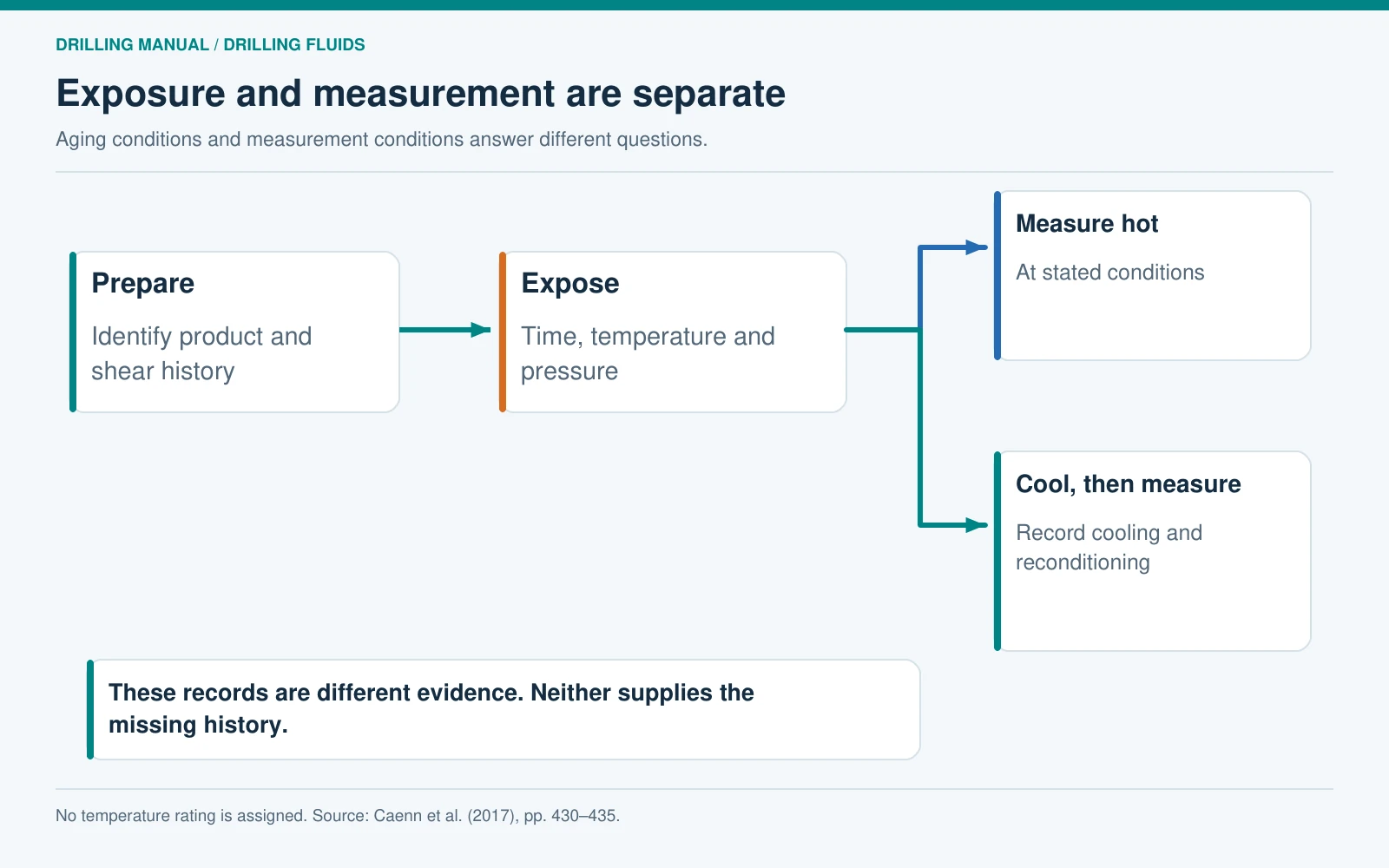
Keep temperature during exposure separate from temperature during measurement. A fluid aged hot and measured after cooling has not been measured continuously at the hot condition. Caenn and colleagues explicitly discuss both time and temperature when interpreting high-temperature studies. Their examples also report rheology and filtration separately. [1, pp. 430–435]
For attapulgite vs sepiolite, state which requirement is driving the comparison: initial dispersion, rheology after aging, flow at elevated temperature, or a combination. An attractive result for one condition does not fill in missing evidence for the others.

Viscosification does not establish filtration control
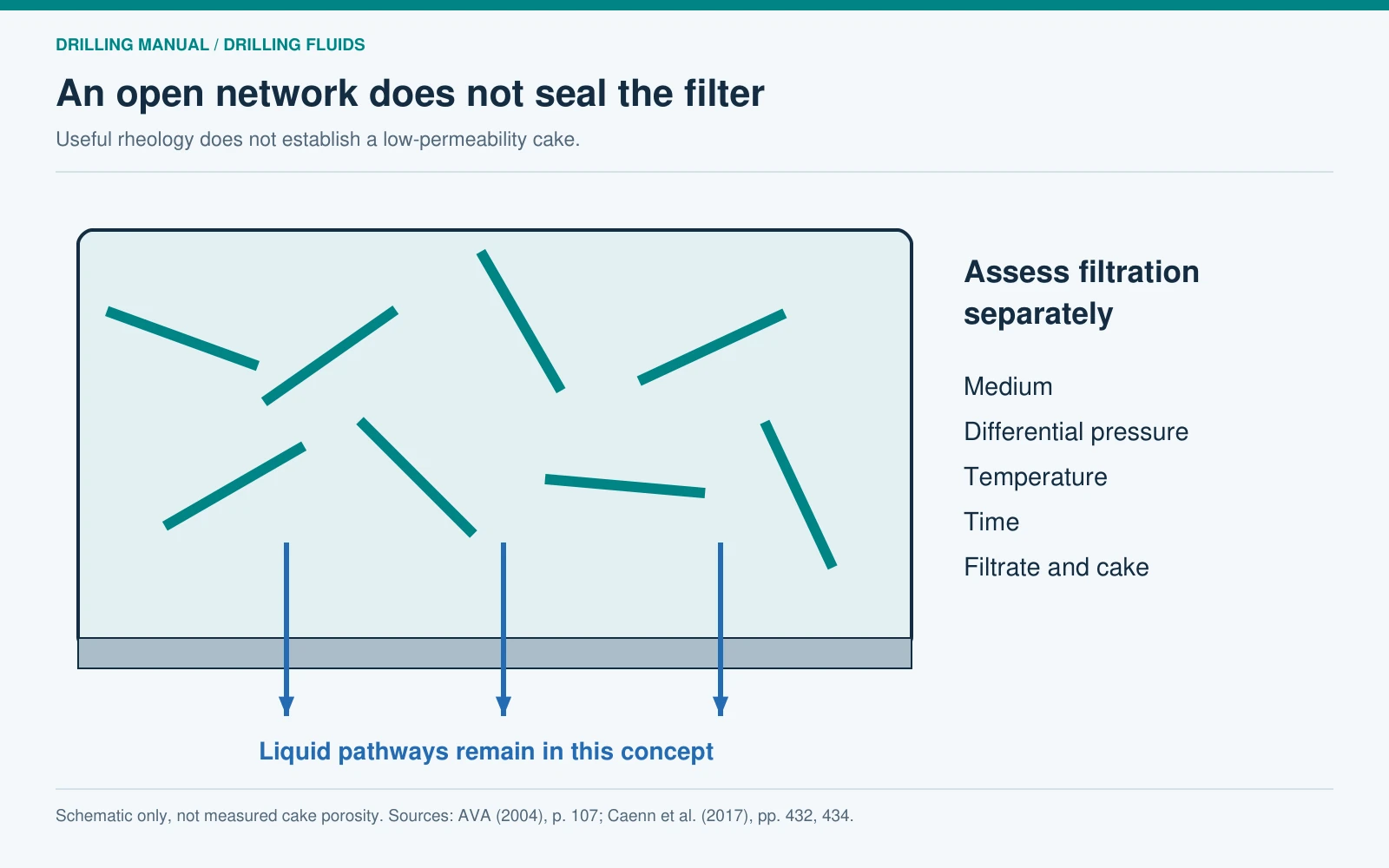
The same elongated network that explains suspension does not automatically form an effective low-permeability filter cake. AVA identifies poor filtration characteristics as a limitation of these clay structures. Caenn and colleagues state that sepiolite requires additional filtration-control components in the systems they discuss. [3, pp. 106–107] [1, pp. 432, 434]
This is a central limitation in an attapulgite vs sepiolite review. A fluid may show a useful viscosity profile yet lose too much filtrate under the selected test conditions. Increasing the mineral concentration is not a demonstrated solution unless the complete fluid has been tested and the resulting rheology remains suitable.
Keep the filtration assessment independent: identify the medium, differential pressure, temperature, exposure time, filtrate result and cake observations. The HPHT filtration guide covers that neighboring test. Here its result is evidence for the material comparison, not a substitute for the separate suspension and flow measurements.
The historical sepiolite formulations in the book include other components to address filtration. Their role is the useful lesson; copying an old formulation would not qualify a new product, water source or temperature duty. [1, pp. 434–435]
Build a comparison matrix around the intended duty
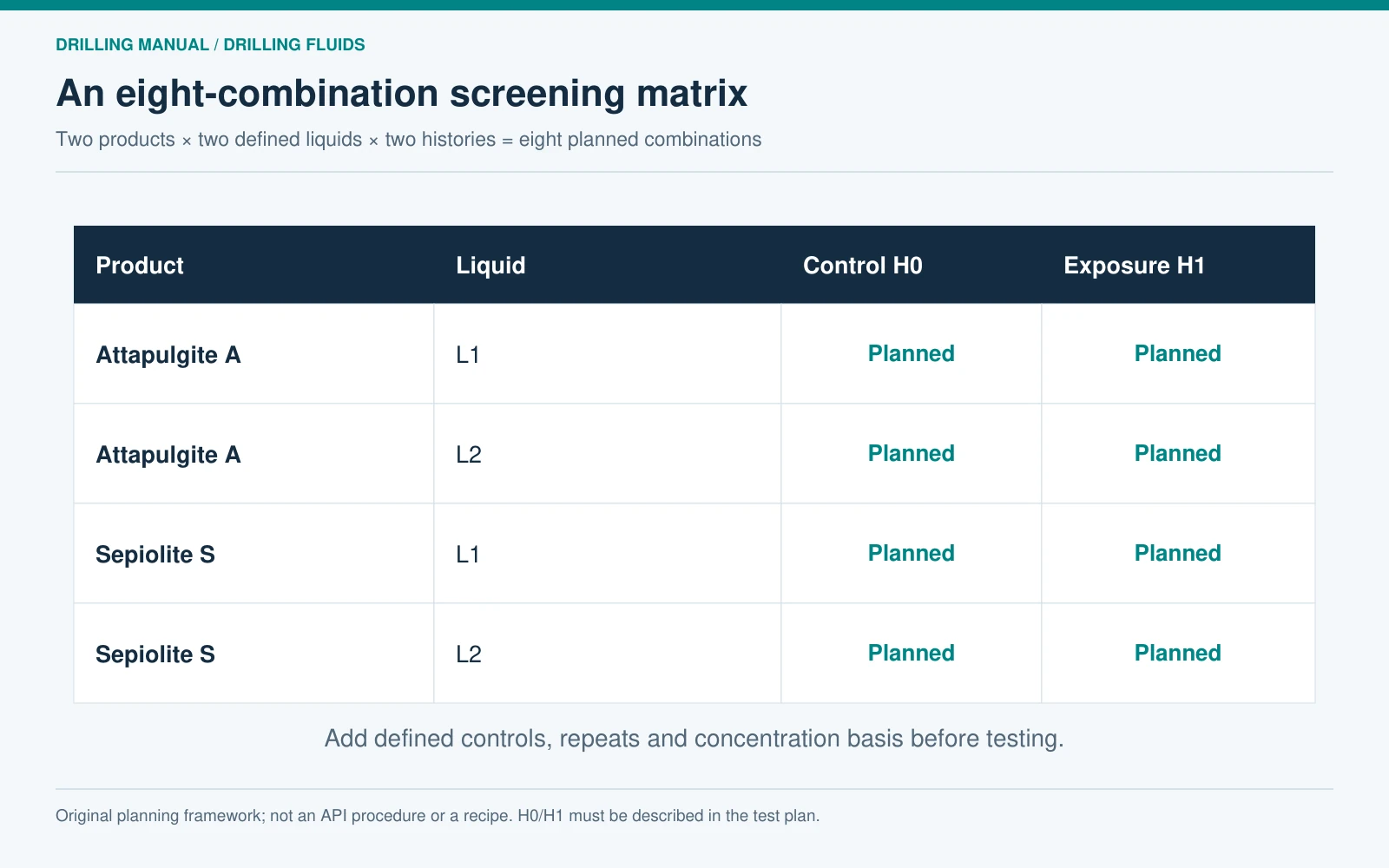
An original screening matrix can compare two identified mineral products in two defined liquids and after two preparation or exposure histories. That produces eight combinations before repeats or controls. The liquid compositions and exposure histories must be written out; “saltwater” and “aged” are insufficient descriptions.
| Variable | Example comparison definition | Hold or record |
|---|---|---|
| Product | Identified attapulgite grade A / sepiolite grade S | Supplier, lot and treatment |
| Liquid | Defined liquid L1 / intended brine L2 | Composition and analytical basis |
| History | Prepared control H0 / specified exposure H1 | Shear, time, temperature and pressure where relevant |
| Measurements | Flow, rest response, filtration and separation observations | Same method and conditions within each comparison |
This matrix is a planning framework, not an API procedure or a prescribed field trial. Product concentration should be explicitly controlled or deliberately varied to answer a stated question. If the goal is equal performance rather than equal dosage, report the concentration needed for each result and retain the other property changes.
The drilling-fluid viscometer guide explains routine measurement terminology. For this comparison, preserve the full relevant response and its conditions instead of reducing the decision to one unqualified viscosity number.
Equal concentration and equal functional response are different comparison bases. The first may reveal how the grades behave at the same amount of added material. The second may identify the amounts needed to meet a predeclared property requirement. Neither should be presented as the other. When the concentration changes, recheck the other functions rather than carrying their earlier results forward automatically. Retain the concentration units and whether they refer to starting liquid or finished fluid; otherwise even a carefully measured result may be compared on an inconsistent formulation basis.
The same planning framework can include a liquid-and-additive control without the candidate mineral when that control answers a useful question. It helps document what the remaining formulation contributes before the mineral is added. Keep its preparation and measurement history visible alongside the candidate samples. If a control cannot remain comparable because removing the mineral changes the preparation process, record that limitation rather than assigning the entire difference to mineral performance. A control is useful only when its role and limits are clear in the comparison.
Read the attapulgite vs sepiolite results by function
Separate three questions: did the preparation develop the intended rheology; did the response remain suitable after the specified exposure; and did the complete fluid meet its filtration requirement? The books’ discussion of sepiolite shows why these cannot be collapsed into a single “temperature stable” label. [1, pp. 430–435]
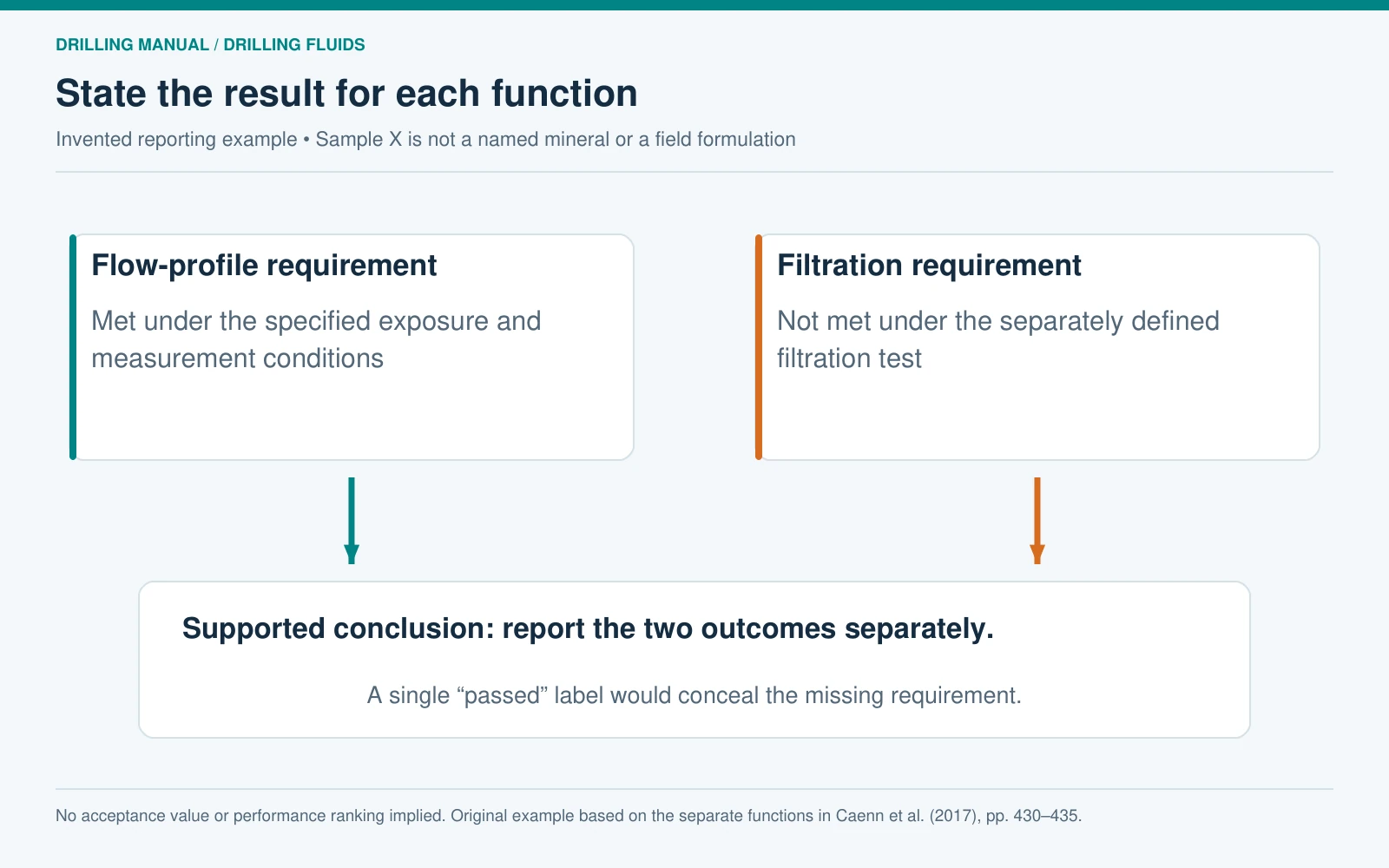
Consider an invented reporting example with no field acceptance values assigned. Sample X meets a predeclared flow-profile requirement after exposure, but its measured filtration result exceeds the separately declared limit. The supported statement is that X met the flow criterion under those conditions and did not meet the filtration criterion. “X passed the clay comparison” would conceal the failure.
A second sample may need additional preparation to achieve the required initial response. That finding belongs in the comparison even if its final measurement is similar. Mixing capability, preparation time and reproducibility can affect whether the laboratory result represents the intended use.
If solid separation is observed, identify when it appeared and how the sample was handled before measurement. A measurement on a remixed sample describes that prepared state. It should not erase a prior observation that the sample separated during the defined hold. State the observation without assigning a mechanism that the test has not established.
Specify the product with a complete evidence record
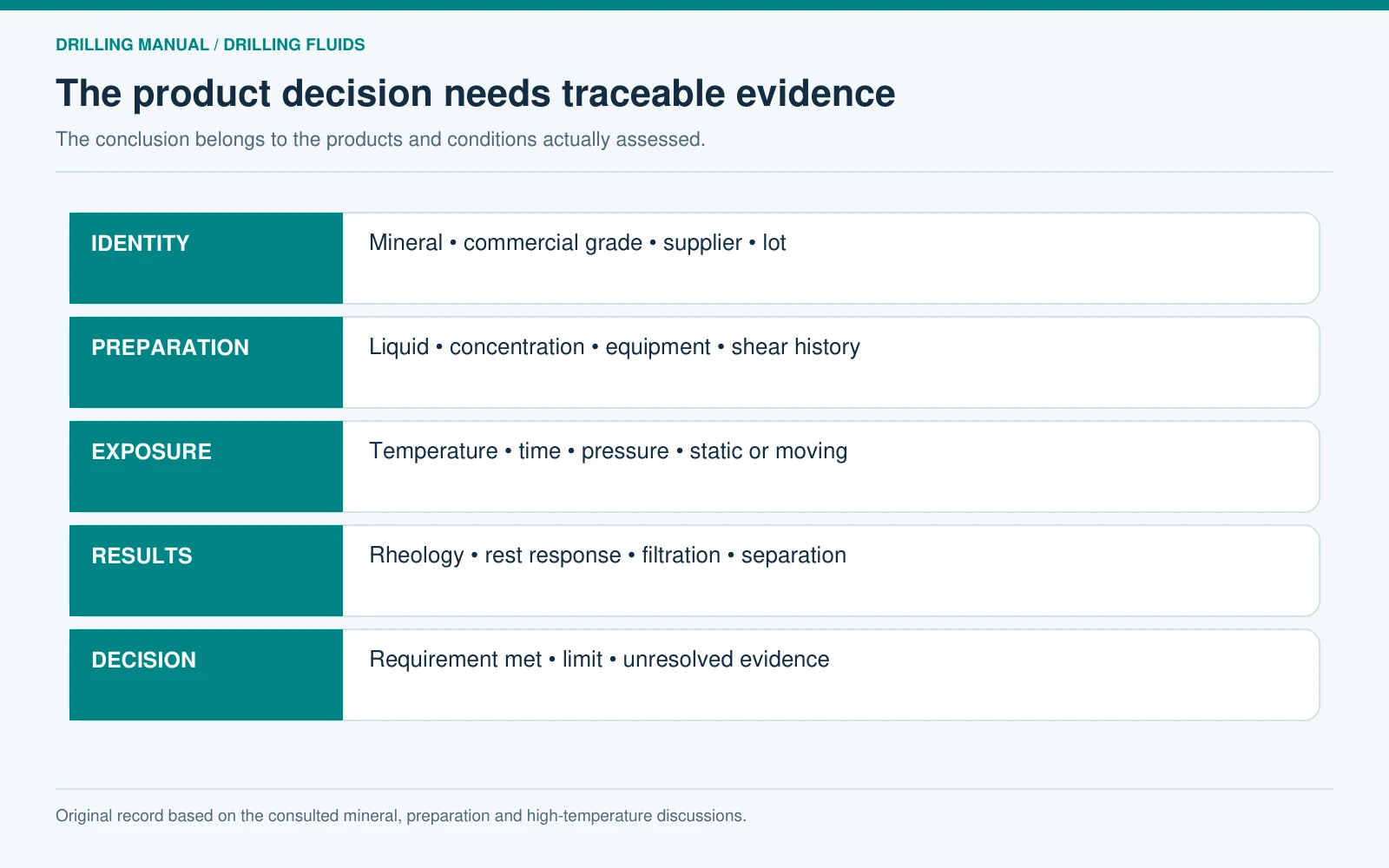
An attapulgite vs sepiolite selection record should identify the duty, the actual products, preparation history, liquid composition, concentrations, exposure conditions and results for each required function. Add the remaining uncertainty and the evidence needed to resolve it. That preserves the distinction between mineral rationale and qualification of a complete fluid.
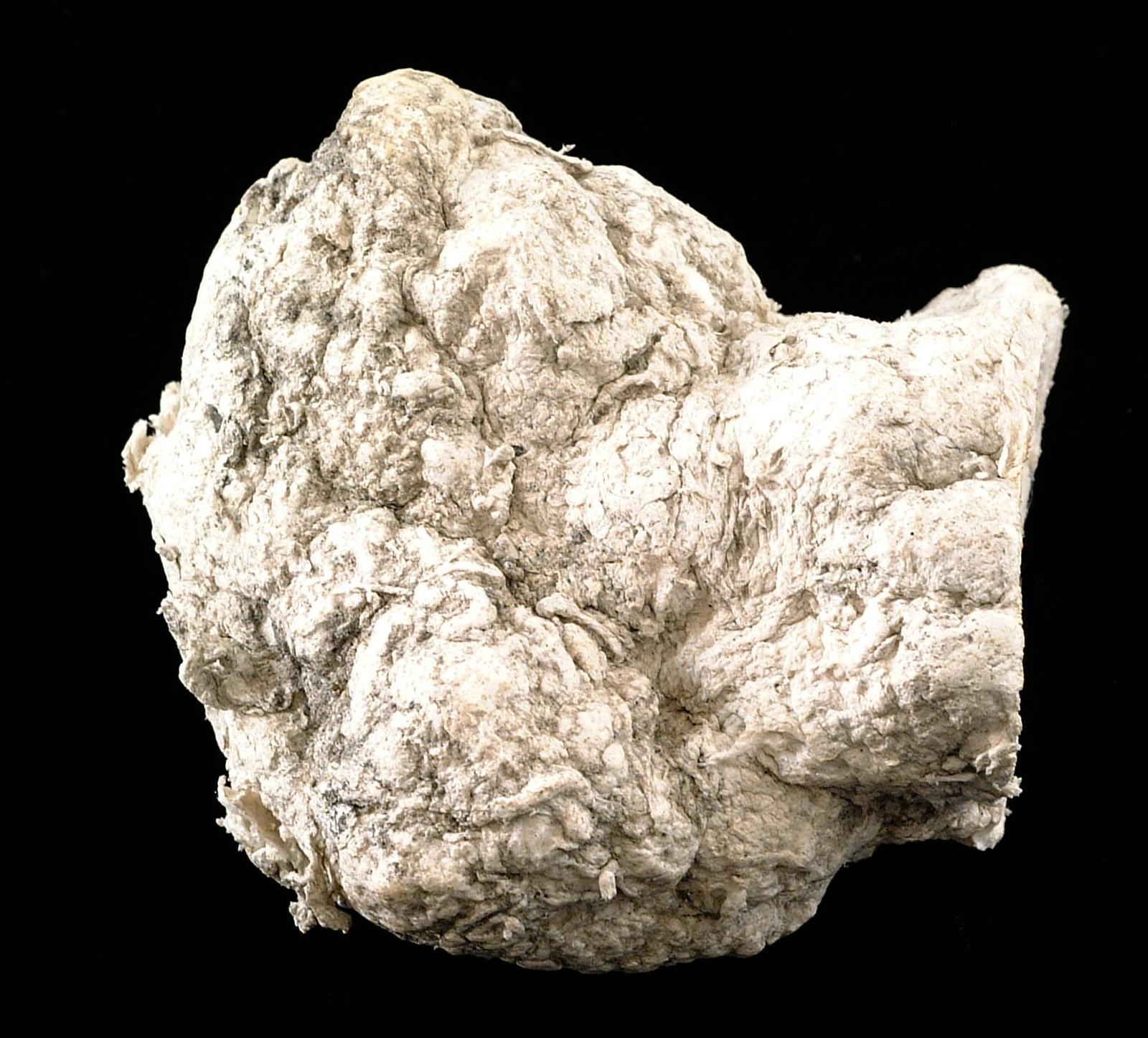
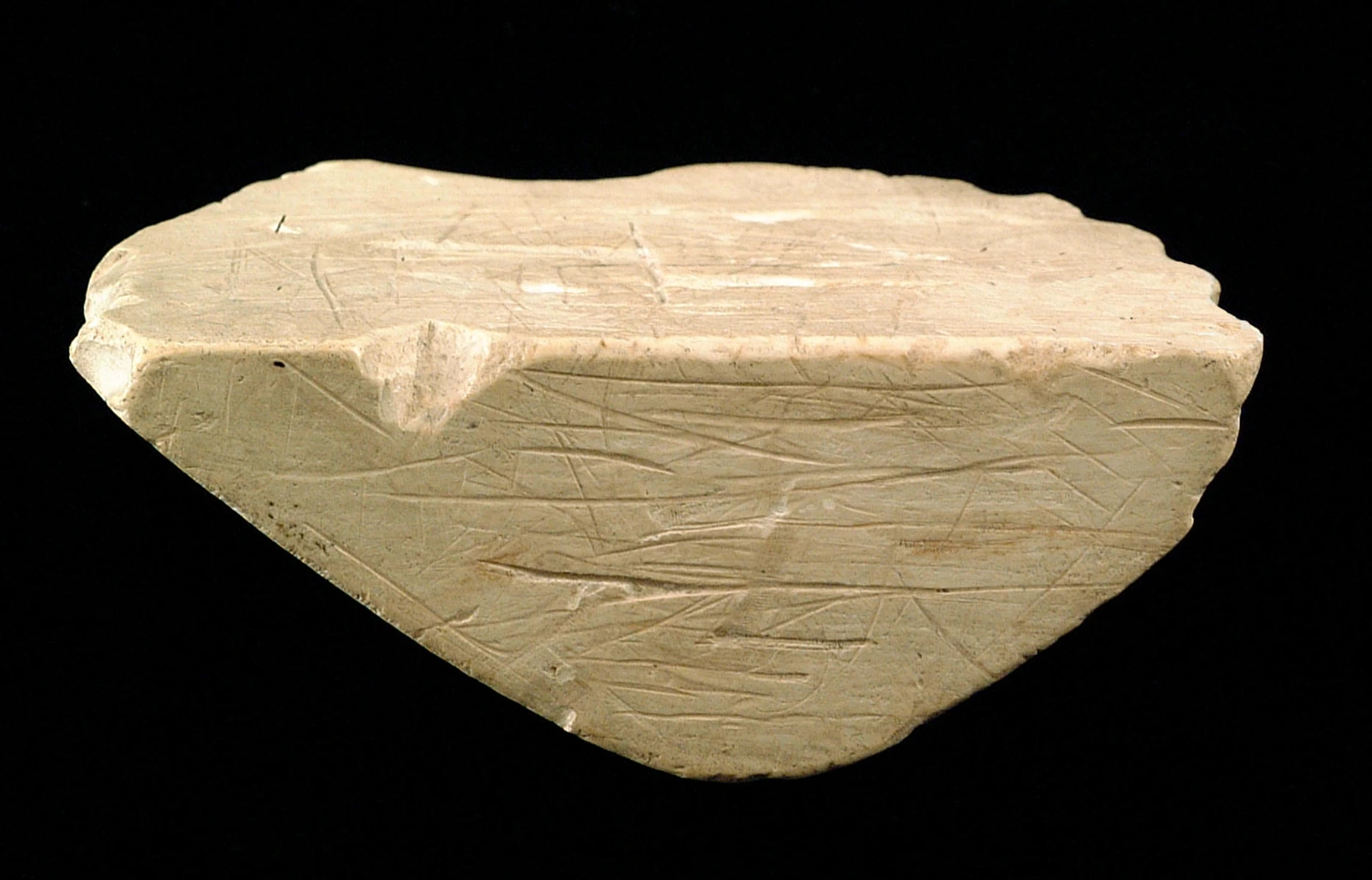
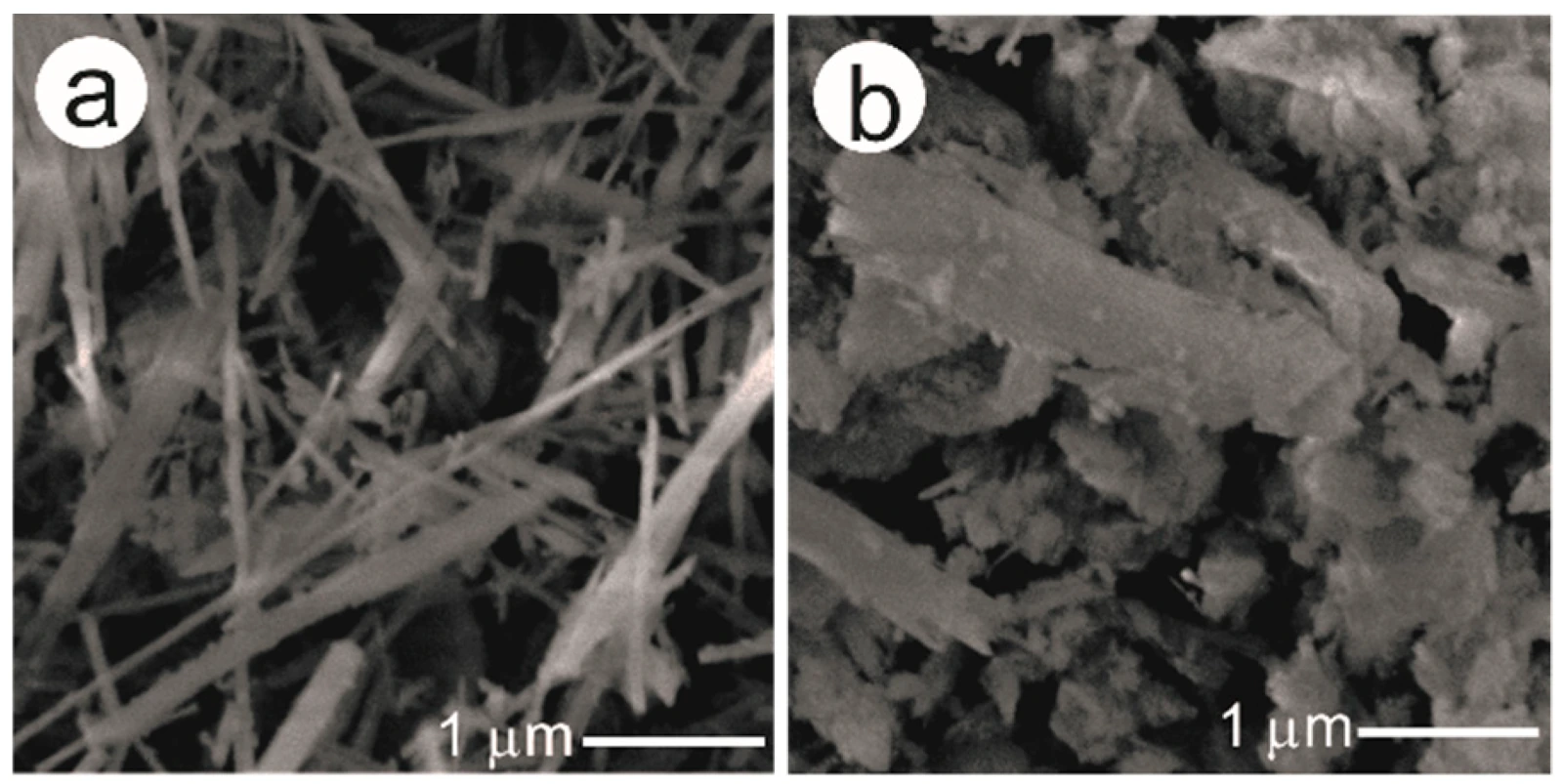
The manuals also discuss the fibrous nature of these materials. For procurement and handling, use the current documentation for the actual grade and location rather than converting a historical handbook statement into a current legal or occupational limit. Mineral photographs illustrate identity; they do not establish that a specimen is a qualified drilling-fluid product. [3, pp. 106–107]
Other viscosifiers may serve a related function through different mechanisms. The xanthan gum guide covers that polymer separately. A material comparison becomes useful when it explains why a candidate is being tested and what would justify its selection, without treating any one mineral name as a universal answer.
Frequently asked questions
Are attapulgite and sepiolite the same clay?
No. They are analogous fibrous clay minerals with related suspension mechanisms, but their structures and particle characteristics differ. Identify the actual commercial grade in any comparison. [1, pp. 106–107]
Why are these clays considered for saltwater mud?
The manuals relate their useful suspension behavior to mechanical interference among elongated particles, with less dependence on electrostatic interaction than swelling-clay systems. That does not make every component in a finished mud insensitive to brine chemistry. [2, p. 2-6] [3, pp. 106–107]
Is sepiolite always better than attapulgite?
The sources give sepiolite particular attention for high-temperature service. The choice still depends on preparation, fluid composition, exposure and the required functions. They do not establish a universal winner across all grades and duties.
Can either mineral provide all the required fluid-loss control?
The cited manuals identify poor filtration characteristics of the fibrous clay network and discuss separate filtration-control components. Confirm the complete fluid’s filtration response rather than inferring it from viscosity. [3, p. 107] [1, pp. 432, 434]
Why can two laboratories obtain different viscosity results?
Different shear and preparation histories can develop different states of particle dispersion. Product identity, concentration, liquid composition and measurement conditions also need to match before the results are comparable. [3, p. 106] [1, p. 434]
Does a high-temperature mineral claim qualify the complete mud?
No. The duration and conditions of exposure, the remaining additives and separate rheological and filtration results must be evaluated. An aged-and-cooled measurement must also be distinguished from a measurement made while hot. [1, pp. 430–435]
References
- Caenn, R.; Darley, H.C.H.; Gray, G.R. Composition and Properties of Drilling and Completion Fluids. Seventh edition. Gulf Professional Publishing/Elsevier, 2017. ISBN 978-0-12-804751-4. Printed pages: 106–107; 430–435. PDF pages in the edition consulted: 110–111; 432–437.
- Baker Hughes Drilling Fluids. Reference Manual. Revised 2006. Formation Mechanics. Printed pages: 2-2; 2-6. PDF pages in the edition consulted: 60; 64.
- AVA Drilling Fluids & Services. Drilling Fluids Manual. Version 1, November 2004. Section 4.3.6, Attapulgite and Sepiolite. Printed pages: 106–107. PDF pages in the edition consulted: 108–109.