Silicate drilling fluids are water-based systems that use soluble sodium or potassium silicate to help stabilize reactive formations. Their distinctive action is the formation of gel or insoluble material near the rock surface and within accessible pore passages. This can restrict filtrate entry and pressure transmission. The same chemistry also creates a selection problem: a useful reaction near the wellbore can become an unwanted reaction in the circulating fluid.[1]
A credible assessment therefore connects the shale response with the condition of the whole mud system. It asks whether the actual water, polymers, lubricant, drilled solids and expected contaminants can work together over the intended interval. This guide explains those decisions, the evidence behind them and the limitations of simple comparisons. For the wider choice of systems, start with the water-based drilling-fluid systems guide.
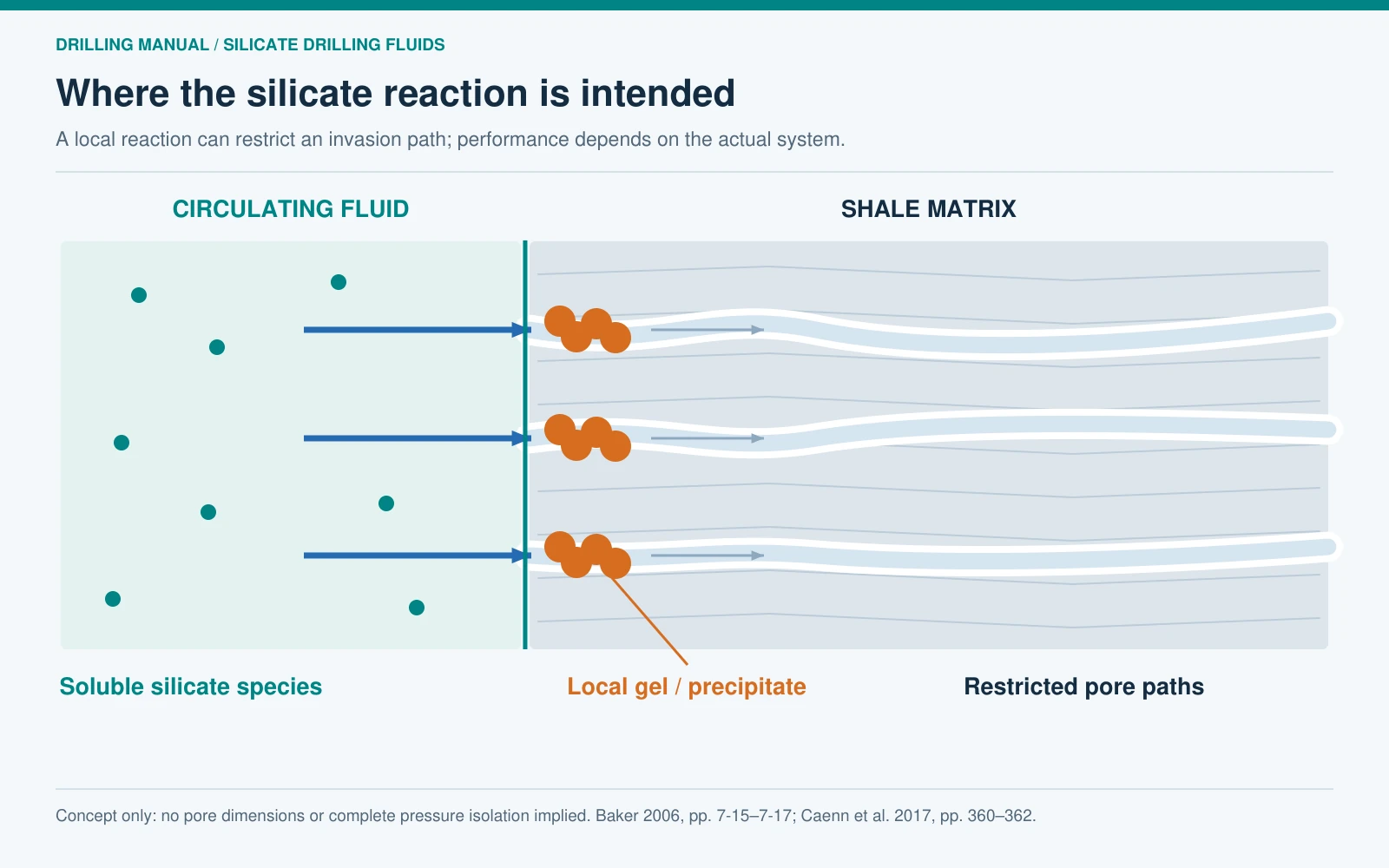
How silicate drilling fluids inhibit reactive shale
Soluble silicate provides a reactive component that can reach small accessible passages at the shale-fluid boundary. Changes in the local chemical environment can then produce a gel network, a precipitate, or both. The resulting material reduces the ease with which fluid and pressure penetrate that region. AVA describes this as cementation of shale porosity; Baker Hughes describes gelation and precipitation within the pore network.[1][3]
The intended benefit is more than making a cutting look firm in a sample tray. Restricting invasion can slow the changes in pore pressure and hydration that contribute to instability. However, the effect depends on the rock, its pore fluid and the complete formulation. A mechanism drawing cannot establish that a particular interval will become pressure-isolated.
Silicate drilling fluids also remain drilling fluids: density, rheology, cuttings transport and exposure time still matter. Caenn, Darley and Gray place fluid-rock interaction alongside stresses, rock properties and operating conditions when discussing borehole stability. A strong inhibition result cannot compensate automatically for an unsuitable pressure regime or poor hole cleaning.[2]

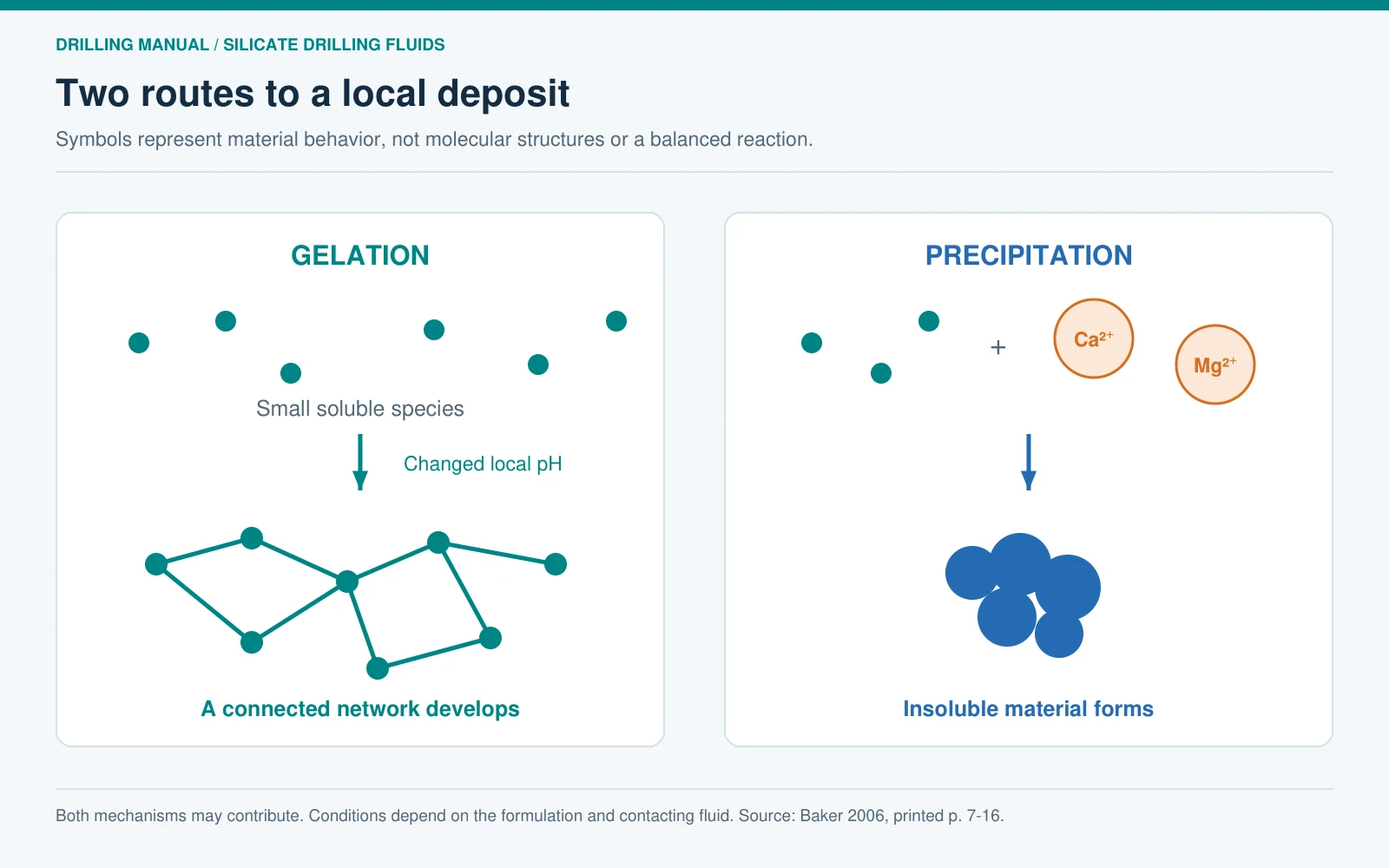
Gelation and precipitation are different reactions
Gelation describes the development of a connected silicate network. In the Baker Hughes explanation, the alkaline circulating solution contains relatively small negatively charged silicate species. A lower-pH environment can change their interaction and encourage formation of larger connected structures. The rate and extent depend on the chemical environment; a single universal gel point is not a complete description of a formulated mud.[1]
Precipitation involves formation of insoluble material through reaction with polyvalent ions, notably calcium and magnesium. These ions may be available from the formation or from fluids that contact the mud. Gelation and precipitation can occur together, but keeping the mechanisms separate helps explain why both pH and contamination history matter.
Neither description is an instruction to lower the active system’s pH or add hardness. The engineering objective is a stable circulating formulation that develops the desired interaction with the target rock. Numerical conditions quoted for one historical fluid should remain attached to that fluid and its test conditions.[1]
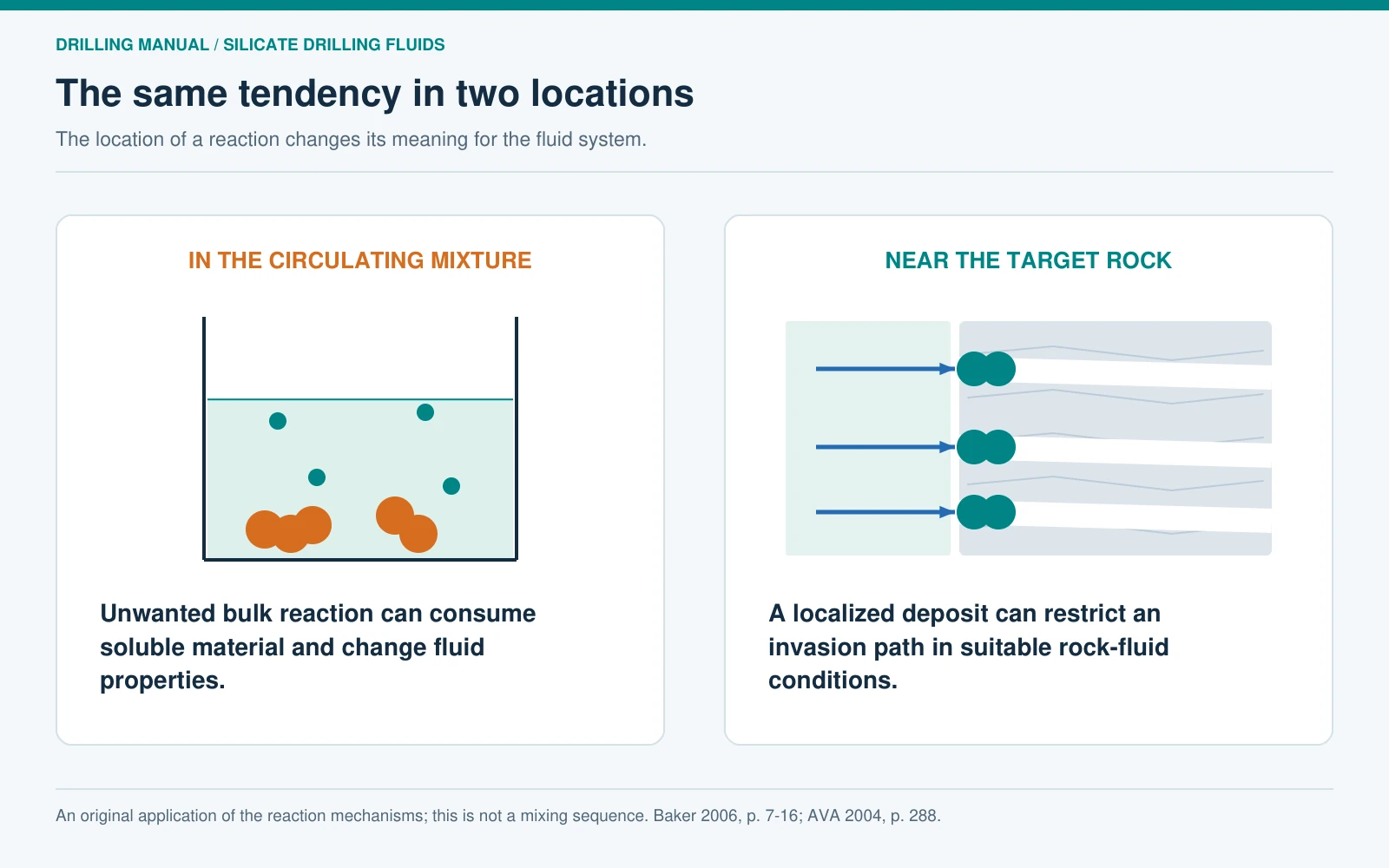
Why the reaction location changes the result
Consider two locations. At the intended rock-fluid boundary, a reaction product may help obstruct an invasion path. In a supply tank, transfer line or circulating sample, the same broad chemical tendency can consume soluble material and alter fluid properties before it reaches the target. Compatibility therefore concerns both what reacts and where the reaction occurs. This is an application of the reaction mechanisms described in the manuals.[1][3]
Water chemistry belongs in the selection record from the beginning. A name such as freshwater or seawater does not describe every relevant constituent. The actual analysis and the contribution of each mixed stream are more useful than the label alone. Similarly, evidence from a fresh laboratory formulation should be distinguished from evidence after exposure to anticipated contamination.
Keep an unexplained change in rheology or filtration connected to the sample history. A rise in viscosity does not identify a silicate reaction by itself: the whole fluid contains other components and drilled solids. The investigation needs comparable samples, known additions and the relevant chemical measurements.
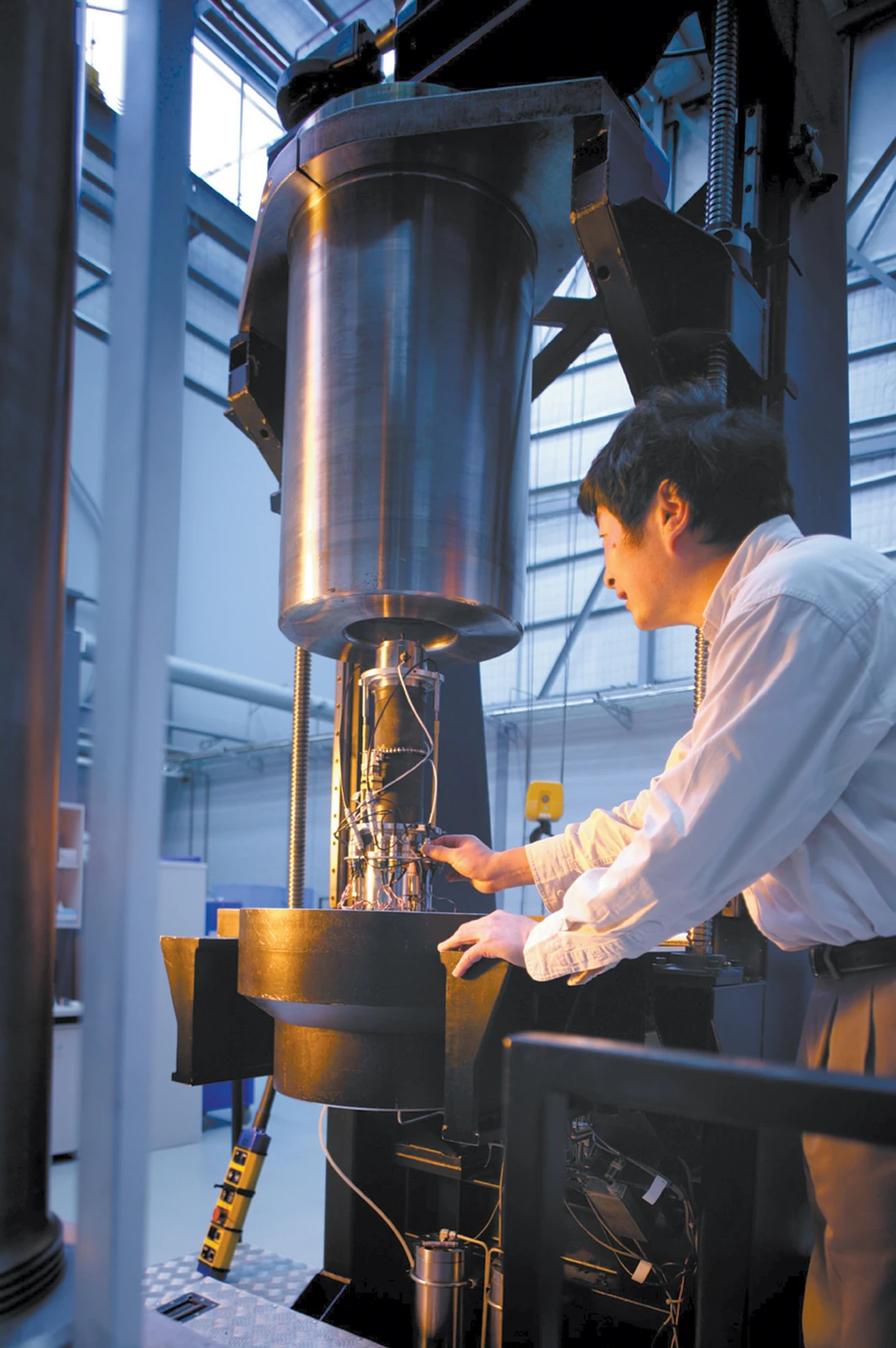
Water activity and pressure invasion answer different questions
Silicate deposition can also affect the shale-fluid boundary’s membrane behavior. A membrane that restricts dissolved species can make differences in water activity more significant. Baker Hughes discusses the contribution of dissolved salts alongside silicate gelation and precipitation, rather than treating the silicate additive as the only source of inhibition.[1]
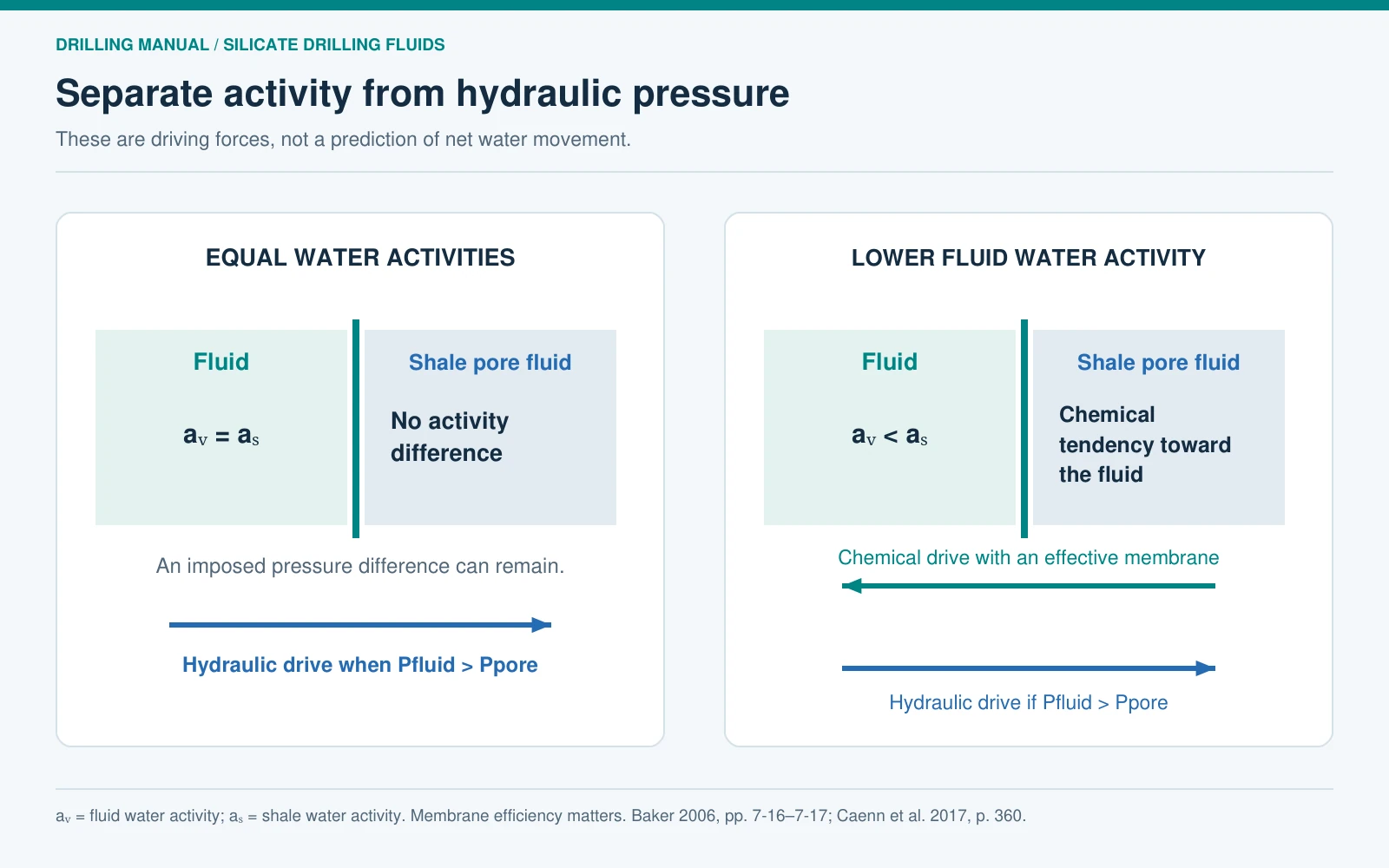
Water activity describes a chemical driving force. With an effective membrane, the chemical tendency is for water to move from higher activity toward lower activity. Hydraulic pressure provides a separate driving force, and the observed transfer reflects the coupled system. Equal water activities remove that particular activity difference; they do not remove an imposed hydraulic pressure difference.
This distinction matters when reviewing silicate drilling fluids. A salinity value, a low filtration result and a membrane-efficiency result describe different observations. None can simply be substituted for the others. Caenn, Darley and Gray discuss pore-pressure-transmission testing because it can examine aspects of the fluid-shale interaction that a simple immersion observation does not capture.[2]
Product composition in silicate drilling fluids
Sodium and potassium silicates belong to the same broad family, but the cation name is only part of the product description. Baker Hughes also identifies the silica-to-alkali-oxide molecular ratio as a variable affecting the solution. A product comparison needs the declared composition and concentration basis, as well as its behavior in the intended fluid.[1]
| Information to retain | Why it matters to the comparison |
|---|---|
| Silicate identity and supplied form | Distinguishes the actual sodium or potassium product being evaluated. |
| Declared solids or active-content basis | Separates a quantity of commercial solution from a quantity of its declared silicate material. |
| Silica-to-alkali-oxide ratio and its definition | Prevents confusion between different compositions or between a molecular ratio and a mass ratio. |
| Density when volume is used | Allows a stated volume to be related to mass without silently assuming water density. |
| Evidence from the complete mud | Connects the product description to actual rheology, filtration, inhibition and compatibility observations. |
Ask what each percentage means. Weight percent of the supplied solution, volume percent of a commercial product and an analytical concentration in the mud are different quantities. A comparison that omits the denominator cannot establish equivalence.


An original concentration-basis example
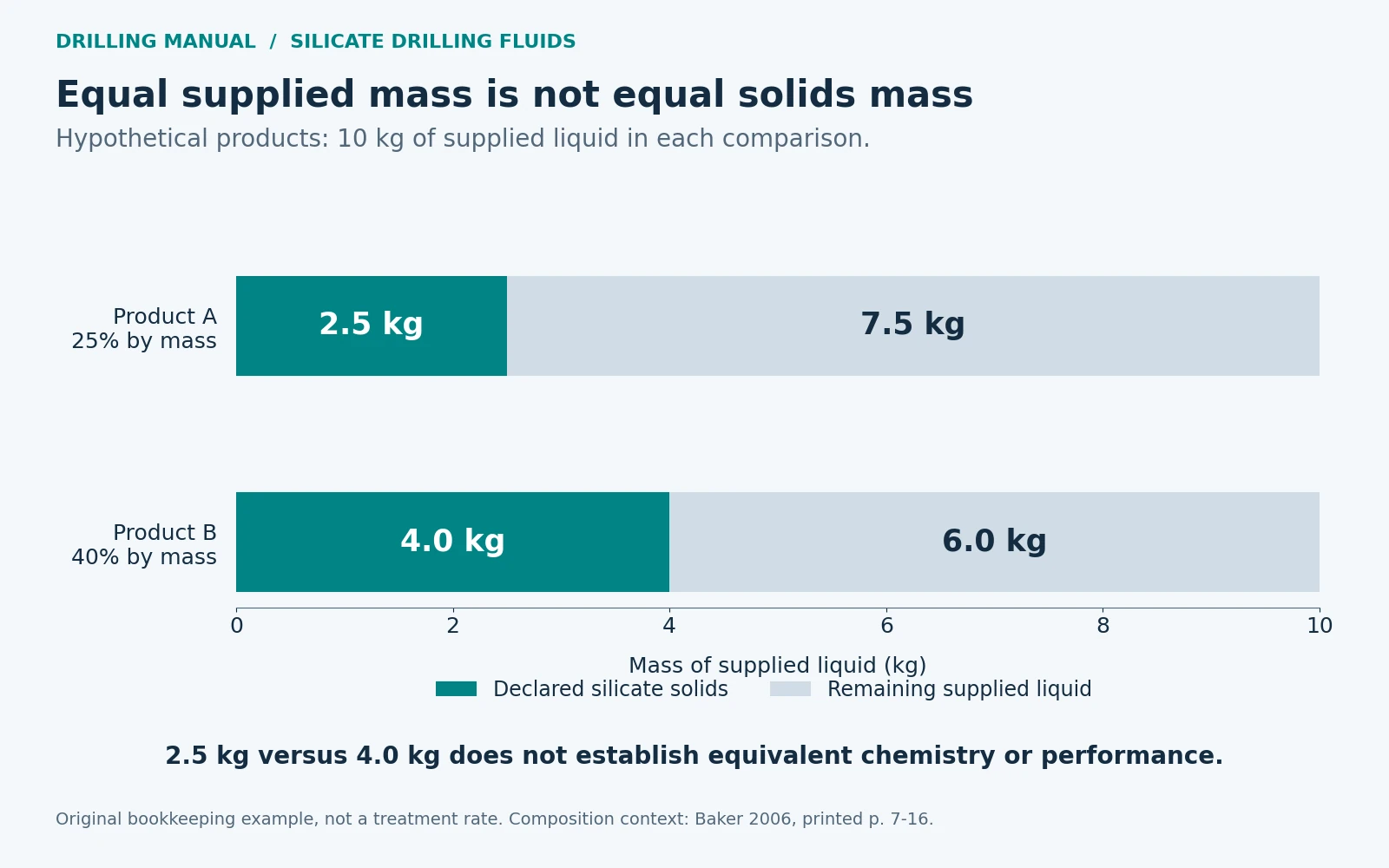
Suppose two hypothetical supplied liquids have declared silicate-solids mass fractions of 25% and 40%. Comparing 10 kg of each supplied liquid gives:
| Hypothetical product | Supplied-liquid mass | Declared solids fraction | Declared silicate-solids mass |
|---|---|---|---|
| A | 10 kg | 0.25 | 2.5 kg |
| B | 10 kg | 0.40 | 4.0 kg |
The calculation is simply declared solids mass = supplied-liquid mass × declared solids mass fraction. Product B supplies 1.6 times the declared solids mass in this invented comparison. This is bookkeeping, not a field treatment or a claim that B performs better. It does not make their cation chemistry, molecular ratio, compatibility or shale response equivalent.
If the quoted quantity were litres instead of kilograms, the supplied-liquid density would also be needed. Keep the stated basis with the calculation so that an apparently identical addition is not mistaken for an identical chemical input.
Compatibility checks for silicate drilling fluids
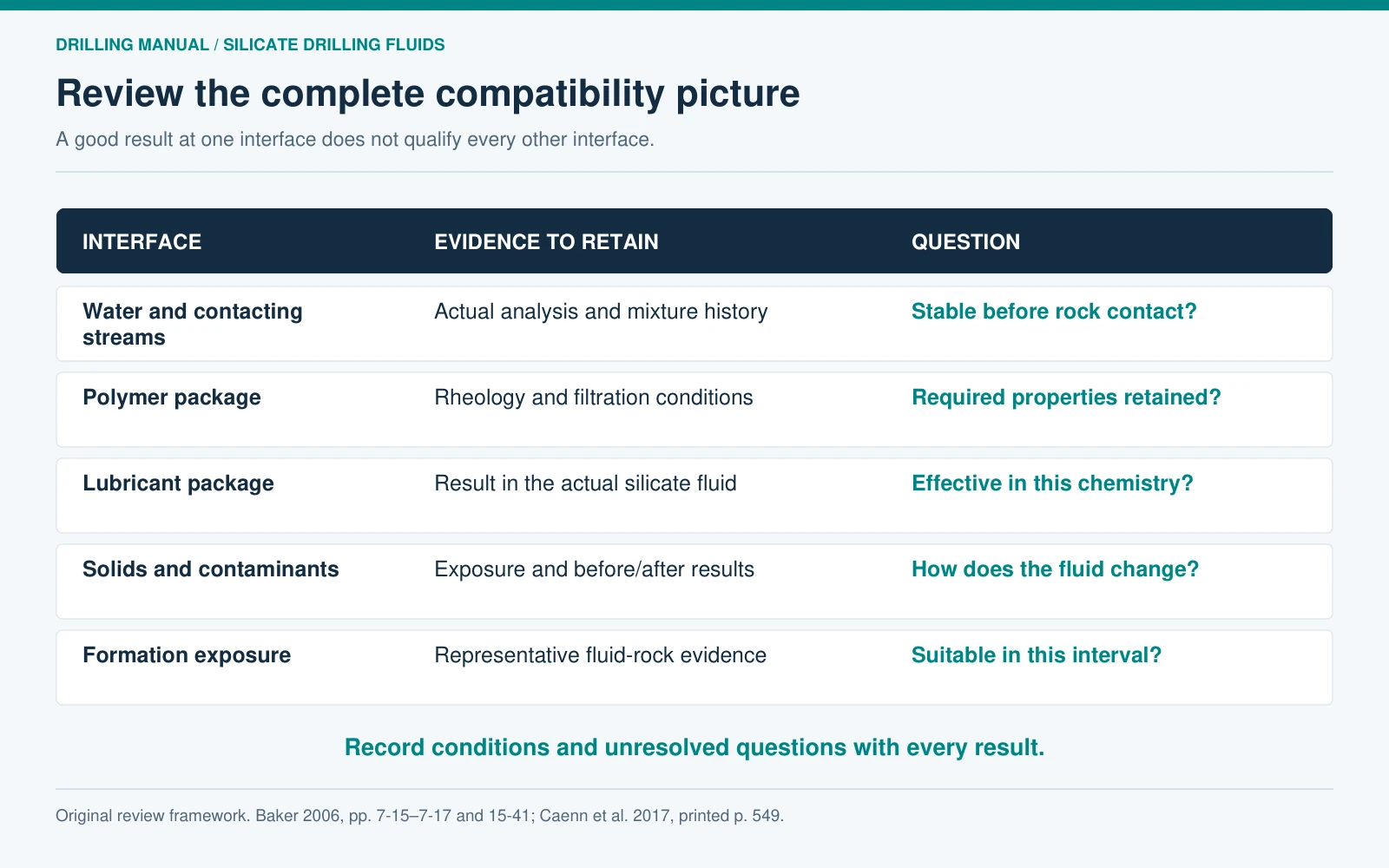
The complete formulation has to support the intended inhibition mechanism while remaining workable. The books describe a long history of silicate systems with both successful shale stabilization and difficulties in controlling fluid behavior. Those accounts support evaluating the whole system rather than transferring a favorable result from one isolated additive.[1][2]
| Interface | Evidence to review | Question the evidence should answer |
|---|---|---|
| Make-up water and contacting fluids | Actual water analysis and a documented compatibility comparison. | Does the intended mixture remain suitable before contact with the target rock? |
| Rheology and filtration-control package | Complete-fluid measurements at stated preparation and exposure conditions. | Can the fluid maintain the properties required for the interval? |
| Lubricant package | Lubricity evidence in the actual silicate formulation, with other properties reviewed. | Does the lubricant work in this chemical environment? |
| Drilled solids and expected contamination | Recorded sample history and before/after observations. | How does the candidate respond as its composition changes? |
| Target and adjacent formations | Representative fluid-rock evidence and the intended completion requirements. | Is the interaction beneficial in every interval where the fluid will be exposed? |
Lubricity deserves a separate check. Caenn, Darley and Gray specifically discuss the difficulty of obtaining suitable lubrication in silicate systems with materials used in other water-based muds. A successful lubricant result in a different base fluid is therefore incomplete evidence for this selection.[2]
Producing formations also require their own assessment. The Baker Hughes glossary advises against silicate mud use in pay zones. That source warning should remain visible in a candidate review: a pore-restricting mechanism valued in troublesome shale does not establish that a fluid is suitable for a reservoir interval.[1]


Choose shale tests that answer the actual problem
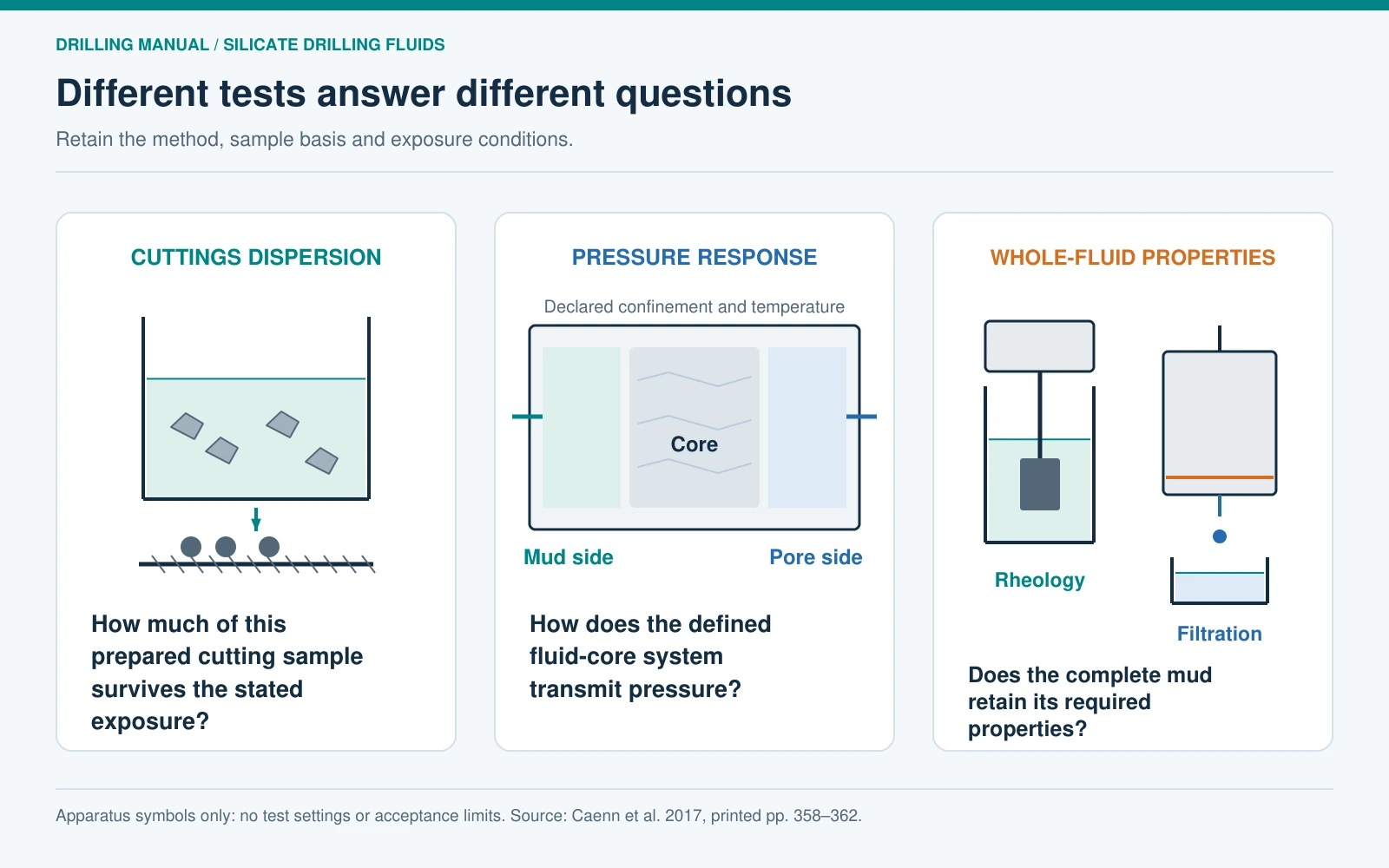
Start with the suspected mode of instability and then choose evidence that can address it. A dispersion comparison examines the survival of cuttings under its stated conditions. A swelling or mechanical observation examines another aspect of rock behavior. A pore-pressure-transmission evaluation addresses pressure and membrane-related interaction. These observations are complementary rather than interchangeable.[2]
Caenn, Darley and Gray explain an important limitation of simple immersion demonstrations: an unconfined specimen can behave differently from stressed rock around a borehole. They also distinguish natural samples, which better represent the formation but vary between specimens, from reconstituted samples, which can be more repeatable but remain an imperfect representation.
For a useful comparison, retain the rock identity, sample preparation, fluid composition, temperature, exposure duration and reported test conditions. Compare the candidate with an appropriate reference fluid under the same basis. Record repeat observations where specimen variability matters. Photographs of surviving cuttings are useful context, but they should accompany the measured result and the method that produced it.
The water-based mud testing guide provides wider background on routine mud measurements. A specialized shale assessment still needs its own stated method and interpretation.
Connect the laboratory result with rig evidence
A laboratory comparison supports a defined choice; field observations show whether the assumptions remain appropriate. For silicate drilling fluids, retain the relationship between fluid condition, cuttings behavior and the interval being drilled. The textbook emphasizes that borehole stability reflects fluid properties, rock characteristics and operating conditions together.[2]
Useful questions include: did the sampled fluid represent the actual circulating composition? Did a property change follow dilution, a product addition, a new formation or a change in solids content? Was the shale response consistent with the earlier samples? Were the observations made after comparable exposure?
Keep pH, reported silicate concentration and rheology as separate records. pH describes the acid-base condition; it is not, by itself, an inventory of soluble silicate. Likewise, a tidy cutting sample does not prove that pressure transmission, lubricity and hole condition all meet the interval requirements. Record the method behind each result rather than converting one favorable observation into a general pass.
Link the review to the daily mud report and the solids-control record so that changes in the circulating system remain visible.
Selecting silicate drilling fluids from the available evidence
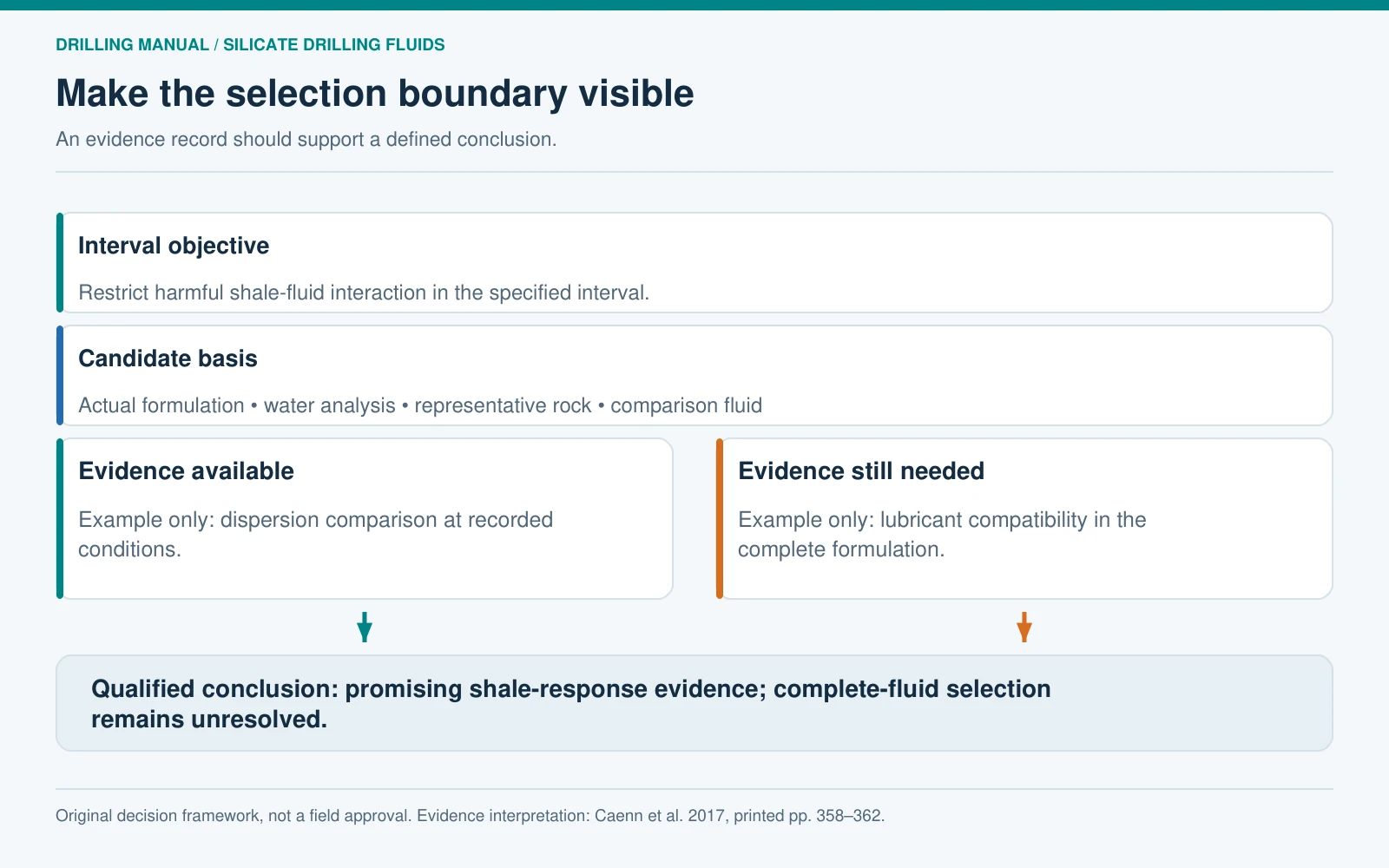
A useful selection record states the interval objective, the actual formulation considered, the rock and water evidence, the properties demonstrated and the questions that remain unresolved. It also records the comparison fluid and the conditions under which the comparison was made.
For example, a candidate may have encouraging dispersion results but incomplete lubricant compatibility evidence. That conclusion is more informative than calling the entire system suitable. Alternatively, a formulation may perform acceptably with the planned water but respond poorly to an anticipated contacting stream. The decision record should retain that boundary and the evidence needed to resolve it.
The result is a scoped choice of silicate drilling fluids for a defined problem, supported by fluid-rock and complete-fluid evidence. It gives the next reviewer enough information to understand both the expected benefit and the conditions on which that benefit depends.
Frequently asked questions
Are silicate drilling fluids the same as sodium silicate solution?
No. A commercial silicate solution supplies one part of the chemistry. A drilling fluid also needs the composition and properties required for its interval, including rheology and filtration control. Evaluating the supplied liquid alone does not establish complete-fluid performance.[1]
Is potassium silicate always better than sodium silicate?
The cation is relevant, but it does not settle the choice. The product’s composition, its concentration basis, the surrounding fluid and the formation response also matter. A comparison should use the actual candidate formulations and the intended rock and water conditions.[1]
Do silicate drilling fluids still need filtration control?
Yes. A localized fluid-rock reaction and a complete mud’s filtration performance are different parts of the assessment. The Baker Hughes discussion identifies compatible filtration-control agents as one of the developments that supported later silicate systems. Test the whole fluid at the relevant conditions.[1]
Can a low-hardness result prove that the system is compatible?
It is one observation, not a complete compatibility assessment. The relevant questions include which streams contacted the fluid, whether reactions occurred, what the reported silicate concentration represents and how the other fluid properties changed. Keep the analytical method and sample history with the result.
Do intact cuttings prove wellbore stability?
They are useful evidence of cuttings behavior under the observed conditions. They do not establish every contribution to stability. Stress, pore-pressure response, exposure, fluid properties and drilling conditions remain relevant, and simple unconfined observations have limitations.[2]
Can one silicate formulation be used through the entire well?
That requires an interval-specific assessment. The chemistry may serve a shale-stability objective while creating different concerns in another formation or at a fluid transition. Reservoir suitability deserves particular attention because the source manual cautions against silicate mud use in pay zones.[1]
References
- Baker Hughes Drilling Fluids. Drilling Fluids Reference Manual. Revision 2006. Chapter 7, silicate-based drilling fluids; Chapter 13, deepwater-system discussion; glossary entry for silicate mud. Printed pages: 7-15–7-17, 13-8 and 15-41. PDF pages in the edition consulted: 416–418, 634 and 766.
- Caenn, Ryen; Darley, H.C.H.; and Gray, George R. Composition and Properties of Drilling and Completion Fluids. Seventh edition. Gulf Professional Publishing / Elsevier, 2017. Chapter 9, Wellbore Stability; Chapter 13, Drilling Fluid Components. ISBN 978-0-12-804751-4. Printed pages: 344–345, 358–362 and 549. PDF pages in the edition consulted: 346–347, 360–364 and 550.
- AVA S.p.A. Drilling Fluids Manual. Version 1, November 2004. Shale inhibition mechanisms and cementation of shale porosity. Printed pages: 287–288. PDF pages in the edition consulted: 289–290.