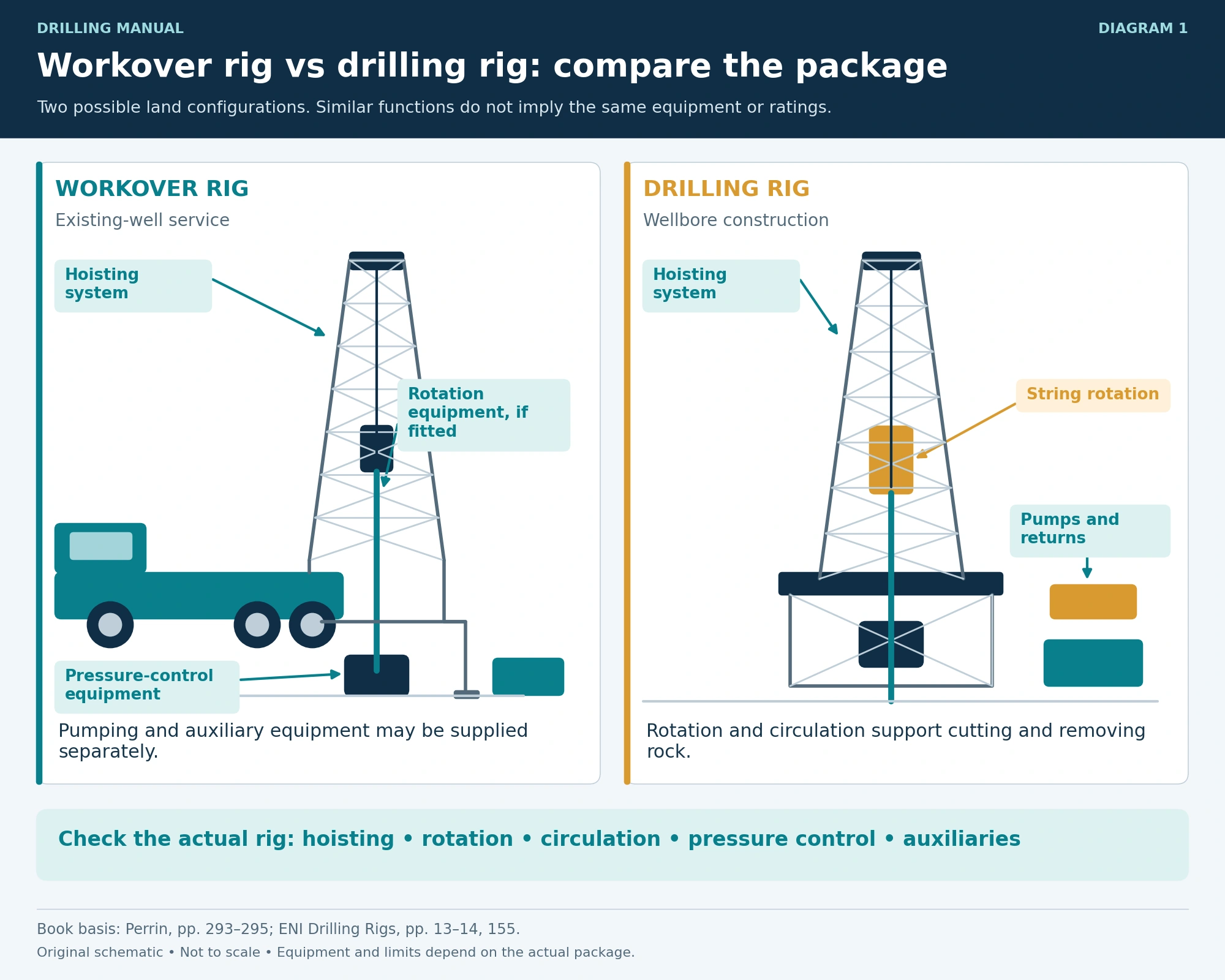
The key difference in a workover rig vs drilling rig comparison is the job the equipment package must perform. Drilling requires a system for making new hole. By comparison, workovers require access to an existing completion, with enough lifting, rotation and pumping capability for the planned operation. However, the categories overlap. A drilling rig can perform workovers, while a suitably equipped workover rig can undertake drilling-out or milling work. [1], [2]
This guide compares conventional land rigs. It explains what to check when choosing equipment for a defined job, with three illustrative applications and a cost example. For the broader intervention decision, see workover operations and when a rig is needed.
Workover Rig vs Drilling Rig: Quick Comparison
| Question | Workover rig | Drilling rig |
|---|---|---|
| Main objective | Repair, recover or change an existing completion. | Construct, re-enter or extend a wellbore; workovers are also possible. |
| Hoisting duty | Match the tubing, work string and recovery task. | Match the drill string, casing and planned drilling duty. |
| Rotation | Check what equipment is actually supplied. | Rotary equipment forms part of the drilling system. |
| Fluid handling | Specify pumps, tanks and returns handling for the job. | Circulation and fluid conditioning support drilling. |
| Pressure control | Match the well, tubulars and workover operations. | Match the well, tubulars and drilling operations. |
| Selection basis | The complete equipment package and total job requirements. | |
The table describes functions, not fixed capacity classes. In particular, a tall mast or an impressive lifting figure does not establish every other capability. The relevant books separate hoisting, rotation, circulation and pressure-control equipment. [1], [2]
What Are Workover Rigs and Drilling Rigs Used For?
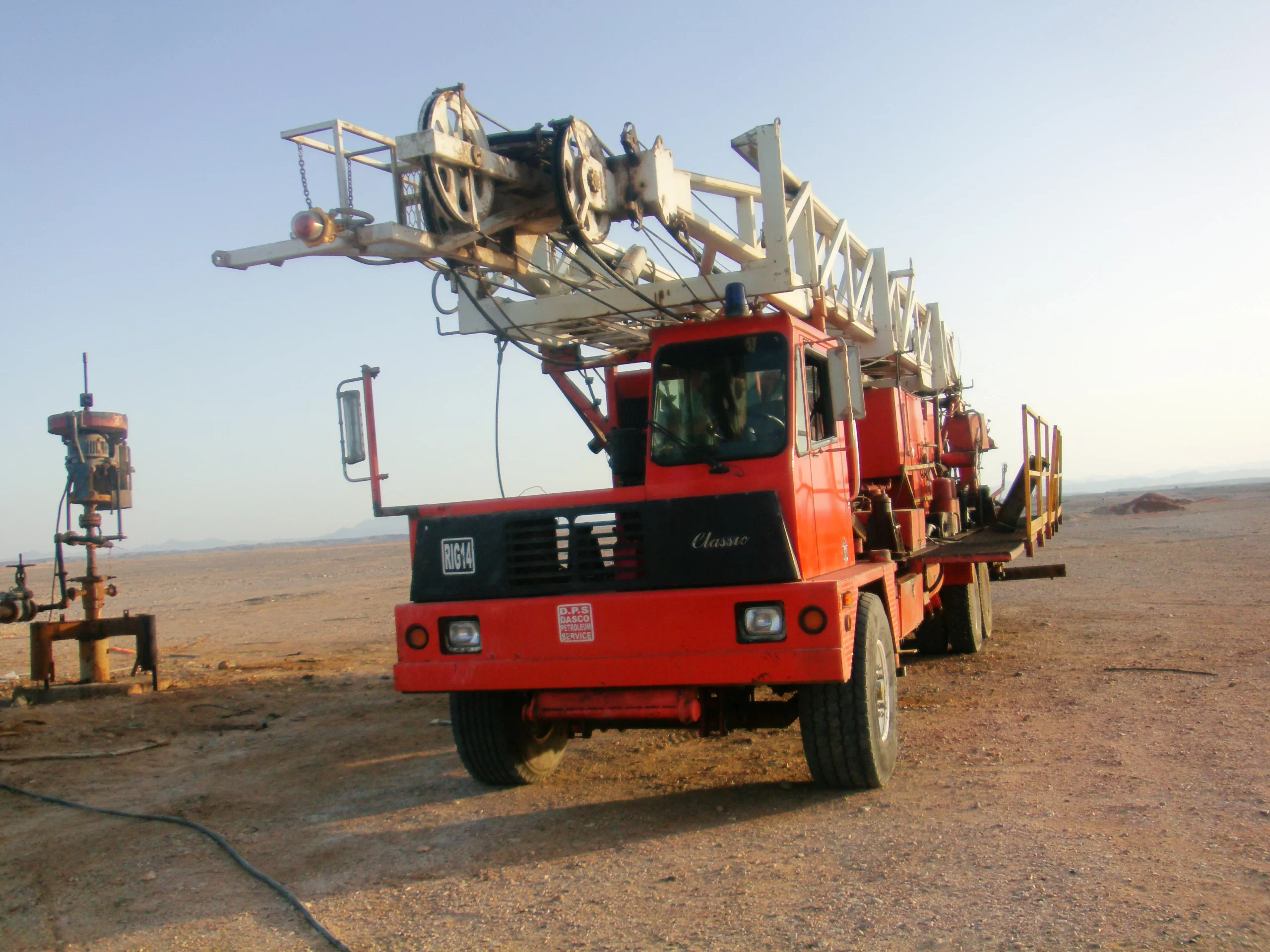
For example, a workover may involve recovering production tubing, changing downhole equipment or preparing a different completion arrangement. Consequently, the existing completion drawing and the planned repair drive equipment selection. The rig must handle what will actually come out of the well. [1]

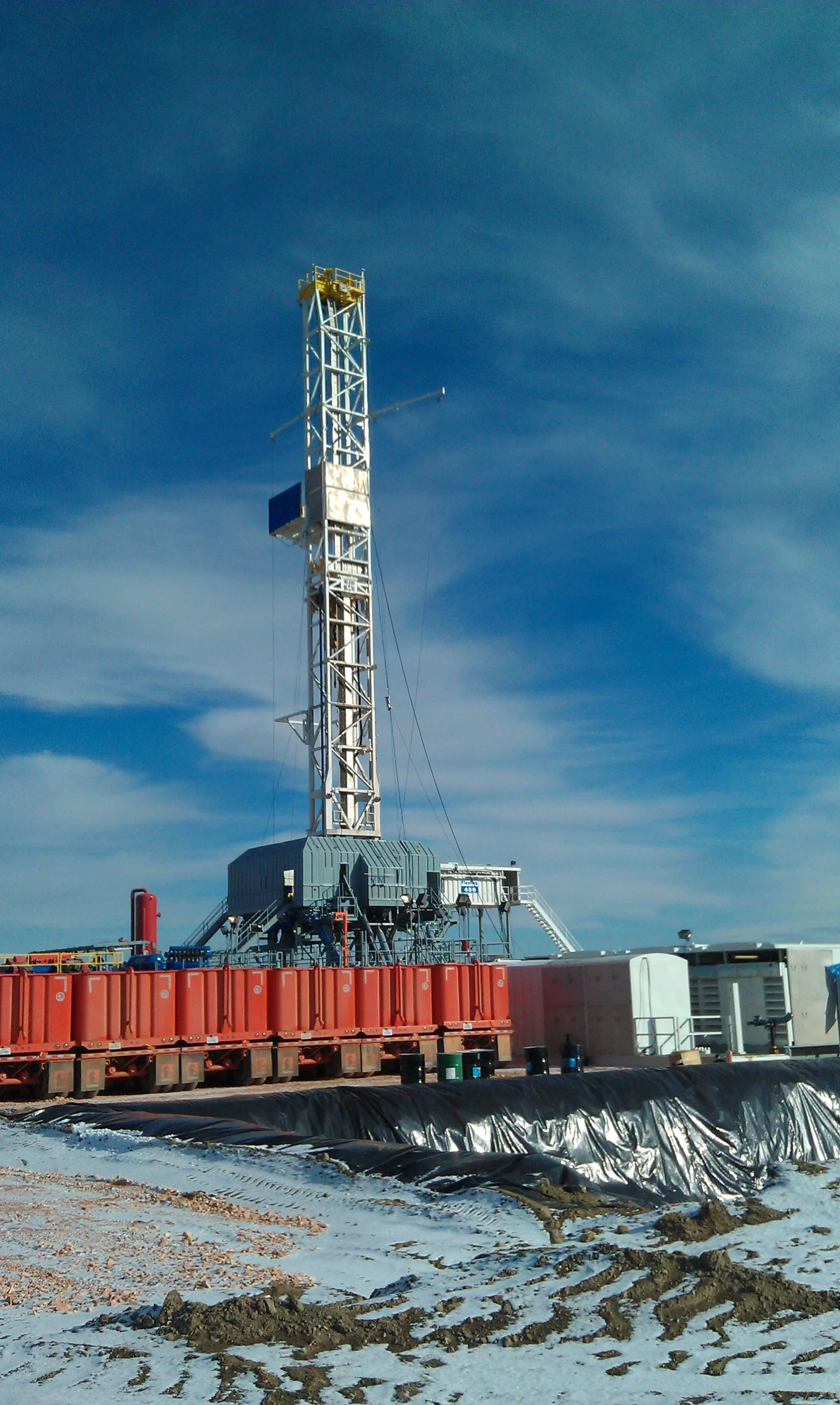
By comparison, drilling combines hoisting, rotation, fluid circulation, power and well control to construct the wellbore. Nevertheless, a drilling rig can also work on an existing well. The operation and installed equipment matter more than the label on the unit. [2]

For instance, Perrin distinguishes lightweight servicing or pulling units from larger workover rigs. Pulling units principally handle rods or tubing. Therefore, do not assume a quotation for a pulling unit includes every system needed for a complex workover. Confirm the supplied package. [1]
Workover Rig vs Drilling Rig Equipment
Hoisting and Tubular Handling
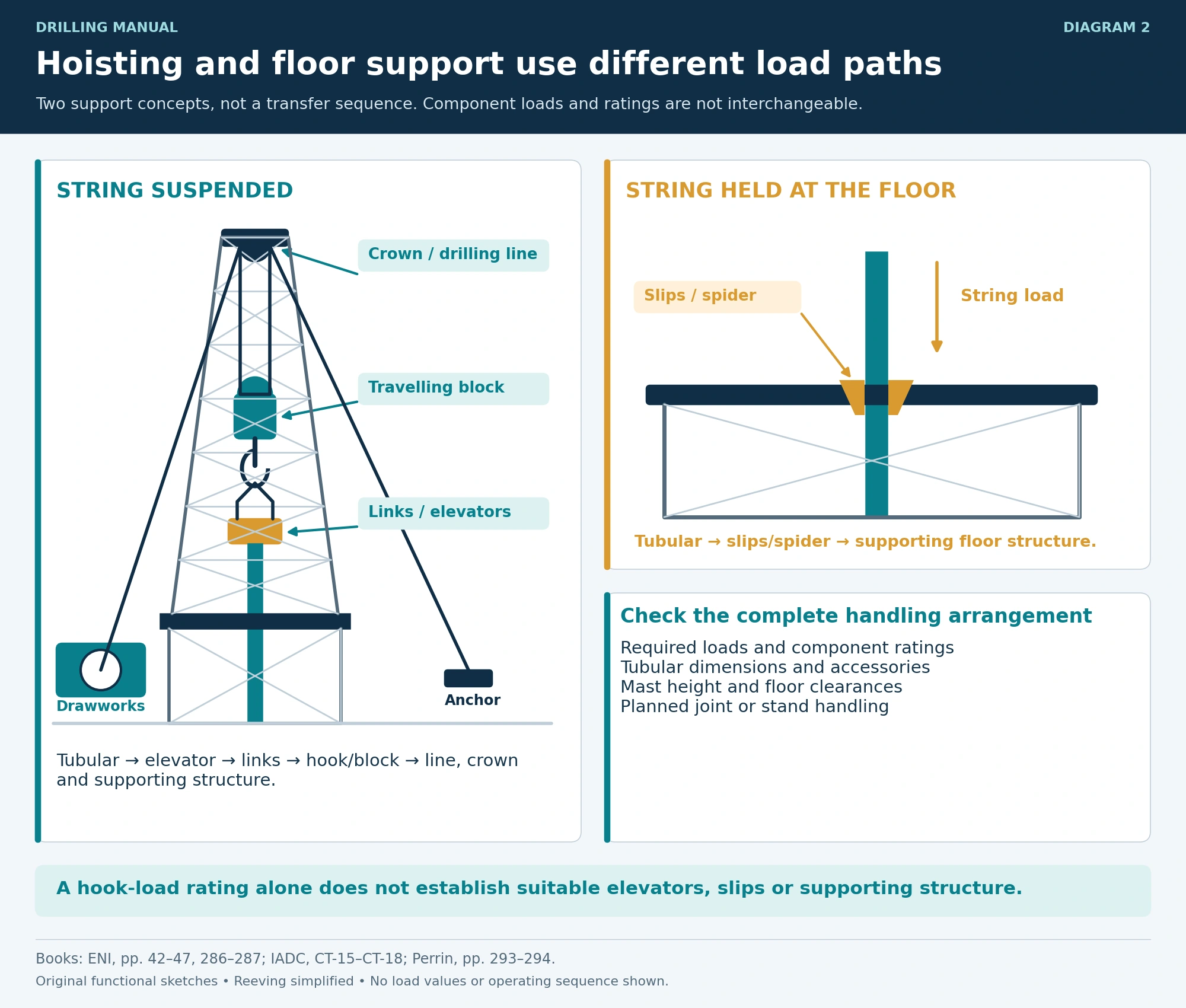
First of all, identify the tubulars, downhole equipment and recovery loads that the job requires. Then check the applicable hoisting equipment and handling tools. Workover equipment must suit the smaller tubulars and connections used in the operation; drilling equipment is not automatically interchangeable. [1]
The load passes through an assembly of components, including the supporting structure, blocks and handling equipment. Therefore, one advertised rating cannot replace checks on the complete arrangement. For individual equipment functions, use the illustrated drilling rig components guide. [2]
Also check how the rig handles and stores tubulars. For example, land-rig designs can accommodate singles, doubles or triples, depending on their configuration. In addition, the mast, racking arrangement and setback support must suit the planned pipe handling. Therefore, do not assume every workover rig handles singles or every drilling rig handles triples. [2], [3]
Rotation and Tool Drive
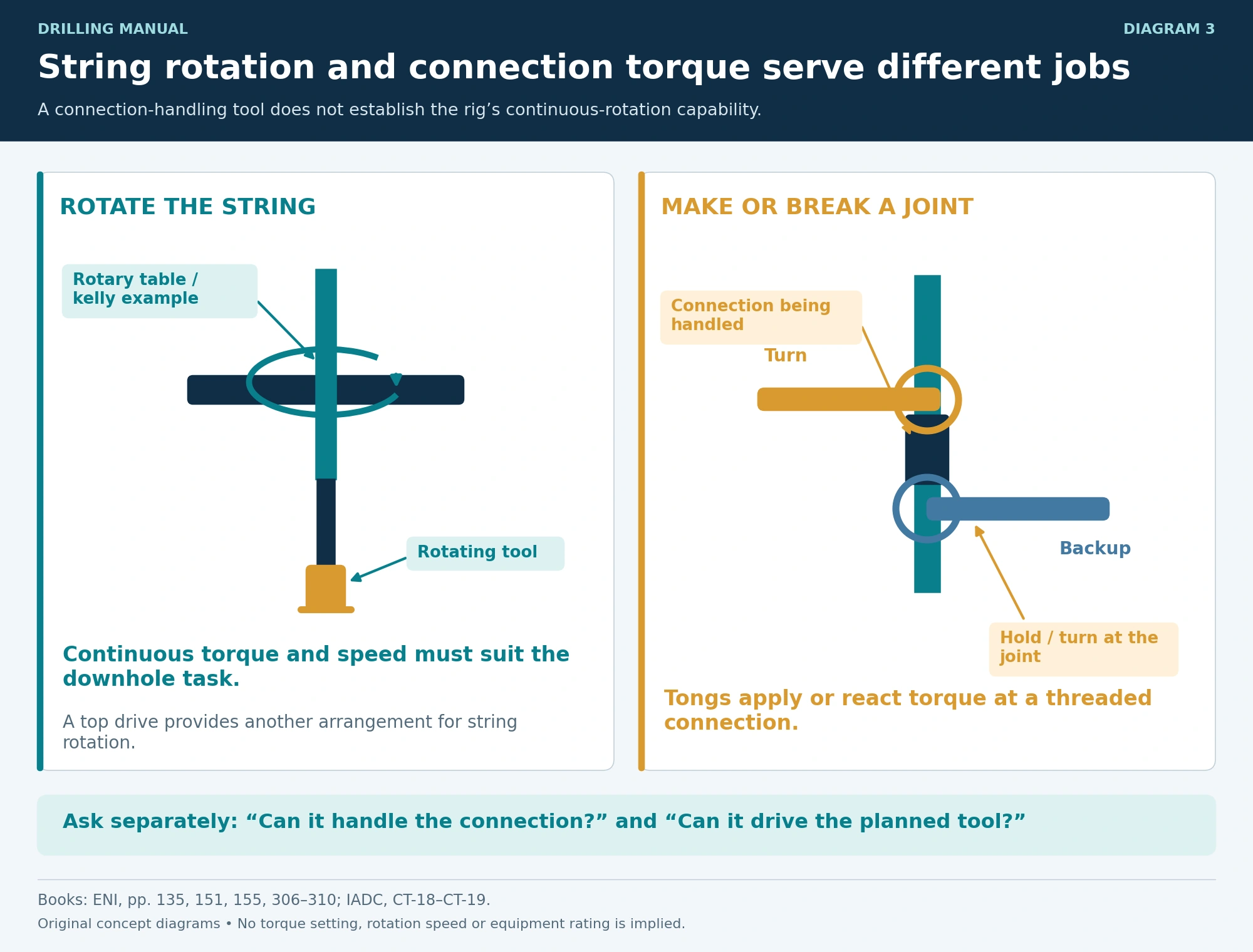
Next, establish whether the operation needs rotation. For example, pulling a string and milling an obstruction place different demands on the equipment. A conventional rotary table and kelly or a suitable top drive provide string rotation, while connection makeup requires its own compatible equipment. [1], [2]
As a result, a workover rig vs drilling rig comparison should list the required functions separately. Specifically, the presence of tongs does not, by itself, establish a system for rotating a milling assembly. Confirm the proposed drive and its suitability for the task.
Circulation and Fluid Handling
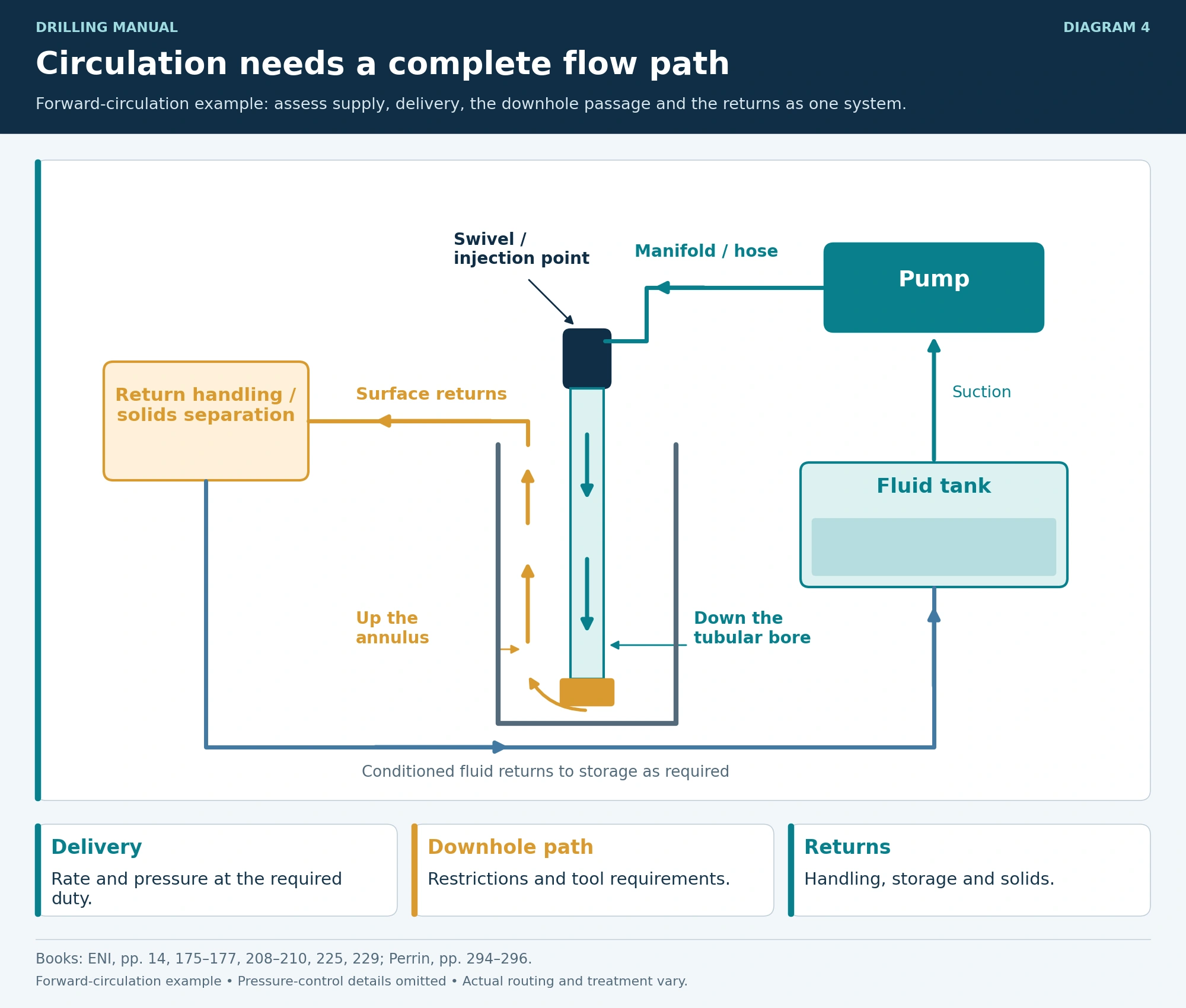
Pumps are only one part of the circulation system. Fluid also needs a supply, a path into the well and suitable handling after it returns. For instance, drilling rigs combine pumps with tanks, mixing and solids-removal equipment. Similarly, a workover package needs the facilities appropriate to its own fluids and returns. [1], [2]
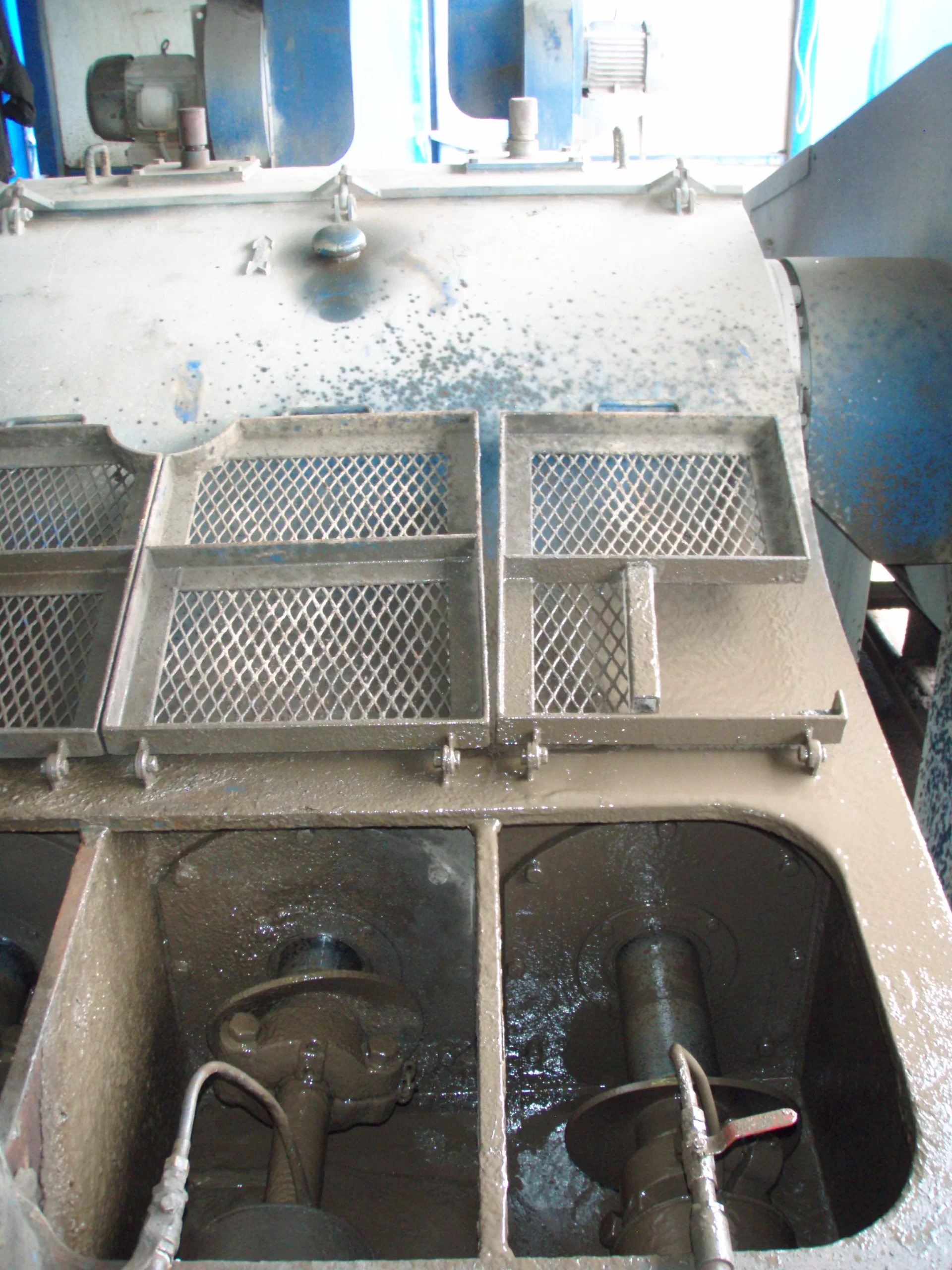

For example, milling creates material that the returning fluid must carry. Therefore, adequate lifting capacity alone cannot qualify the rig for that job. In other words, check the pumping requirement and the complete fluid route together. [1]
In addition, compare the flow available at the required pressure, rather than relying on pump horsepower alone. The pump relationships in Eni link flow, pressure, power and efficiency. Consequently, the operating condition belongs in the equipment review. Volume monitoring during tubular movement also needs a suitable arrangement, such as a trip tank. [2]
Pressure Control and Well Access
Both rig types need equipment that matches the well and the planned operations. The required arrangement includes more than a generic reference to a BOP. Tubular sizes, connections and the relevant pressure-control functions must agree with the work program. [1], [2]
In particular, controlling the annular flow path and controlling flow inside the tubing are different functions. Consequently, neither a rig name nor a mast rating establishes pressure-control suitability. The comparison here concerns equipment functions, not a well-killing or barrier-removal procedure. [1]
Well-control strategy is a separate decision. Perrin discusses work on killed wells, but also describes some workovers using coiled tubing or snubbing under pressure. Therefore, the word workover does not establish the well’s pressure condition or authorise an under-pressure operation with a conventional rig. [1]
Power and Auxiliary Equipment
Finally, include the systems that support the main equipment. For example, drilling-rig power generation and distribution serve the operating machinery. For a workover, pumps, tanks, handling tools and specialist services may need separate provision. As a result, compare the complete supplied package, including interfaces and auxiliaries, rather than the carrier alone. [1], [2]
Applications: Match the Rig to the Work
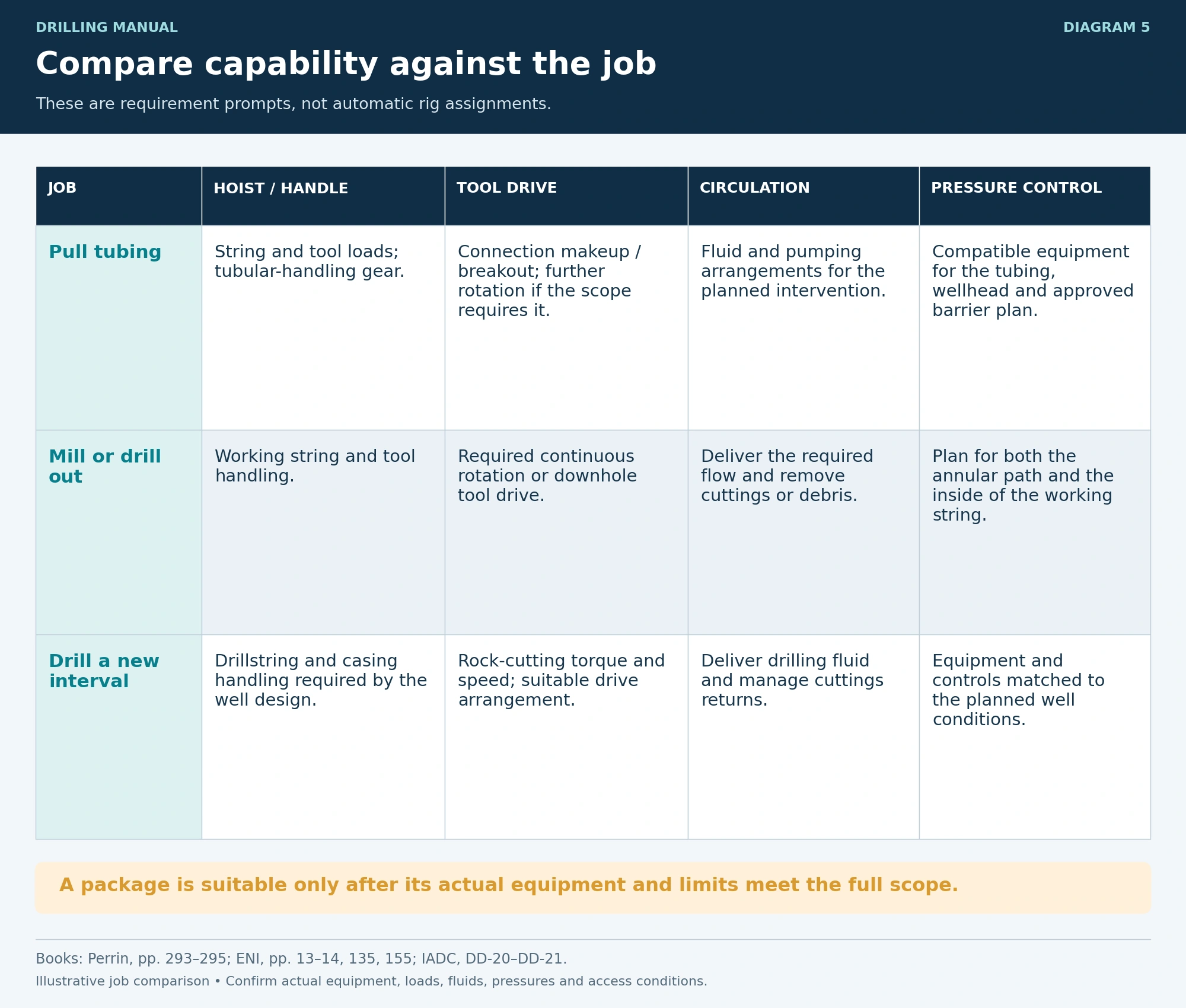
Consider three illustrative jobs. Each begins with a defined objective, but each needs a different capability review.
| Illustrative job | Capabilities to establish | Decision that remains |
|---|---|---|
| Recover production tubing | Hoisting, tubular handling, compatible connections, fluids and pressure control. | Does the proposed package fit the actual completion and retrieval task? |
| Mill an obstruction | Suitable drive, work-string handling, circulation, debris handling and pressure control. | Can every required function support the same operation? |
| Drill a new interval | A drilling system matched to the hole, string, fluids and well conditions. | Is the supplied package adequate for the drilling program? |
These examples do not assign automatic approval to either rig type. Instead, they show why the scope must lead the comparison. Adding a milling requirement can change the necessary equipment even when the well depth stays the same. Likewise, drilling out an obstruction does not establish suitability for drilling a planned formation interval. [1], [2]
Factors in Workover Rig vs Drilling Rig Selection
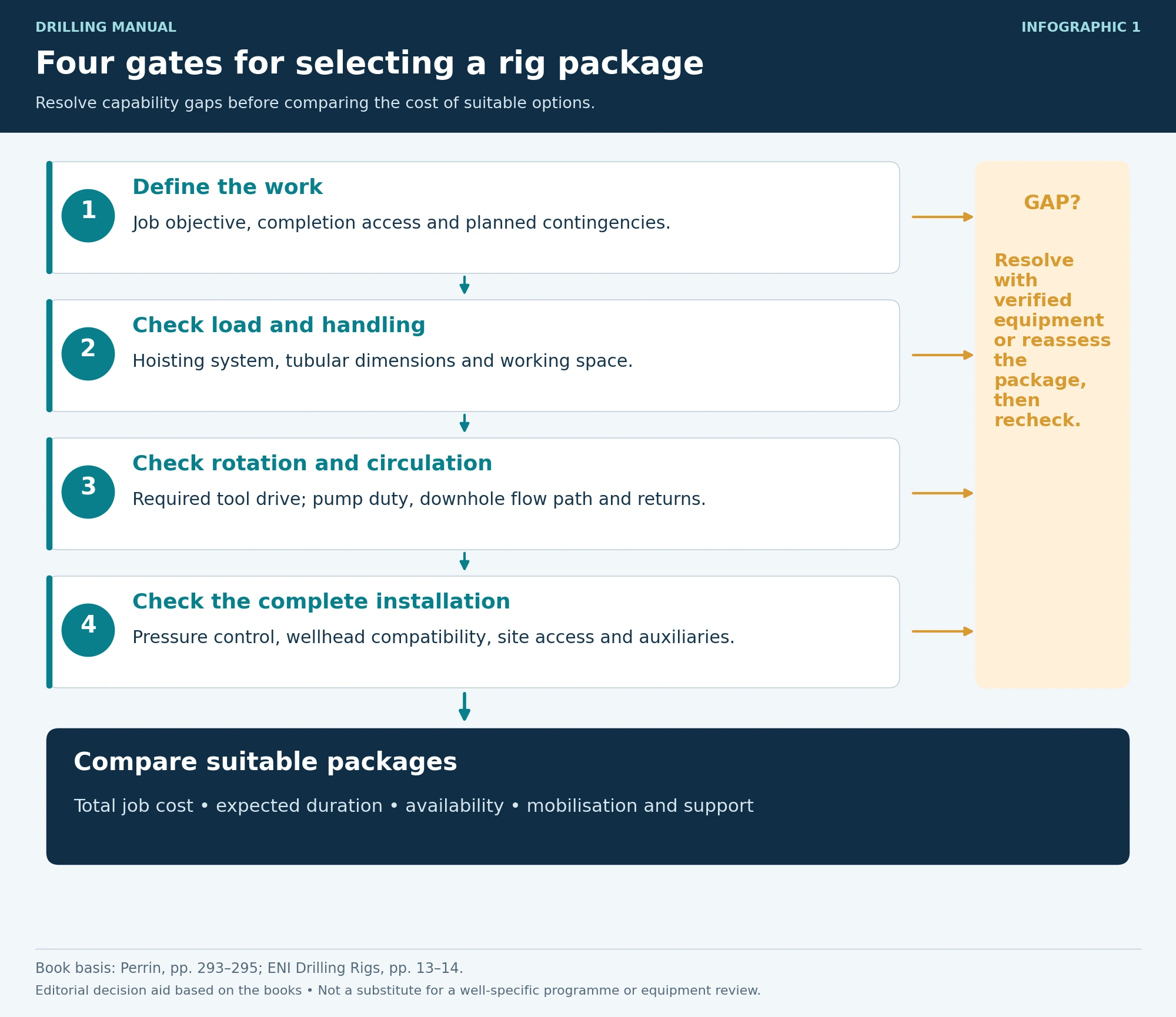
Start with the well and completion, then define the work. Perrin identifies depth, installed equipment and job requirements as important inputs. The comparison then covers hoisting, rotation, pumping, safety equipment, auxiliaries, availability and cost. [1]
- Specify what must be retrieved, run, rotated or circulated.
- Identify the tubular sizes, connections and equipment already in the well.
- Check each required rig system against the same scope.
- List auxiliary equipment and services separately.
- Compare availability and total cost after technical suitability is established.
For instance, a nearby rig can still require additional equipment or a different execution plan. Therefore, geographical availability is useful information, but it does not complete the selection. [1]
Why Depth Alone Does Not Choose the Rig
Two wells at the same depth can have different strings, completion equipment and planned operations. Consequently, a depth figure cannot replace the required load and equipment checks. Record the actual tubular details and the work scope when comparing workover rig vs drilling rig proposals. [1], [3]
Mobility and Site Constraints
Although lightweight servicing units can be mobile, mobility is not exclusive to workover equipment. The books describe fast-moving, trailer-mounted and walking or skidding land drilling rigs. Therefore, compare the actual transport and setup arrangements. Include space and support for the mast, tubulars, tanks, pumps and other equipment. [1], [2], [3]
What to Send With a Rig Request
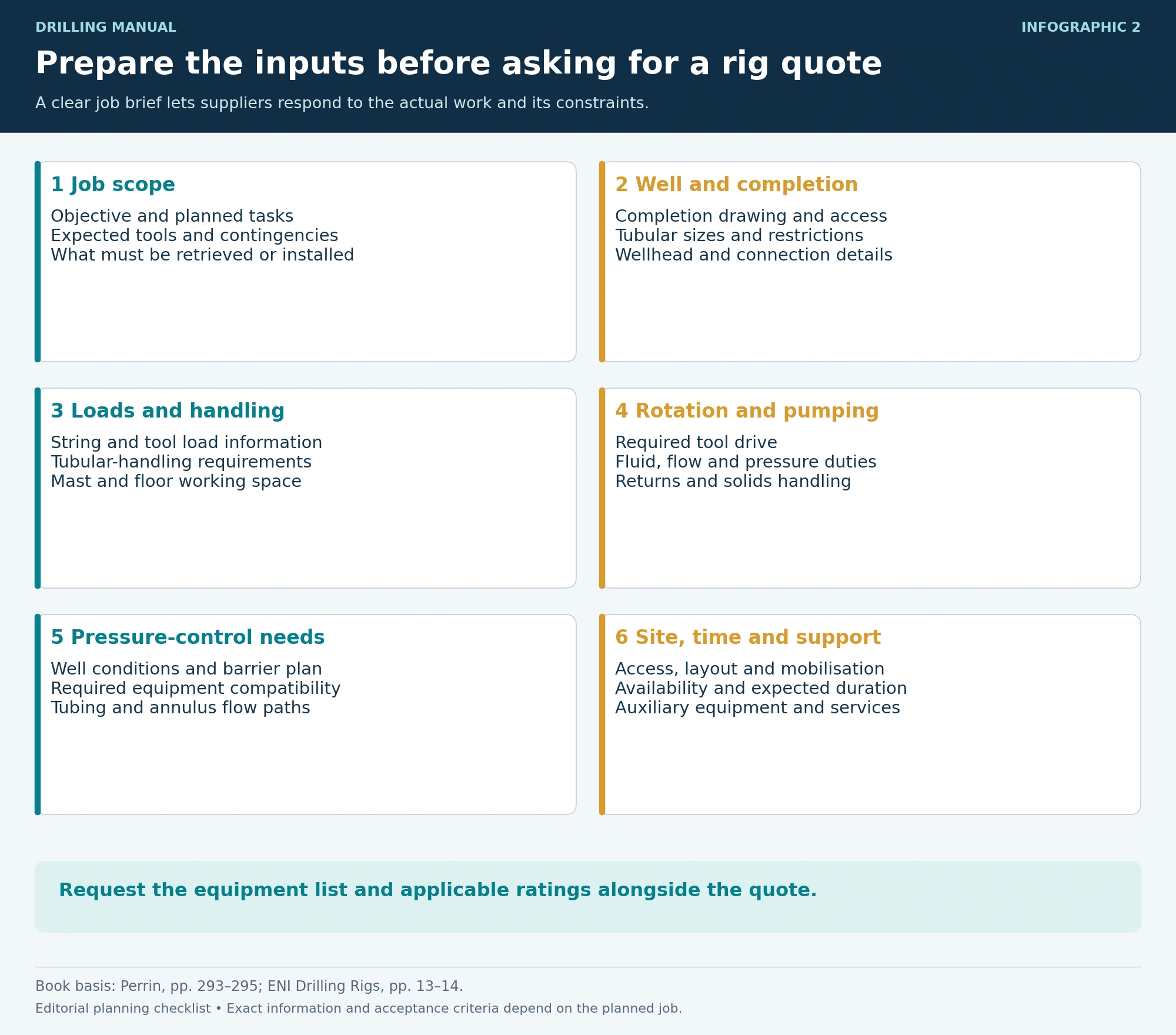
Provide the work objective and completion drawing first. Then supply tubular sizes and connections, the equipment to be recovered or installed, and the defined load cases. Add rotation, fluid-handling and pressure-control requirements, together with site constraints. Finally, ask the supplier to identify included equipment, exclusions, supporting services and the basis of the duration estimate. [1], [2]
Comparing Workover Rig and Drilling Rig Costs
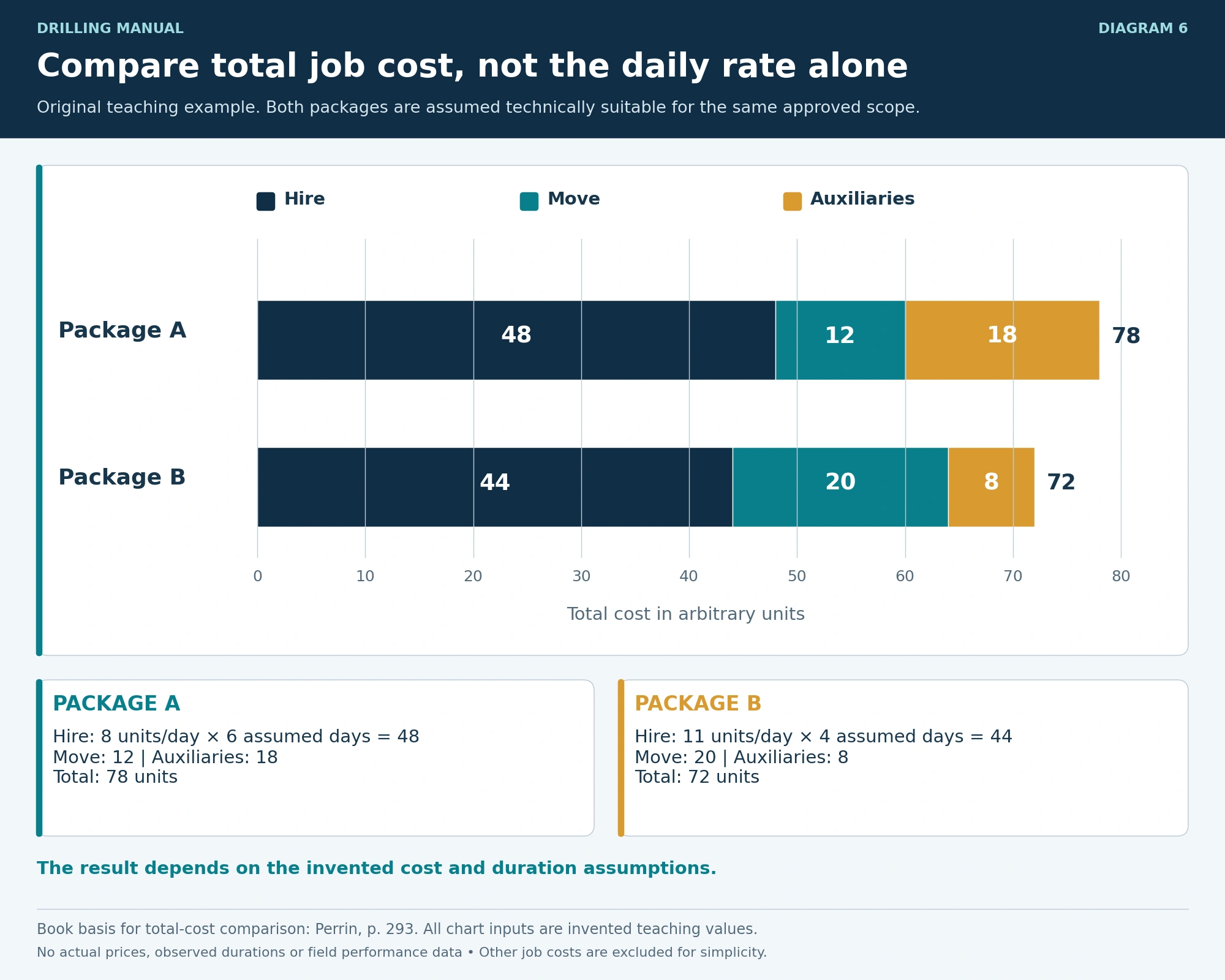
A lower daily hire rate does not necessarily produce a lower total job cost. Duration, support equipment and the achieved result also matter. The following original example illustrates that principle using invented inputs and arbitrary cost units. Both packages are assumed technically suitable for the same scope. [1]
| Cost item | Package A | Package B |
|---|---|---|
| Daily hire × assumed duration | 8 × 6 = 48 | 11 × 4 = 44 |
| Move cost | 12 | 20 |
| Auxiliary equipment | 18 | 8 |
| Illustrative total | 78 | 72 |
Although Package B has the higher daily hire rate, its assumed total is six units lower. However, the shorter duration is an input, not a prediction about drilling rigs or workover rigs. In practice, actual quotations must use a common scope and credible duration estimates. This is an arithmetic example, not a field case or market-price guide.
Workover Rig vs Drilling Rig: Limitations
Rig labels cannot establish universal depth limits, pumping rates or pressure ratings. Similarly, appearance does not prove the installed systems or their condition. A comparison remains incomplete until it covers the actual equipment package and the planned operation. [1], [2]
This land-rig comparison also does not select an offshore installation or define a live-well intervention program. In particular, its conceptual diagrams do not specify an approved BOP stack or equipment ratings. Instead, those choices require the relevant well and equipment information. [1], [2]
Practical Rules of Thumb
- Write the job scope before choosing the rig label.
- Treat hoisting, rotation, circulation and pressure control as separate checks.
- Match handling and makeup equipment to the actual tubulars.
- Include pumps, tanks and other auxiliaries in the comparison.
- Compare total job cost only between technically suitable packages.
These are planning principles drawn from the equipment-selection discussion, not numerical operating limits. [1], [2]
Frequently Asked Questions
Can a drilling rig perform a workover?
Yes. Eni includes workovers among drilling-rig uses. However, the installed equipment still has to match the completion and the proposed work. [1], [2]
Can a workover rig drill or mill?
A suitably equipped workover package can perform drilling-out or milling tasks. However, this does not establish suitability for every new-hole program. Check the required rotation, circulation, hoisting and pressure-control functions. [1]
Is a pulling unit the same as a workover rig?
The terms do not guarantee identical equipment. Perrin distinguishes lighter rod-and-tubing servicing units from larger workover units. Therefore, obtain the equipment list instead of assuming the name defines the package. [1]
Which costs less: a workover rig or a drilling rig?
The useful comparison is the total cost of completing the same suitable scope. Daily rate, duration, mobilisation and auxiliary equipment can change the result. Consequently, the lowest daily rate alone cannot answer the question. [1]
Is a completion rig a separate equipment class?
Initial completion prepares a drilled well for its intended service, such as production or injection. The drilling rig may perform this work, or a separate unit may replace it. Therefore, check the supplied equipment: the term completion rig alone does not guarantee a particular capability. [1]
Can a workover rig deepen or sidetrack a well?
Changing a well’s purpose can include deepening or sidetracking. However, a candidate unit must satisfy the resulting drilling program as well as completion access. Its workover designation alone does not establish that capability. [1], [2]
Do both rig types need a top drive?
No universal top-drive requirement follows from either name. For example, conventional drilling can use a rotary table and kelly. Identify the required rotation function, then assess the actual equipment proposed to provide it. [1], [2]
What about coiled tubing, wireline and snubbing?
These are other intervention options, and some work can proceed through the installed tubing. Therefore, first decide whether the job requires a conventional rig at all. See the workover method comparison and the snubbing units guide for that wider decision. [1]
Book References
[1] Denis Perrin, Well Completion and Servicing, English edition, 1999. Printed pp. 1, 3–4, 253–258 and 293–296; PDF pp. 10, 12–13, 265–270 and 305–308. Completion, rig selection, intervention scope and workover equipment.
[2] Eni Corporate University, Drilling Rigs, Libya ENABV Training Project, Revision 001, 2006. pp. 9–14, 22–23, 42–47, 135, 151, 155, 175, 177, 192, 208–210, 225, 229, 286–287, 306–312, 332–335 and 367. Equipment functions, circulation, handling and pressure-control interfaces.
[3] International Association of Drilling Contractors, IADC Drilling Manual, 12th edition, 2015. “Types of Drilling Rigs,” pp. RT-1–RT-3; “Casing and Tubing,” pp. CT-14–CT-19. In the uploaded compilation: PDF pp. 7–9 and 100–105. Mobility, stand handling and tubular-handling equipment.